The Place of Female Chauvinism in Feminist and Women’s Movements

This is something I’ve been struggling with. So, I’m a female chauvinist. And I’m not really sorry.

Well, sort of. You know I’m sorry about everything, except for being sorry about everything. I should be clear about what I mean. Because I don’t hate men, at least not in the sense that you think of that term in the context of feminism (slash basically no feminists really do*). Sometimes I think I’m better than them (okay, kind of a lot, you guys make it too easy) and sometimes I think they’re better than me (okay, only occasionally). But saying I love being a person wouldn’t cover it – I love being a woman. And that’s on the short list of things for which I’m not at all sorry. I’m thankful to have been born born all kinds of other things – fast, smart, trans, pretty, occasionally funny but not when I tell dirty jokes** – but particularly, I’m thankful to have been born female.

So, chauvinist but not exactly a chauvinist pig.

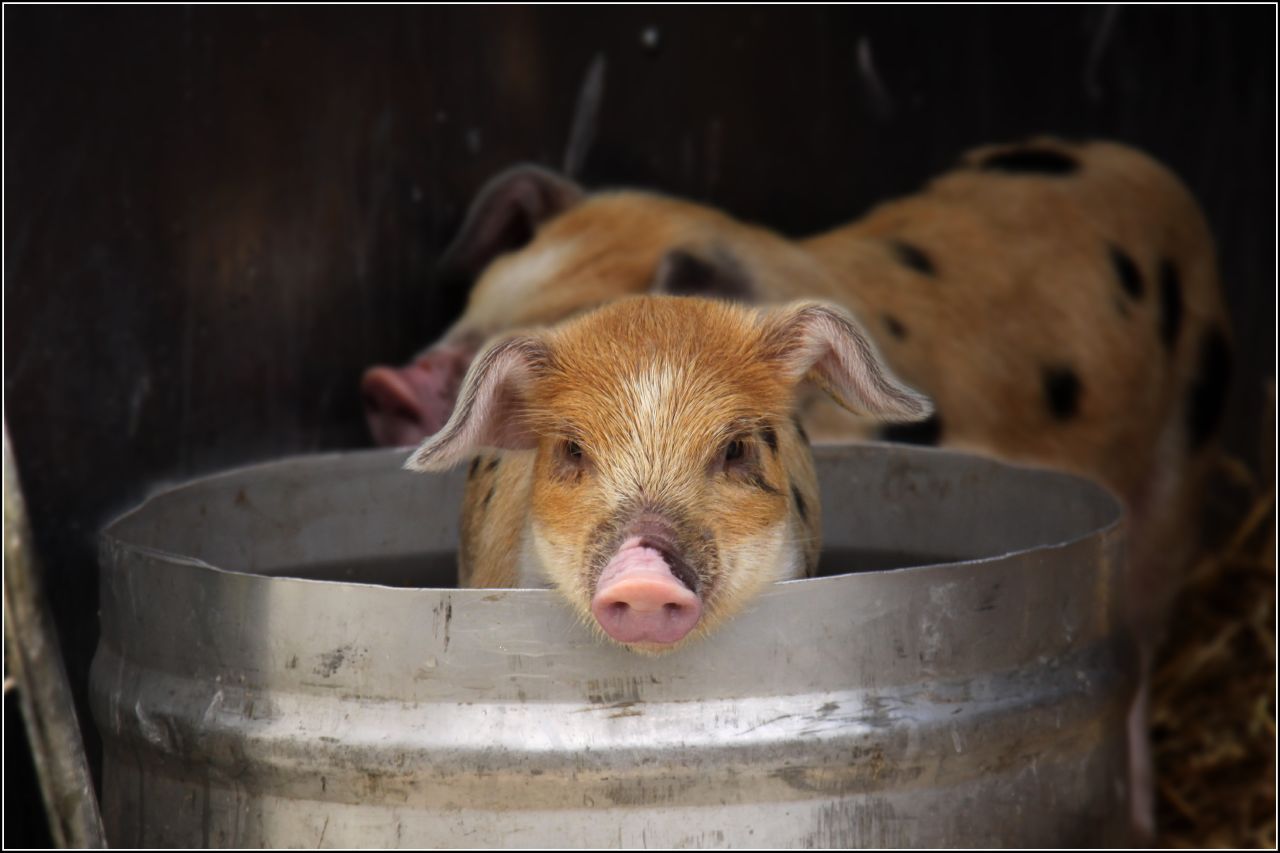
Truth be told, calling people pigs has always sort of ... I don't like that. It really bothers me, for some reason. Source: Wikimedia

Truth be told, calling people pigs has always sort of … I don’t like that. It really bothers me, for some reason. Source: Wikimedia

And I think there is room for restorative pride in the feminine experience, pride in womanhood, pride in girlhood, that recaptures the imbalance in society’s objectified, distorted, and sexist ways of patterning everyone’s thoughts about us (including us). The idea that pride is restorative is really bedrock to this. Pride in womanhood is fundamentally different than pride in manhood because of the hierarchical sexism inherent in our society that places manhood above womanhood. Pride in femininity is fundamentally different than pride in masculinity because of the hierarchical sexism inherent in our society that places the masculine above the feminine.

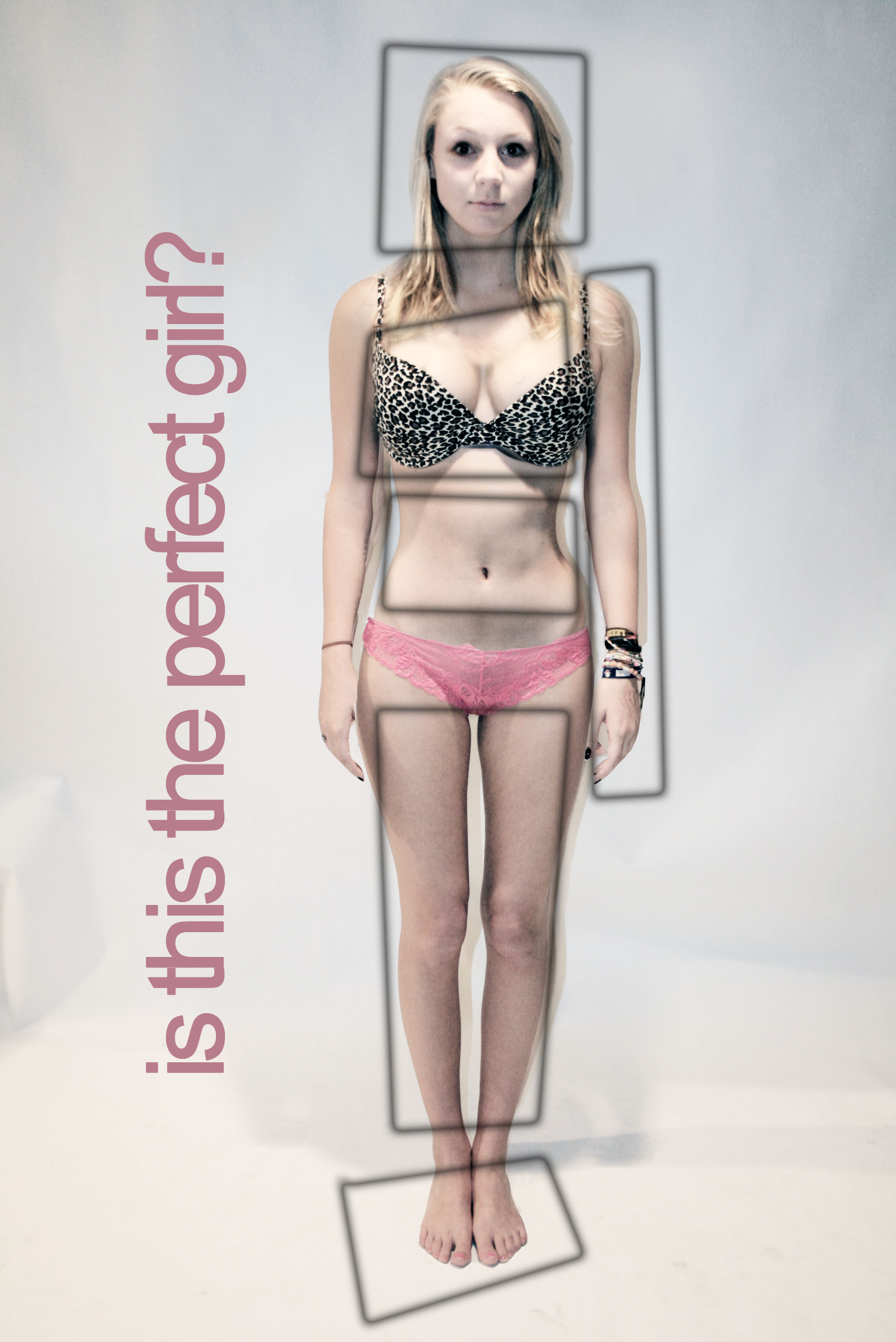
Seriously, so note how much makeup the inpatient in a hospital is wearing for her review with her attending. In an article about how sexism hurts women's health, for the love of all that is good and holy! (Source: Role Reboot)

Seriously, so note how much makeup the inpatient in a hospital is wearing for her review with her attending. In an article about how sexism hurts women’s health, for the love of all that is good and holy! (Source: Role Reboot)

In this way, talking about pride in being a woman – female chauvinism – is not only a good and radical thing, but it is analogous to other pride in the context of other kinds of struggles. So white folk get uncomfortable at the idea of #BlackLivesMatter, wait wait wait, uh, you mean all lives matter, don’t you? And please don’t mug me – I listen to Beyoncé! And straight people can’t understand why gay people need a pride. Why don’t I get a flag? And when they do have a flag, they have distorted reasons about what it means within a system of oppression from which they benefit. 

But, while “good feminists” embrace the idea of black pride, they reject the idea of female pride. And I’m saying they shouldn’t.

I believe these phenomena arise from a really interesting side-effect of marginalization, which I want to be the focus of this piece. In many ways, the mechanism of marginalization – of all these isms – tends to attribute all the diversity to the dominant group. So we pay lots of attention to differences in hair color and eye color, because they vary a lot in white people, but we ignore all the things that are different about the billions of us black haired, brown eyed peoples. Guys are individual, identity-laden agents of change, but women are interchangeable hoes***. And there are a million and one straight love stories, every one of them different, but society-killing, Christ-denouncing, global-warming-causing same sex marriage can be simplified into a unitary construct, as if there’s no diversity among LGBT love stories.

We should be proud in our womanhood like Bree Newsome is proud of her blackness (incidentally, you go, sister!) Source: Inform!

We should be proud in our womanhood like Bree Newsome is proud of her blackness (incidentally, you go, sister!) Source: Inform!

Now you’re really going to think I’m crazy, but what I’m going to do here is say that the dominant culture – the white guys – also have a point. Don’t worry – it’s not the point they think they have. The interesting phenomenon is that, simultaneously, dominant group mechanics, while seemingly attributing all the diversity to the dominant group, actually whitewashes**** much of the really meaningful diversity in the dominant group. You can see this in white folk who cling to the 1/64th of their ancestry that is Chippewa or Cherokee – because they recognize that being “white” does not confer them a really meaningful racial/ethnic identity in the way that being Indian-American does me. This is why every white person wants to be Irish on St. Patrick’s day. You can see it in how all the clothes all the straight guys wear looks exactly the same, but it’s really important to them to be distinctive by having those shoes in just that shade of brown – again, the process of marginalization makes the world all about men, but it whitewashes men in some special and perhaps hard to realize ways. And they don’t want to be whitewashed (and I’m glad of it!).

This isn’t just a case of the grass is greener, of all the straight haired girls want curly and all the curly girls want straight. This is a fundamental characteristic of that asymmetrical relationship.

To me, the solution to this is radical, and it comes from chauvinism. I actually think that straight people should have a Pride. It’s just that it’s the LGBT Pride we’ve already got. As we become a cultural force with which to reckon (oh, we will / we are), I think it’s right to think about making the centerpiece of Pride be about gender and sexual diversity, but to emphasize that not only LGBT people are diverse with their gender and sexuality. Of course, our diversity is the most obvious, but straight people are diverse, too. I’ve taken to pointing this out, every time I talk about the concept of gender expression. You take 100 straight girls who work in the same industry, and some of them don’t even own pants, and some of them wouldn’t be caught dead in a skirt. Some of them don’t wear makeup to interviews, and some of them wouldn’t be caught without false eyelashes at the gym. That’s diversity of gender expression. And you don’t even need to understand LGBT people to get that it exists. And if you really celebrate it, to me, you’re welcome at Pride, not as an ally, but as a full blooded sibling. Even if you’re straight.

So, my answer, radical as it is, is to not only embrace chauvinism in my womanhood (and the idea that I can be proud of being a woman but that pride does not bind me to a course of being sexist), but to embrace the idea that you can be proud of who you are. Even if you’re a straight white dude! But you’re going to need to re-capture who you are. Because you’ve been defined in this sexist way that makes you everything and makes us nothing, and surprisingly and unintentionally, also makes you nothing and makes us everything

This is a big part of the reason I really nudge Teri and his friends along in this idea of developing a robust, future-compatible concept of manhood, not just for themselves, but as a gift to all men. Sure, I benefit, because if men weren’t tools, feminist movement would be so much easier. Obvi. But the truth is I benefit directly, because Teri is a man, and moreover, he’s my fiancé, and the better man he is, the better my life will be – not because I need a man anymore than a fish needs a bicycle, but because my life and his are wound together. Just as the better woman I am, the better his life will be. That’s the shared destiny of our selecting each other as mates, and it’s the consequence of the commitment we make to each other, the one we will consecrate someday soon in marriage.

And finally, yes, I glossed over it so I could pack in a not very funny joke, but I did say born female. As a trans woman, I take some relatively strong views. One of them is that I am biologically female, irrespective of the sex to which I was designated, irrespective of anything, period. I don’t know what my karyotype is – I haven’t and don’t need genetic testing to know who I am. Moreover, that very concept is backwards – my genes have the potential to explain the diversity of sex, because they probably aren’t typical female genes, but they’re carried by a woman (me). I’m a woman irrespective of how they look – and I know this from years of trying to deny this simple truth. In embracing authenticity, I’m not living “as a” woman or or somehow changing to my gender identity – I’m simply accepting reality*****. For this reason, I reject terminology****** like male-to-female or female-to-male, for myself, anyways.

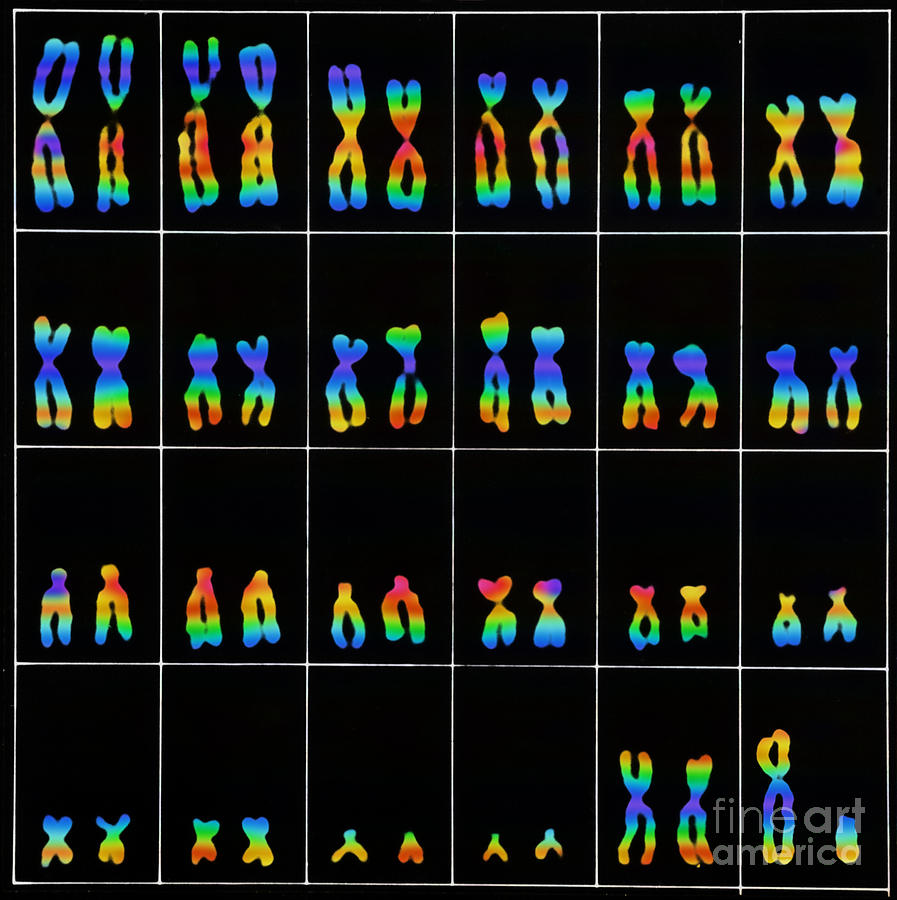
This is a karyotype. Not mine. Some guy's. Seriously, if you want to have a conversation about the biology of sex and you don't know the word karyotype... Source: fineartamerica

This is a karyotype. Not mine. Some guy’s. Seriously, if you want to have a conversation about the biology of sex and you don’t know the word karyotype… Source: fineartamerica

The relevance of this strong view is that I reject the idea that I was a man, or even a boy. Which is important, because it allows me to be unabashedly a woman – I think everyone who knows me knows I don’t identify as anything, and I don’t prefer things, either.

So I’m proud to have been born female. And I’m proud to be a woman. And I’m not sorry. And I want you to be proud, too. I just want you to be proud in your identity, and I’m willing to help you find your identity. Because you can’t be proud in your privilege.

* I found this article while I was looking for another article, and it’s so amazing that I have to make sure I mention it, by creating a footnote to nothing (cue the bridge to nowhere hyperbole), and I’m going to have to figure out some way, before I publish this piece, to footnote something with this. Because this is amazing. The truth is that, although she uses aggressive language (very Dworkin-worthy), I pretty much actually agree with her. Except that I, unlike her, am kinda cutesy. Well, more than kinda. And I don’t fight, I play fight, and most likely, I don’t hate, I play hate. No, not player hate. Ahem. She explains by the end of the short piece (although apparently too long for the men’s rights folks to finish reading it) that she doesn’t actually hate men, which would also have been obvious from the rest of the piece if one were actually reading it (slash if one were a woman). Also, in solidarity with her, I hate refrigerator magnets. Ask Teri. Or better yet, ask me about the whole situation with having to clean rust off my stainless steal dishwasher that I hardly ever use because of the giant stupid refrigerator magnet someone put on it. Ahem. No, we’re cool, actually I totally love her, we’ve since become really good friends, that one and I.

** Okay, I told one dirty joke that was actually really, really funny, and totally on point. But it’s the only one I can think of. The punchline was “Let me introduce you to my Beaver Cleaver.” You kind of had to have been there. Erm.

*** Or, all too often, interchangeable holes. Oh, you thought I couldn’t be that radical? But seriously, this idea is rife in the “makeover” element of every movie where some mousey girl gets a makeover and looks like she came off the cover of a young woman’s magazine – it’s important, because the dominant culture messaging of men says that every woman could be that girl, if she just toed the line a little harder.

**** Only here to be funny to Teri: Well, that’s an unfortunate name.

***** Truth be told, I still use the term transition – the thing about having a reclaimed identity is not just that I didn’t make up the language, but that I must find a way to describe who I am in a language that wasn’t my choosing and that wasn’t designed to include me in the range of possibility. So, I still use transition, but I’m predicting that you’ll see it appear less and less, and although it’s been in many of my posts, and in this case, I’m relegating it to a footnote. Baby steps.

****** I kind of had a moment of annoyance at an event I did a few months ago – a local activist asked me to be on a panel to “speak about the transgender,” and she had an “MTF” and an “FTM” and a “non-binary” and anyways… I told her, sorry, I don’t do talks about the transgender, and I don’t share stages with MTFs or FTMs. Mostly being flippant, but I think, in the long term, you’ll like my language better, because you’ll like the identity-validating message underlying it. And also the simplicity. Because seriously, like, I can’t keep it straight, whether I’m an MTF or an FTM or an MTFTMTF. I’ve got a little pea-sized girl brain, give me a break.

Our Model of Suicide and Maintaining Mental Health Stigma

This is one of those short posts that started life as a comment on someone else‘s timeline on Facebook. My friend, Tania*, asked for people’s thoughts about the idea of legalized euthanasia, suicide, and/or physician assisted suicide. Her questions follow this article from the NYT last weekend.

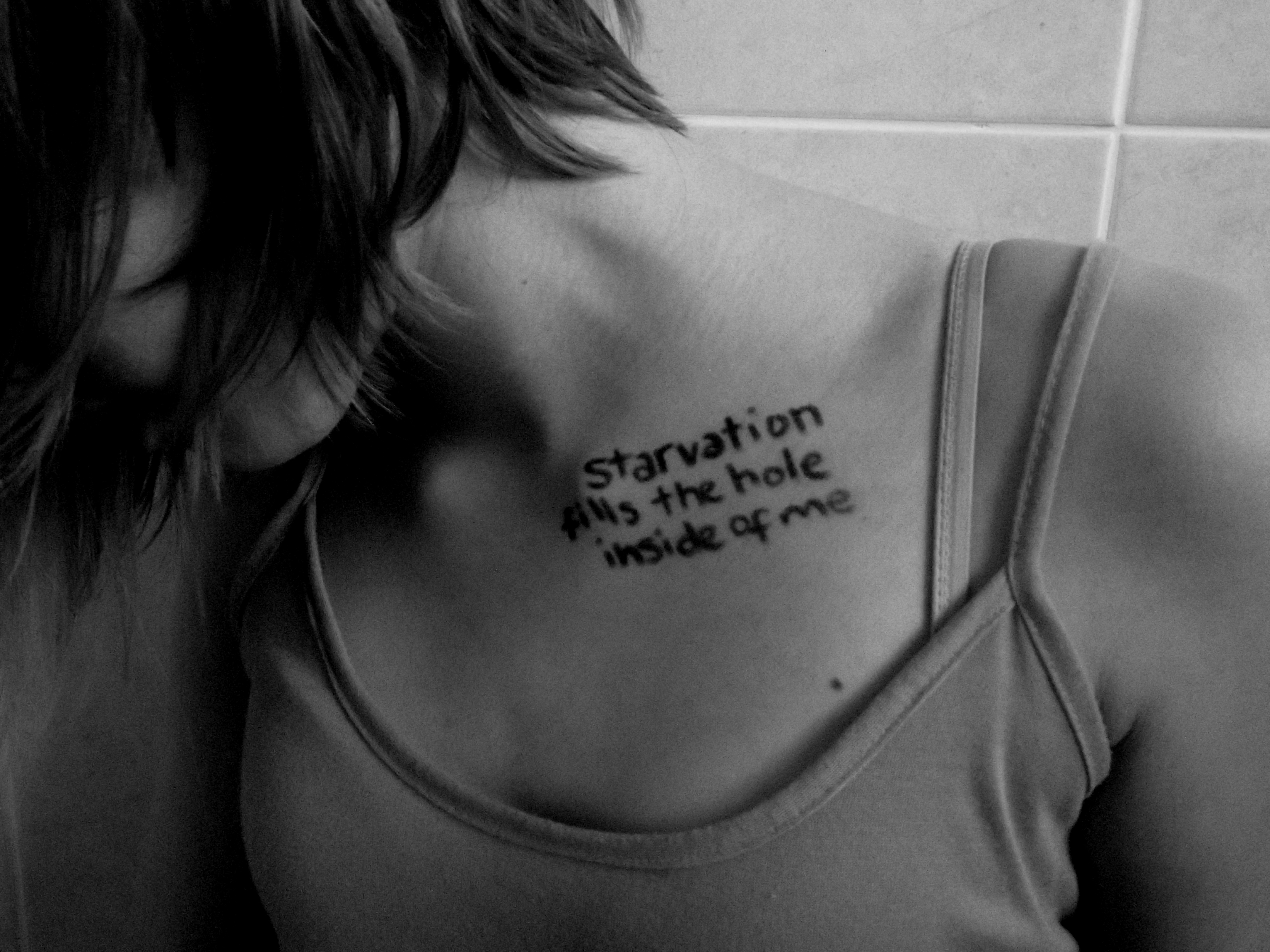
Anorexia is my personal experience, but it's also relevant to me because there is so much policing around the expression of and fear around the honesty of us as women who are there (and to a lesser extent who were there) Source: @daniellehelm on Flickr

Anorexia is my personal experience, but it’s also relevant to me because there is so much policing around the expression of and fear around the honesty of us as girls or women who are there (and to a lesser extent who were there, and of course, of the men who’ve been there, too) Source: daniellehelm on Flickr

There was one book**, back when my struggle with anorexia was much more active, that was about a young woman who did eventually die (passively) – the young woman made an argument that, in her case, anorexia was terminal. Her argument was based on her experience trying a wide variety of both outpatient and inpatient treatments, and getting progressively sicker. It was a pretty sophisticated argument – it wasn’t a simple brinkmanship kind of argument. The anorexia world is full of these stories of people who drop down to unimaginable weights – like a person who weighed 120-130 lbs dropping all the way down to the sixties – who go on to survive and thrive. Marya Hornbacher is just the most widely celebrated of these stories***. But the young woman… well, actually, it wasn’t her making the argument – if I remember correctly, the book was written by her surviving father, who was telling her story, bravely even including her feelings about the terminality of the illness. Again, if I remember correctly, he didn’t necessarily agree wholeheartedly with what his daughter said, but he had given it deep thought, and he had come to the conclusion that it could not be cursorily written off (as many people are wont to do – for instance just cursorily saying the young woman in the NYT story shouldn’t be “allowed” to “choose” suicide). And, importantly, he recognized that he did not understand the illness like she did, because he had been there as an observer, but the battlefield had been her body.

As survivors (and proud of it!) we know an elemental joy of surviving that you, who have never survived, may not be able to understand. But in having survived, we come face to face also with the knowledge that our survival was not guaranteed, and if we take pride in our survivorship, that pride must recognize the sisters we lost. Source: @Rega Photography on Flickr

As survivors (and proud of it!) we know an elemental joy of surviving that you, who have never survived, may not be able to understand. But in having survived, we come face to face also with the knowledge that our survival was not guaranteed, and if we take pride in our survivorship, that pride must recognize the sisters we lost. Source: Rega Photography on Flickr

What’s important about this view is also that she was not saying that all people who are suicidal should end their lives – people who find this to be their solution are not saying, for instance, that no suicide prevention work should be done, or even that our efforts to prevent suicide should not be intensified. Rather, they are merely saying that an expectation of survival of their illness may not be reasonable.

I read this book more than ten years ago, and so it’s taken me a long time to evolve how I think about this. But, what stuck with me for a long time is that, when we talk about diseases and disorders that affect things other than the emotional brain, there are many, many things that don’t have a 100% survival rate. My fiancé had leukemia twice – he survived, and I am thankful, but we accept that a minority will not. For all kinds of leukemias integrated together, the five year survival rate is now just over 60%, meaning we accept that almost four in ten will not make it. Death may not have been a certain outcome in Teri’s case, but neither was life a certainty. If one ignores whether death was “one’s fault,” then the reality is that several mental illnesses – anorexia is one of them – have known rates of mortality. Anorexia is one of them.

When we talk about mental illness, there is not nearly often enough the kind attitude of survivorship mixed with pushing us all to do more, be more clever and resourceful, to help more people survive. My experience, anyways, is that this attitude is very different when talking about a non-mental illness that might take one's life vs. a mental illness that might take one's life. Source: A Leukemia and Lymphoma Society Light the Night Cancer Walk, Dave Overcash on Flickr

When we talk about mental illness, there is not nearly often enough the kind attitude of survivorship mixed with pushing us all to do more, be more clever and resourceful, to help more people survive. My experience, anyways, is that this attitude is very different when talking about a non-mental illness that might take one’s life vs. a mental illness that might take one’s life. Source: A Leukemia and Lymphoma Society Light the Night Cancer Walk, Dave Overcash on Flickr

In contrast, we assume – without a clear basis other than that we believe that people are responsible for their mental illness in a way that people are not responsible for their physical illness – that mental illness cannot be terminal (maybe, excluding dementias, although I think we mostly consider dementias neurological and not psychiatric).

That basis – the belief that people are responsible for their mental illness – is a deeply problematic one for a variety of reasons. The fact that psychotherapy can help people help themselves feel better really does not validate that idea – all manner of disorders and diseases are amenable to behavioral “treatments,” not just mental illnesses. Schizophrenia is not only significantly more heritable than, say, hypertension (compare this and this), but although both are amenable to behavioral treatments, behavioral treatments (like weight loss, diet, exercise) have higher effect sizes by far for hypertension. Infectious diseases are not given the stigma of mental illness based on one’s having “chosen” the illness, even though they are clearly essentially completely behavioral, whereas almost no mental illness is considered completely behavioral by scientists****.

The result is that, when we think about some other health problem, that has a death rate, we assume those deaths might be preventable, if we get cleverer and come up with new technologies and new medical practices and new ways to help people with prevention. In contrast, when we think about suicide, we assume that those deaths are preventable, and that nothing needs to be done to prevent them except to coerce people to not commit suicide, to call people who commit suicide cowards, to criminalize suicide, etc. To me, that’s deeply problematic, whether or not one believes one should be able to “choose” suicide.

Moreover, it should be deeply problematic to everyone who is trying to reduce / prevent suicide, as well. It pushes suicide into a deep taboo. And it’s hard to treat something that’s taboo. And, of course, it’s deeply problematic for people with mental illness even when suicide is not a part of the conversation.

So, to me, do I support the policy Belgium enacted? I probably do. But the thing I support far more firmly is destroying stigma around mental health. I believe in it for me. I believe in it for all the friends with eating disorders who saved my life, time and time again, ten years ago. And I believe in it for all my friends who live with mental illnesses that I haven’t experienced in the way I experienced anorexia and so don’t fully understand.

I believe in it for all of you, too, who have never been there, and so who find it easy to pass judgment. At times, I yearned to be back in your blissfulness of ignorance, although today, I include my experience with anorexia alongside all the many things I am thankful for in my life. It made me the woman I am today. I am glad – daily – to survive, all the more because I know my survival was not guaranteed.

* God, what is it with me, I can’t even get past the italicized intro without a footnote. Just pausing here to say that Tania is such a heroine for the AutismFamily. Her particular passion is autistic (she coins “Aspien”) girls and women, and I love her work so much.

** Comment or message me if you know the book. I think it’s one I borrowed from the Jacksonville Public Library, the summer before grad school in psychology, which was the time of my rock bottom with respect to my own struggle with anorexia / disordered eating.

*** And I’m sure I’ve mentioned before how much of a heroine Marya is, and how amazing it was to, if only for a moment, meet her when she was here to speak.

**** Getting overly technical, susceptibility to a wide range of infectious disease is heritable. But again, the heritability of many mental illnesses is far higher than the heritability of many infectious diseases, if not most/all of them.

Embracing Imperfection while Celebrating the Pursuit of Liberty

Celebration of American independence must always have been fraught with complexity and inner turmoil. Our forebears sought a response to the British tyranny of that era, but, having spent all their days as subjects of that crown, they could not have had much knowledge of what life without tyranny might mean*. Our forebears sought to create a “more perfect union,” but they did not create a perfect union, nor have we perfected it with any of the changes we made, in the more than 200 years of our nation.

Harper's Weekly Covering the triumph of the passage of the 13th Amendment. Source: LOC

Harper’s Weekly Covering the triumph of the passage of the 13th Amendment. Source: LOC

We have certainly tried. We have tried through giving voting rights to the landless, the abolition of slavery, reconstruction of the South following the Civil War, women’s suffrage, our many attempts to improve our immigration system, affirmative action, hate crime statutes, and other attempts to reduce the harms of racism, the granting of choice to women, our steps to make sure all may access health care, and most recently, marriage equality and other steps to enfranchise the LGBT community. These have all made our land a better and freer land. Sometimes, they were unalloyed good. More often, they were imperfect attempts.

It cannot - must not - be a sign of our patriotism that we pretend that our errors were right or justified, or that we fail to analyze the weaknesses in our values and actions that led us to commit injustice. Source: Wikimedia

It cannot – must not – be a sign of our patriotism that we pretend that our errors were right or justified, or that we fail to analyze the weaknesses in our values and actions that led us to commit injustice. Source: Wikimedia

Certainly, we have failed, too, and failed not just by doing too little, but failed by refusing to do what was good and just, and by actively pursuing what was and is wrong. Failed in our treatment of Native Americans. Failed, time and time again, in our response to hate crimes, even with all the statutes we’ve put in place. Failed the Tuskegee Airmen. Failed to guarantee equal rights to women. Failed in fighting unjust wars. Failed in our reckless pursuit of the imprisonment of vulnerable populations. Failed in our systemic and reckless increasing of economic disparity. Failed in our inability to lead the world in life expectancy, and not for want of throwing money at the challenge**. Failed in our approach to terrorism. Failed by creating classes of people whose rights we refuse to recognize and pretending that this is good or true.

Interestingly, when this video is shared on Facebook, where I originally saw it, the first minute or so is usually clipped. It’s good, but it’s actually way better with that additional context.

At times and in places, we have led, do lead, and most certainly will be leading the world. At times we have followed. At times we have not only not led or merely followed, but we have ignored the wisdom in proof of better ways embraced by other lands. I was at a wonderful party, last night. A friend mentioned in passing that she had, to her embarrassment, largely ceded the idea of patriotism to extreme conservativism. We talked about how this had come to happen – because I see it in so many people in the Sisterhood, and in other movements of which I am part. How did we come to think that wearing red, white, and blue is patriotic, shooting off loud fireworks is patriotic, but making this country a better place is not patriotic? I ask because so many of the people in my life, these days, are in the nonprofit sector (and in for-profit pursuits) that are actively focused on making the world a better place. I have friends who do this by making sure all Americans can have homes. I have friends who do this by making sure all women can be safe from domestic violence and that all women can have access to healthcare. I have more than a few friends who do this by trying to bring the Autism Revolution. And most of them are cautious about embracing the concept of patriotism.

I quipped that the situation is much like my relationship with organized Christianity, as an openly, proudly, authentically LGBT person. How did it come to be, that if I see a verse from the Bible – even, and often, Jesus proclaiming radical love for all, starting with the self – my mind instantly and rightly goes to fears that this person may be aggressive or even violent? When did Christianity*** become this vessel for hate and this bully pulpit for intolerance, instead of love? This situation is much the same about American patriotism – it is presumed now to be an attitude of haughty tyranny over the rest of the world, secured with our advanced army, our nuclear weapons, our economic might, and now even drones. It is predicated on the idea that we are perfect, that our union is perfect, and that it is our right to rule by force over others. It is, in short, and much as Christianity today is frequently striving to be everything Jesus exhorted against, modern American patriotism is, all too often, everything the dream of our forebears, to live in freedom, to be brave, was not.

We do not know full well the minds of early American heroes or heroines, like our sister Sybil Ludington, or even our even our sisters like Julia Ward Howe, who left behind a lot more of their thoughts in their words and speeches, but it does rather seem that they did not see bravery as something relegated only to soldiers, but rather, as a fundamental American virtue.

We do not know full well the minds of early American heroes or heroines, like our sister Sybil Ludington, or even our even our sisters like Julia Ward Howe, who left behind a lot more of their thoughts in their words and speeches, but it does rather seem that they did not see bravery as something relegated only to soldiers, but rather, as a fundamental American virtue.

And beyond just recognizing the tremendous injustice of this, how do we take back the night?

Certainly a great claim to patriotism lays at the feet of all the men and women who have fought, shown valor in combat, have risked and sometimes met death on the battlefield. Although I love peace, and I never myself served in this way, I recognize the need for their bravery, and I celebrate it. I do not see a contradiction between my love for peace and my love for our service-members. The two enhance each other. But I also recognize that, alongside these brave souls, countless other Americans are, everyday, fighting to make this country great, and even if they do not risk untimely death, in dedicating their entire lives to this country, they, too, ultimately die in service of it.

In this light, it seems, to me, deeply unpatriotic to me to recognize this day by mere waving of a flag, by engagement in braggadocio, to make idle claims that our country is the best in the world by birthright and as a privilege, and not a country that can be the best in the world because we make it so. In short, it seems deeply unpatriotic to me to recognize this day in any way other than to say that I love this country sufficiently well that I am willing to live and die to make it great, and that I do not merely offer this service as a hypothetical, but I engage in it, every day.

What I am asking you, today, is to consider changing your approach of shying away from the conversation around patriotism. To tell the truth, if you are one of us, in trenches or lofty estates, fighting every day to make this country great, patriotism will do no good to our mighty flag until you are an open and proud patriot. Your patriotism must not mean that you ignore the imperfections in our union, or that you do not fight to make this union more perfect, but rather precisely that you study and learn these imperfections, and you devote your life to righting them as best you know how.

And, although we can, should, must – always – be mindful of the sacrifices so many soldiers and others have made around and before us, so that we could live in the land of the free, we must recognize that living in the home of the brave is not a privilege granted to us by their sacrifice, but a sacrifice demanded of each of us, every day of our lives. In that recognition rises the great hope of this most unlikely of nations that we call home. In that way, declaration of independence becomes not a static event  some 239 years ago but a living call to arms to all of our people. And that is patriotism.

* I argue previously that this conception is much better than the currently widely accepted tradition of interpreting, for instance, Rousseau, as making a claim that freedom is innate and that we know how to be free, instinctually, but get tricked into chains. No, freedom is a technology, and is the most shining innovation humanity has created. There is also great danger in engaging in a presentist attitude that the “founding fathers” (or Jesus, or anybody) would think precisely like I do about freedom, or about anything. However, our forebears – not just Washington and Franklin, but many, many more of them – clearly did conceptualize governance as being a thing in which one actively participated, not a thing done to one. They saw freedom as a thing not just worth believing in, but worth thinking about, meditating on, advocating for, and yes, fighting and risking their lives for.

** We are, embarrassingly, not only not first, but thirty fourth in WHO’s ranking of some 200+ states.

*** Christianity as an organized entity, or as many organized entities. Not Jesus – I have commented on this in great detail, already.

Civility and Authenticity in the Workplace

Thank you, in advance, for listening to this perhaps half-baked thought – this is one of those, “No, I have way too much to say in a Facebook post,” kind of blog posts.

This article has been open in a tab in my browser at work for several days now while I stewed on it, and particularly how a call for civility meshes with a call for authenticity, something I’ve been talking abouta lotlately.

Sometimes, workplace brawls really do happen, although they are altogether more often cold wars.

Sometimes, workplace brawls really do happen, although they are altogether more often cold wars.

I’ve been arguing that we have a huge untapped sea of potential in our own people that is blocked by failing to let them be authentic – not just in the sense of the way we treat LGBT or ethnic minority workers, but in a much broader sense of masks we wear, masks we force each other to wear, without reason at work. Now, I’m generally a composed, civil person at work. I get mad relatively rarely, and I don’t swear or shout when I’m mad, although I do raise my voice (very rarely*) and I occasionally do say things I regret (and for which I consistently apologize). I will also admit to being uncivil in my professional / work life at times, and it is something I want to continue working on. And I’m still fairly new to having these kinds of formal leadership responsibilities – particularly managing large teams and overseeing increasingly large budgets. Apropos of that, this paragraph is particularly striking to me:

Bosses produce demoralized employees through a string of actions: walking away from a conversation because they lose interest; answering calls in the middle of meetings without leaving the room; openly mocking people by pointing out their flaws or personality quirks in front of others; reminding their subordinates of their ‘role’ in the organization and ‘title’; taking credit for wins, but pointing the finger at others when problems arise. Employees who are harmed by this behavior, instead of sharing ideas or asking for help, hold back.

Certainly this is not authenticity, or anyways a kind of authenticity we should encourage (that is, we should not be making a place for people who think like this, or we should do so with great caution, in our congregate lives). So there’s a sobering question there for me with respect to how to be a good leader. Certainly, if you met me five or ten years ago, I’ve made a conscious investment in being more poised and careful about what I say, in part driven by all the times I’ve engaged with the media – although I will push hard for what I believe in, I am more considerate in many ways of others concerns and priorities, and even if I am more assertive about what I think needs to be done (whereas I might have been a pushover, ten or twenty years ago), I try to do it in an inclusive way.

Really, the problem cited above is a problem that (for me, for instance, since this behavior is inconsistent with my values) I should be avoiding during recruitment and retention. It is not evidence that I should not let people be authentic (because that authenticity is authentically dangerous!) but rather that the risk or lack of safety (apropos of my much favored Mr. Beaver quote from C. S. Lewis) associated with this is that an authentic organization can be better, but with the greater unleashing of agency as well as progress through community amongst one’s team, there is also greater risk associated with bringing on board people whose values disrupt the authenticity ecosystem. So, I also argue that, rather than opening us to these kinds of dangers, when we let people be authentic, we also give them the keys to our real mission (not just our mission statement), and that lets them take a level of ownership in the organization they’ve never had before. And if they’re the right people, who belong in our ecosystem, magic happens.

Medical errors cause a lot more harm than we think... besides clinician skill, are there civility or workplace authenticity - personnel factors - that could help us save these lives? Source: Wikimedia

Medical errors cause a lot more harm than we think… besides clinician skill, are there civility or workplace authenticity – personnel factors – that could help us save these lives? Source: Wikimedia

I also tweeted about this striking comment from the piece:

According to a survey of more than 4,500 doctors, nurses and other hospital personnel, 71 percent tied disruptive behavior, such as abusive, condescending or insulting personal conduct, to medical errors, and 27 percent tied such behavior to patient deaths.

Again, expressing these feelings in this way is not authenticity. It is bullying, and bullying is not okay**. In some cases, it reflects selecting for the wrong things at the entry to the ecosystem (and there has been much discussion about how we choose people for grad school, medical school, etc., and some of the dangers inherent in our implicit value matrix). It is perhaps also a sign of creating an environment in which frustrations cannot be aired (civility and honesty are not always good friends), and in such a situation, “bottled up” frustrations may explode in unwanted ways. Finally, this situation is not authenticity-positive in the sense that, when one person is a bully, or coercive, and they are allowed to do this with impunity (a situation I’ve personally encountered / to which I have been victim) they have a chilling effect organizationally, and that chilling effect destroys value that a whole sea of talent, who could be authentic, but are not, because of fear, are not demonstrating.

This is where it gets dicey for me. I’m personally not a big fan of cell phone boxes at the door (and I’ve been in meetings with them). My experience is that, much more often, the problem is excessive meetings, without clear agendas (especially routine meetings). And it seems to be particularly those meetings that are disrespectful abuses of our time that have cell phone boxes. There is also the danger that expecting people to be instantly and perpetually available, but then disrespecting them when they make valid business decisions to prioritize other issues over talking to you, itself, is more than a little, itself, uncivil.

Another way in which I’m concerned is that I have a strong sense that I want to develop an investment in the idea of family and shared identity with my team. And I want people to be real, even if real means they have feelings, although I want to empower them to be real but focused. I’ve said very clearly, that I feel that a significant contributor to how I’ve accomplished the things I’ve accomplished is that I take things personally. I also tell my leadership team that we are precisely who and what we are, because of unique factors each of them brought to the table. We wouldn’t be where we are, for instance with the Center, if I didn’t take things personally, and if they hadn’t brought their personalities into what we built, together. And taking things personally does include leveraging not only my thoughts and rationality but also my feelings. This doesn’t mean being mean – but civility can often be a call for a certain kind of dispassionate engagement that some majority culture men engage in, particularly, and more than once, it’s been a way to gaslight women in professional life and to roadblock the development of other minority talent.

So the article gave me a lot to think about. I do think, that as we help people be assertive (which enhances authenticity), to own their perspective but recognize others disagree, much civility naturally follows – because people are generally pretty cool, in the absence of a reason to get heated up. I’m not sure that civility, in itself, though is the right goal, organizationally, to seek – I think at this point incivility is a symptom of an underlying problem.

* There is a famous-ish story, that involved perhaps mild voice raising, but not yelling or shouting, about an interaction with me and our HR people, related to arbitrary decisions that affected my operations and caused threats to our sustainability. I will admit to getting uncivil (apparently a co-worker of the HR person thought I would become violent and was ready to call the police… seriously, I don’t think I’ve ever even thrown a punch in my life, and I’m not about to start). If there was incivility, I will not say it was all my fault – I felt completely unheard, and in a situation with which any operations leadership can sympathize, others were making decisions but I, to me, seemed to have all the responsibility of their impact. The person talking to me (we’ve since had many pleasant interactions) could certainly have worked harder to understand why I was concerned, and take my business interests, particularly, and my organizational stake in the situation, much more seriously.

** In this case, the price of that bullying is ultimate for the patient, in the form of loss of life.

Living Like Black Lives Actually Mattered

Let me start by stating what will be obvious to some and make others uneasy: We aren’t. We haven’t. We don’t.

Seriously, this restaurant is such a marker for pretty much everywhere crime and poverty happens in this city. And I refuse to not drive by it because I'm afraid. Crime happens in the locus of every Chicken Coop not because black people are criminals but because every Chicken Coop is ensconced in an entrenchment of poverty, and those of us who have always had enough to eat have no idea how hard it is to climb out of poverty.

Seriously, this restaurant is such a marker for pretty much everywhere crime and poverty happens in this city. And I refuse to not drive by it because I’m afraid. Crime happens in the locus of every Chicken Coop not because black people are criminals but because every Chicken Coop is ensconced in an entrenchment of poverty, and those of us who have always had enough to eat have no idea how hard it is to climb out of poverty. Source: WZZM

It’s endemic in the way we talk (leading to terms like microaggression). That part of town. Don’t get caught with a flat tire over there. My neighborhood is bordered on the northern side by a street that is a huge racial and class divide, with mostly white lower middle and middle class people (and a few affluent people and a few poor people) on one side, with modest, but stable housing values, and systemic impoverishment and deprivation of American lives on the other side, mostly visited on black people. A food desert, with roads that somehow magically never get fixed, and a clear lack of opportunity. Not a coincidence – no, this situation is all too common in all too many towns and cities, as a result of redlining (not just conceptually, but redlining was real, here, in Grand Rapids). Not just for black people, but for our Hispanic family, too. So there’s this fabulous restaurant on Division here in Grand Rapids – it’s an old drive-in, with a big awning and picnic benches for eating outside, a very “hearkening back” kind of vibe, makes you feel safe and wholesome. Taqueria San Jose. We’ve known about it forever, but somehow it seems like a light, summer thing, and when we’re hungry, we end up someplace else (we go to a number of other restaurants right there, just never this one), and when we drive by it, we’re forever saying, “We should go to that place!” A lot of my hipster friends know about it (and it was full of white hipsters on lunch break when I went). But I get surprised that many of my white friends know this part of town incredibly poorly, and are surprised I go there at all. “Oh, I don’t get out to that part of town very often.” You should know a few things about Division. One is that a disproportionate number of the violent crimes that happen in Grand Rapids happen on stretches of Division, typically late at night (but it’s totally safe from inside my car, for me, any time of day, and particularly in the middle of the day, because, of course, this violence isn’t random violence but violence that exists in a racist system that impoverishes groups and classes of people). You should also know that the Hispanic community has invested greatly in their money, and their sweat, and their tears, in building businesses in this part of town, something that has changed rapidly even just in the six years I’ve been here*.

I loooved Hyde Park. And my favorite Hyde Park memory was the elderly women who had Barack Obama tees pulled over their church dresses at the bus stop, and the look of optimism on their faces.

I loooved Hyde Park. And my favorite Hyde Park memory was the elderly women who had Barack Obama tees pulled over their church dresses at the bus stop, and the look of optimism on their faces. (Source: Wikimedia)

I had another similar experience – back when I was in the business of dating straight girls** – I was on eHarmony (okay, you guys, I really didn’t know about this, and I’m sorry), and I was living in Hyde Park in Chicago. Hyde Park is kind of a unique place. It and its sister neighborhood, Kenwood, are predominantly black, but also affluent, and there are very few places like Hyde Park in the US that are congregations of black affluence. Which is too bad, because y’all should really have the opportunity to live in such a place. The University of Chicago is there, along with the Museum of Science and Industry, the former being what brought me to town. I lived in a brownstone rental two and a half blocks from the Obamas’ home. But I remember at least once, a woman couldn’t believe I lived in Hyde Park and made it really clear that she would never come to Hyde Park, because of the danger, with heavy racial implications. I politely indicated that I loved living there, and I made it really clear that she and I would not be dating (#TaylorSwiftVoice Like, Ever). Many of my white friends in the city told me I had a different experience living there, because while neither black people nor white people think I am them, they both have a stronger tendency to just be themselves and be comfortable around me than they would around each other, but I had a beautiful time, as an outsider living in a black neighborhood, and I’m so thankful for having had that opportunity and for the graciousness with which black neighbors accepted me. For me, I spend much of this American life surrounded by people who don’t look like me (that’s you) – but it’s still good for me to be in a place where all the people are black and don’t look like me, and not only in places where all the people are white, and don’t look like me. If you’re white, you should have this experience, because particularly if you’re a white man, you may not have any idea what it would be like if the world didn’t belong to you. If you’re black, you should have this experience (again, there are so few of these kinds of places in the country that most black people haven’t), because you need to see black power.

Driving while black is real, even if it doesn't happen to happen to you (and particularly if it doesn't happen to happen to you because you're not black). Source: NY Daily News.

Driving while black is real, even if it doesn’t happen to happen to you (and particularly if it doesn’t happen to happen to you because you’re not black). Source: NY Daily News.

There’s a story I’ve told a number of times – it’s one of those stories I tell because I don’t really understand what it means. There’s some funny business to the driving while black / driving while brown phenomenon. One of the funny things is that I don’t get profiled as an Indian American (and I’ve rarely heard of my Indian American friends getting profiled, either***), even though from a distance, I can’t look that different from the range of appearances of Hispanic people. When I was starting to come out – this was two winters ago – I went out for drinks, with Teri, and I was driving home down Division (the same street Taqueria San Jose is on), and this big SUV pulled up next to me at a light. There were these two big, white guys in it, and they were clearly staring over their steering wheel at me. And I was scared, as a newly visible woman out by herself. I reached for my cell phone, to call the police. And we made eye contact, and I realized they were the police. And as soon as we made eye contact, they lost interest, drove off, and pulled someone else over a block up. What was that all about? For one thing, it was about the racial order of things – as I’ve commented before, although I am not white, as a mostly non-marginalized minority, in the racial ordering of things, I am placed**** in the category of the people who are protected and served, whereas Black and Hispanic people are often placed immediately in the category of the people from whom “we” are protected. To me, it is also about the insidious nature of racism. I am, somehow, subtly, read consistently in this process, through a mixture of minute signals. I think sometimes those signals are wealth signals (I was driving my cute VW Eos, for instance), although I think even wealth signals are subverted by the process of racism – for instance, clean cut and made up, in a fancy-ish car, I might be read to be a professional, whereas my car might be read as having been the result of my work in the drug trade or some other illegal enterprise, if I had been read other.

The biggest problem, to me, the biggest barrier, in talking about these realities is that we want to talk about them without talking about racial/ethnic diversity. So, we point out the obvious – that, biologically, race is a marginally meaningful construct at best, that all lives matter, that everybody deserves respect and dignity.

Yeah, that isn’t going to work. Really. It’s not going to end racism. And racism really can be defeated.

What should we be doing? One, we need to stop expropriating issues. I mentioned this in the context of Lana Wachowski at the Trans100. 84% of hate crimes against LGBT people are against trans people. Of hate crimes against trans people, almost all of them in the US are committed against blacks and Hispanic people, largely impoverished black and Hispanic people. In a similar way, ignoring the fact that violence and crime in general, in many of our cities, like Grand Rapids, is not evenly distributed – that there is no unitary concept of how safe a city is, explaining how Grand Rapids can be simultaneously the best place to raise “your” children and the worst place to be black. We need to stop talking about crime like risk is unitary and talk about the people most at risk and the factors placing and keeping them at risk.

Two, if it walks like a duck, and it quacks like a duck, we should talk about it as a duck. Whatever else turns out to be the truth, Charleston was either an act of terrorism, or there is no such thing as terrorism. It is not only racist and ethnocentric to operationally define racism as only acts committed by radicalized people of Muslim background – it is nonsensical. When a white person shoots up a church – not any church, but a church that has burned down, been attacked many times, because it is a seat of anti-racist movement – we should talk about it as an act of racial terrorism unless some mysterious countervailing evidence appears.

Three, we should learn about and embrace the cultural heritage of others. I have been telling this story recently, in the LGBT context, as queering the value equation – but we have to start understanding that embracing the fact that people are different from “us” (and perhaps that there really is no “us”) – is one of the greatest sources of power available to us in a diverse country like the United States. So stop telling minorities (or women or LGBT people) they’re just as good as you. They’re already aware of that, and they’re aware of the ways they’re better than you, too.

And four, we need to be showing up in these impoverished communities – supporting them. Not just at candlelight vigils for their dead (as a trans person, much as I love our own TDoR and the importance of remembering our fallen, our story is not just about loss but is a story of hope, and we have to accept that marginalized communities are not a sob story for which to have pity (I hate pity), but a wondrous source of resilience, creativity, and innovation. So, stop saying you’re sorry, and show up. Don’t just show up at the vigils and the protests – don’t just tweet the rage hashtags – show up at the shops and restaurants. Make your own business open and inviting to people who aren’t like you, too. Again, not for the purpose of pitying them or showing them charity, but because you embrace them as sisters or brothers or … whatever.

Because you actually see their beauty, because the truth is, people who don’t look like you are beautiful.

* I actually just joined the Hispanic Chamber of Commerce of West Michigan. I believe it’s the right thing to do to serve underserved families, including black and Hispanic families, but I also know that, demographically, we are going to have more and more young Hispanic kids over time, so being perceived as the best partner for this community is cold hard business, too.

** I know more than a few trans women who still try to date straight girls, after they transition, which is the joke… for the record, I think this is a really bad idea and more likely than not will be invalidating for everyone involved. But, hey, live and let live.

*** There was an incident when I was in maybe fifth or sixth grade, when my mother was driving us home from some youth activity – she went through a series of ridiculously cheap giant station wagons – if you’re much younger than me, you don’t get this, because they were rapidly becoming relics already by then, but the 40+ crowd knows what I’m talking about. Anyways, we were driving home in this big lumbering station wagon, and my mother used the turn signal, and slowed down to take the left onto our street off of the two lane road leading up to it. This truck came careening from behind and tried to pass us on the left, while she was turning, and it knocked our car into the woods. I suppose we could have been seriously injured, but miraculously, the car slowed down and neither of us were hurt. She sent me home on foot while she dealt with the situation. She felt that the driver of the truck was obviously drunk, and even though he, himself, said that her taillights and turn signal were clearly visible, the other (white male) driver wasn’t tested for intoxication and was not ruled at fault. My mother had a couple other times like this when she did feel discriminated against, and I take her more seriously with age. Clearly, there are also awful hate crimes against Indian men, particularly Sikh men, absurdly***** mistaken for Muslims (as if it were okay to kill Muslims), but I do argue that, in many contexts, most notably Nikki Haley sitting over South Carolina during this crucial time, in much of America, this is how things are, and as I argued before, there are dangers in distracting us from the dangers and depredations visited on Hispanic and Black communities.

**** This is the very point of the idea of privilege – I did not place myself in this category, and I did not decide how this was supposed to work. But I derive benefit from it, whether I like it or not, even if I make myself part of trying to pull the system down.

***** Deserving of my vaunted (and ridiculous) footnote-on-a-footnote, absurd because these men are thought to be Muslim because they wear turbans, whereas men who wear turbans in the United States are almost invariably Sikhs. Made more absurd because of the history of relations between Islam and Sikhism. And of course, and sadly, made far more absurd, yet, by the fact that most of the acts of mass violence in the United States are committed by white men.

Towards a World Where Every Child Belongs

A few weeks ago, a mom brought her tween son in to the Center without an appointment, to ask about resources. I knew, since I know all my families, that she wasn’t the mom of any of our kids in the ABA clinic, and we weren’t seeing new patients at that day or time, that she wasn’t someone we knew. I caught enough of her facial expression to gently interrupt and offer to help in any way I could. They came back to my office for a chat. Her son told me about his experience being bullied by kids in his school. I spent some time getting to know them, what’s he’s good at, and what he likes. I told him briefly that I had been bullied at his age, too – I don’t talk about it a lot, but when I was in sixth grade, there were these boys who used to gang up on me and hit me. I was too ashamed to complain. My mom ultimately saw bruises, and then she went on the warpath, much as this mom was doing now. If you know me, you know I have an ugly mamma bear side, that doesn’t come out often, but it comes out when someone bullies or threatens our kids, so maybe this is where it came from. So, I supported mom in her warpath – you fight, sister, tooth and nail. I gave them some resources – my friend Anthony Ianni’s Relentless Tour to stop bullying, a toolkit from a national anti-bullying center, and also some resources for places to go to be social with people who won’t bully you or tease you and adults watching over who wouldn’t stand for that – our friends at the local YMCA, I told him about cool things going on like Autcraft. And I wanted him to know that there are people who think autistic kids are cool. We cried a little bit and he gave me a big hug, and to be honest, I haven’t seen him since then, and I don’t know how the story turns out. It seemed like an imposition on my time – there are lots of demands on my time – but it turned out to be a really healing conversation for me, too*. And it’s a good introduction to this topic.

Yeah right, you're going to bully this guy. But back then, when he wasn't 6' 9

Yeah right, you’re going to bully this guy. But back then, when he wasn’t 6′ 9″ and he didn’t know how to stand up for himself, you did.

Teri and I watched this movie last night, After the Dark (it’s on Netflix). It’s about this senior philosophy class, and their last gedanken is that they are in a remote place, and atomic bombs are about to go off, and they have a bunker that can only save ten of them, and they have to decide whom. We really liked it – I gave it five stars on Netflix.

It fit really delightfully with this recent business of using personality inventories for leadership at work (in our management development series, we did a profile called the DiSC – see more in a prior blog post of mine). Elyse kind of went crazy on this, and may possibly have taken it multiple times to get the results she wanted. We had a couple of our newer leaders who hadn’t done the profile do it, and on a profile wheel, she mapped out all of my leadership team, so that we could see how our styles as twelve different people were similar or complementary. It turned out that many of our people were clustered together, and it taught me some important things about their desire for harmony and dislike for open competition (although, apparently not in the context of really long, admittedly slightly dorky board games, but that’s another story that’s apparently happening next month). We talked a little bit also about how we cluster leading to a gap space in our wheel – it turns out that we lack someone who is comfortable as a conductor, and this is true. I bring to the table at least some ability to inspire and motivate, and to give people a really amazing vision, that enables them to achieve explosive growth. Elyse brings to the table uncanny acumen and a brilliantly scientific mind that pushes us to be technically excellent. And a big group of our leaders bring steadiness and harmony – they are critical, because the pace of what we’re trying to accomplish can burn people out without steadiness and harmony. But, when there are things that would go more smoothly if someone just implemented a concrete process and held everyone to it, like schedules and managing our productivity and stuff like that, we honestly kind of struggle. This is a concrete way in which more diversity would help us, even if we also generate strength from what we have in common. Rather than being in conflict, the dynamic balance of the two is what makes us strong**.

One of the barriers in getting to this kind of realization, often, is reticence to accept the idea that people, in their dimensionality, bring both strength and struggle to the table. There are these questions, right, when you interview, and someone asks you what your weakness is? And you’re supposed to say something that sounds loosely like a witness, but which you can spin into a strength, to show that you know how to make lemonade out of lemons. But you can’t say you’re a perfectionist, because everybody says they’re a perfectionist. And, of course, you can’t admit to a weakness from which you don’t know how to benefit, because that’s the way the Bizarro world of interviewing works. One of my biggest weaknesses, which is hardly hidden from anyone, is that I take things personally. When our kids suffer, I cry, I feel it along with them. When an injustice is done to them, I rage. I don’t ask for ownership in the things going on in my life – I take it as a birthright. I’m unapologetic about my weakness – I know that it inspires people to both extremes in their feelings for me. I know that it can make things difficult. It really was also how and why I came to do the things I’ve done in the last few years, when I had the biggest chance in my life to take something personally.

1054179588_4731d4d2b3_o

Like MLK, I argue that a world where your children and mine can play together, side by side, is a better world for your children and mine, for you and me, … for everybody.

After the Dark also took on this topic of weaknesses in an interesting and critical way. I don’t want to spoil the ending, but the kids in the movie are repeatedly pressed to be analytical, to accept that one person can objectively be classified as better than another, and to make choices based only on that kind of holistic and reductionist value judgment. And this goes wrong – terribly wrong. There is something to be said for seeing in our whole strength, our unified personality, that even when we come together, we are not just a collection of strengths, but also a collection of struggles and challenges and weaknesses, and that doesn’t necessarily just make us weak – it is also what makes us beautiful.

In a talk I recently did, I argued that failures in diversity and inclusion often begin with a failed value equation like this one.

In a talk I recently did, I argued that failures in diversity and inclusion often begin with a failed value equation like this one.

I feel like there’s some of this with the model of diversity and inclusion that we have. “We’re” afraid “them,” rather than thinking about how a broader definition of “us” would make us all better. And we set really exclusive ideas of things, and we set them in kids’ minds really early. Another example – I can’t talk a lot, yet, about this project, but I got to spend Friday morning on it, and it’s soooooo cool – I’m collaborating with some people on a  really cool science education project. I was brought in to help with things like sensory sensitivities the autism community may have, and to help make it accessible to a neurodiverse audience. But as it unfolded, I really saw some cool opportunities to be inclusive in so many more ways. For instance, telling the human story of sciences like physics is a great opportunity to critically address the fact that, if you talk about this stuff to a group of early grade schoolers, all the girls will be engaged and raise their hands, but if you talk to the middle schoolers, many of them will already think this is boy stuff and not really participate or identify. They ought to know stories of women like Shirley Jackson or Lise Meitner. Or even the great Marie Curie herself. If they do, they might get to see that doing science like a girl is pretty great, and that if they’re interested in science, they should be able to feel like they belong in science***. And people who are different in the way their brains are wired – well, there is more than a passing interest in the possibility that Einstein was autistic, and he, Feynman, and some of the others even among the most famous of that era, were nothing if not unique. So I’m taking the opportunity to go beyond making this project neurodiverse in the sense of sensory supports, but I’m pushing the team (and they’re being really receptive) to the idea that inclusion starts with how the story is told, and that stories like the one we’re working on can be a powerful vehicle to help make sure that those girls, those ethnic minorities, those autistic kids, those whoever is different for whatever reason – who might make really good scientists, don’t get faulty messaging from a bad value equation that tells them that they don’t belong.

People need to belong not just in professions, or, say, with the diversity of the leaders in my leadership team, in a place in leadership if they want one, but that they also deserve to belong, socially. Back to the young man’s who paid me an unexpected office visit a few weeks ago, the problem is that kids in his school don’t know how much better their life would be if they had an autistic friend. I live in a bubble, especially where I work, where every single person I interact with loves someone autistic. Where every single neurotypical person is aware – my fifty staff, our parents, our kids’ siblings – of the beauty a child with autism has brought to their life. And it’s more than that – some of our graduates, who are older now and in school – are rock stars. So many other kids have found out how cool it is to be their friends. In one case, a boy who was at our Center was in a class with a bully. But the bully didn’t have any friends. And our boy made friends with the bully, and the bully stopped being a bully. That’s the kind of magic I’m talking about. That’s what makes me dream that someday, we’ll all belong, we’ll all be a part of community as a birthright. I dream of a day when every kid has a friend with autism. And a world where everybody, more generally, has a friend who is “different” from them. And like all the people in my life who know and love someone “different,” I think you’ll all love it, when it comes true. Because it will. That’s what I mean by taking things personally.

* This boy wasn’t my patient, but this does also bring in this whole topic of therapeutic sharing – which is primarily for the patient’s benefit but sometimes also benefits the provider. I shared because there is a powerful cloak of invisibility around abuse, and breaking that cloak down helps the victims of things like bullying. In a recent panel discussion, I also, however, made the argument that some, particularly in psychology, of our ethics models and the way we think about multiple relationships with our patients, actually makes things worse instead of better and is ill thought out. As I say later in this piece, I am unapologetic, often, in positions I take, and in my defense, I’m not just saying this now because I’m a full grown clinician and no one can victimize me – I said the same thing during the ethics segment of my board certification oral examination.

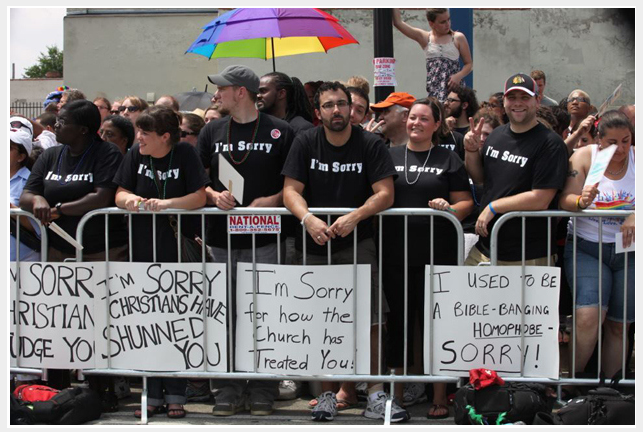
** One example of this, I make fun of calls to have a “Straight Pride,” but just as many white people don’t really understand that they have a race like anybody else, I think maybe a future direction for enhancing our understanding of Pride as a celebration is that, when we celebrate nature’s diversity of sexuality and gender, plain old straight people are part of that diversity as well, and as I said in my Sorry, Not Sorry Conversation, one of the problems with the I’m Sorry movement at Pride is that the straight people who are part of it have failed to understand what Pride is about, and they don’t belong because they don’t understand what they’re celebrating. So, increasingly, I think we need to teach them to have pride, too, much like feminism is not about hating men, and anti-racism is not about hating white people. Not a Straight Pride event, but it’s okay to enjoy your identity as heterosexual.

*** When I applied for engineering and physics graduate programs, one of the physicists who wrote a letter of recommendation for me shared that, when she herself had applied to grad school, she had found out after the fact that one of her professors, who had agreed to write her a letter of recommendation, had put, in it, that she, as a woman, had no place in physics. She found out about the letter, thankfully, because it made someone at the university to which she applied livid, and they leaked it to her. And, obviously, she managed to make it to being a professor of physics at Michigan, so she did not half badly for herself. And in case it seems like this is a problem of yesteryear, we have the current inexcusable behavior of a Nobel laureate.

Authenticity as the Sine Qua Non of the Trans Success Story, and the Virtuous Cycle of Narratives Informing Lives

I’d like to try and draw together some thoughts that evolved during dinner with a friend at Philly Trans Health Conference, over the weekend. She and I are two very different, but similarly very happy trans women. This topic of happy trans people is established as one of importance to me. I want to move our happiness from a privilege, from luck, to birthright and expectation for our people*. Much like I want to make a world where people are proud to be autistic, where society recognizes the immense gift it is given in the form of the autism family, I want to make a world where LGBT (and particularly T) people aren’t just safe, but we are truly proud.

Proud as Proud Can Be... and you can click on the flag to buy trans pride stuff from randomflyingpidgeons!

Proud as proud can be… and you can click on the flag to buy trans pride stuff from randomflyingpidgeons!

In pursuit of this goal, I made my friend, Kelly, really think during dinner**. I wanted her to evaluate, critically, what it means to be a woman*** – beyond being addressed or seen correctly by others, and certainly beyond wearing a dress or heels, and granting that our identities as women are diverse, beautifully heterogenous, and ever evolving, what did it mean to her that she was a woman? She was a little surprised at how hard it was for her to answer this question.

I asked her a second critical question – not to push her or distress her, but because I think the answer is central to our cause. Why was she happy? And if the first question was hard, the second question was far more difficult.

One piece of extremely worrisome data I want to bring into this conversation is the subset of suicides, particularly of trans youth, that have arisen recently and that explicitly do not seem to look or functional like marginalization, lack of acceptance, or oppression stories. More than a few trans youth have killed themselves in the recent past (like Kyler from San Diego), who had parents who loved, accepted, and celebrated them. Who had solid, if not world-class access to transition-related medical services. Who had schools that celebrated them – one of them was Homecoming King – and who were in at least some cases pretty well-integrated into their communities. Who do not seem to have been experiencing a lot of traumatization by way of bullying or other victimization. I think we need to stop and question why these kids are dead, and how we failed to do anything about it. And we have to recognize that just acceptance – people recognizing one’s gender identity, people supporting one’s name or pronouns, access to school, employment, accommodations – doesn’t seem to always be enough.

This is Istanbul's 2011 Pride... the change is global! (Source: Wikimedia)

This is Istanbul’s 2011 Pride… the change is global! (Source: Wikimedia)

Moreover, trans acceptance, and LGBT acceptance more broadly, is not a static picture. It has changed dramatically just in the recent history – the stuff that happened since Stonewall – and it is changing at a breathtaking, accelerating rate every day. What is the quality of evidence that acceptance is reducing suicidality in our community?

I want to propose an answer to my own question. I cannot provide an evidence basis for it, but it is consistent with my base of anecdotal evidence. I’ve quickly had the privilege not just to become a happy trans person, but to get to know a lot of happy trans people, in fact many of the most influential ones, and even to share my very life with one. And I’d like to hypothesize based on my experience of them and myself. My hypothesis is that every happy trans person begins their process of authenticity with a sincere, internal step of self-acceptance. I mean real self-acceptance. They enter transition or coming out, knowing and deciding to learn to love, who they are. They do this first, and every subsequent decision in their authenticity process derives directly from this internal conviction – a conviction not just in the truth of their gender identity, but in the goodness and rightness of their gender identity. And, this is really important, they enter into coming out and transition happy. Really happy. Although they may gain confidence, surety, ease, from things like their name or pronouns, or from transition-related medical services, they neither seek nor obtain wholeness from them. They don’t, in fact, need to seek wholeness from anything, for they enter this process with it.

Marya is amazing. So thankful for sisters like this one. Source: Mark Trockman / trockstock.com

Marya is amazing. So thankful for sisters like this one. Source: Mark Trockman / trockstock.com

When I was in the throws of surviving anorexia, like many other anorectics, I found a lot in Marya Hornbacher’s words. Her Wasted has this phrase**** all the “ana’s” knew by heart: “If I eat this apple sandwich in precisely twenty bites, no more no less, I will be happy.” We repeat a similar mantra, over and over again, as trans people, and it’s sheer and utter nonsense. If I just have the facial features I think I want, I will be happy. If I just have a vagina, or I don’t have a uterus anymore or, …, I will be happy. If I have a beard, I will be happy. If I get pronouned correctly, I will be happy. If I “pass,” I will be happy. And we continually defer happiness to some future that never seems to come. Recovery from anorexia depended (for me) crucially on rejecting the idea that I would be happy if I just lost another one, two, ten pounds, and not just because I had gone far, far beyond the place where I had ten pounds to lose.

In Christianity, there is a rift between evangelistic and liberation theologies, in that the one is interested in finding deferred happiness in heaven, and the other is interested in helping people be well and whole. The rift is old, and deep, not just in Christianity, but far beyond it. The Christ who overturned tables, fed masses, cured the sick, and befriended the harlot, is alongside the apostle, in the same New Testament narrative, who cared less for what is good and what is evil, and cared more for what is right, and what is wrong. Before that, the God that demanded the Israelites strike down their enemies and leave no survivors was the same God that demanded grapes be left on the vine for the poor and the stateless, again, the one a question of rightness and the other a question of goodness. And on it goes back, turtles astride turtles, and we are forever, the serpent and the sons of Adam, at odds, the one striking at the other’s heel, and the other smashing one’s head*****. It plays out far beyond Christianity, and it is deeply enmeshed in the way we live.

And this is where I bring to the trans community not an answer, but the right framework to find that answer. We are failing these fallen siblings of ours, trans youth and trans adults, not just because we haven’t won complete acceptance and inclusion for our kind, but because we have not taught nor empowered each other to find our identities, to take that internal step of self-acceptance that allows for and necessarily precedes the pursuit of authenticity, and in so doing, we do more than just put the cart before the horse. We kill our own kind by selling them a dream that can never succeed.

So how do we stop? How on earth do we not just stop selling this absurdism that transition or coming out experiences, in themselves, can make anybody happy?

My thoughts from dinner that night, over margaritas and excellent Mexican food, link me back now to a video that I helped do for my beloved Actors Theatre, a couple of months ago. In it, I discussed a virtuous cycle between art and life, where life inspires ever greater, more true, more honest art, and art in turns drives us towards our own truths and our own authenticities, making us better people. This is the kind of art that Actors does, and I believe desperately that this is something of which people need far more.

I am far from done in figuring this puzzle out. But my first answer to this question is that we, as visible trans people, must think of our trans visibility, our stories, our narratives, as participating in a similar virtuous cycle with all the life experiences of the trans-gentry******. If we tell stories that are focused on how far we take transition, or how much external acceptance we gain or take, we will instead participate in a vicious cycle, in which we will press our own people ever farther from the thing that could save their lives. So rather, we must tell stories of authenticity, of identity, not because others could ever take on our identities*******, but because, as iron sharpens iron, as life and art lift each other up, our authenticity and identity stories will push our people higher and elevate them in their pursuit of the self-acceptance that presages being a happy trans person.

That’s my theory. I’m all for gathering supporting data, but I’m not going to wait, because this is life and death, and as one of that minority of really, truly, madly, deeply happy trans people, I’ve got to do something. While happiness remains a privilege, like any other privilege, I need to use it not just for me but for making the world a better place.

* Consider this also a shot across the bow of those people (you know who you are) who think that misery is at the heart of trans activism, and who reject any trans person who is happy. I view happiness like I view footnotes. I put it out there until you quite consider it over the top, and then I put it out there some more. The next shot will be between the eyes, my darlings, for I am out to get your worldview.

** I also made her change our plans and go to a place where I could get reservations, because you know, that process of walking around until you find a place to eat is what leads the world to eat at TGIFridays, and life is far too short. And excellent Mexican food came with Mexican revolution – there was a handwritten sign propped in the glass above the door calling for social justice in Mexico. Thank you for that, my darling Kelly.

*** Make no mistake… this ownership of what makes a woman is the principle bullet of exclusionary feminism movements. Although I respectfully agree with these women that women are a wonderfully diverse people who defy simple definition, and the seat of our definition is not in our cleavage, our hips, our dresses or makeup or any of those kinds of things, I continue to strongly reject their claim that only the cisgender early female life experience can be a gateway to womanhood, or that women of all kinds cannot coexist and build each other up and empower each other.

**** In fairness, none of us have any idea what an apple sandwich is, and if I had reached a greater place of sureness in myself when I got to meet Marya, I would have not just thanked her for what she did for me, which was a lot, but I would have pressed for an answer on this important question.

***** I’m with the serpent, and Ruth, and Mary Magdalene, and Jesus, and all of those seeking good over evil and not right over wrong, but you knew that.

****** A very cute term I am now borrowing from Kinky Boots.

******* The boom boom I have, that all the boys chase, and all the right junk I have, in all the right places, belongs to me and no one else. Just as I can never be any better than lousy at being someone I’m not, none of you will ever be a better me than I will.

A Sorry, Not Sorry Conversation

Dis furst part dedicates to da ladeez

Dis furst part dedicates to da ladeez

I want to try and address two very different situations, involving the word sorry, and explain why, although on the surface the arrangement primarily benefits me and disadvantages everyone else*, I’m not sorry for saying I’m sorry in the one situation, and I wish you would stop saying you’re sorry in the other.

So first, the situation that should be sorry. There is so much ballyhoo about we womenfolk saying we’re sorry. We’re almost bombarded with this message, from feminist blogging, to worrisome study results measuring the concerning level of sorriness among women, to advertisers (damn you, you make us cry anyways) who sell us woman power by criticizing our behavior, and even from our feminist boyfriends who chide us for saying we’re sorry. I was particularly taken by Amy Schumer’s latest contribution to this conversation.

Sorry, Amy, not with you on this one. Although you're amazing and I encourage robust debate amongst us as feminists and women.

Sorry, Amy, not with you on this one. Although you’re amazing and I encourage robust debate amongst us as feminists and women

In the video, a panel of women scientists are apologizing over each other, and the situation is used to essentially poke fun at the way women act. Now, I really do like Amy Schumer. But normally, when we make fun of women for being women, … that’s sexism. When we implicate that there’s something wrong with women, that their preferred behavior is implicitly wrong, and that they should just be men (because men and their behaviors are superior), that’s misogyny. But we give feminists a pass to attack women, if they’re attacking women for saying they’re sorry, or for all the other behavior more common among women that some feminist or another has arbitrarily adjudicated as furthering the patriarchy. And we never ask why men don’t say they’re sorry more – we just attack women and tell them to stop apologizing – that itself should be a clue that something is… hinky.

I’m not so down with this. Scratch that. I’m so not down with this. Look, Teri, Ms. Schumer, everybody. I don’t think you understand why I apologize. This is most tellingly clear in that you don’t pay attention to all the things I’m not sorry about. I’m not even vaguely sorry for being a feminist. I’m not very sorry for bringing the revolution. You interpret me as being sorry for the space I occupy, sorry for the air I breathe, sorry for the attention I demand. What you fail to understand is that I – and I believe, a lot of the other women out there “over” apologizing, we – apologize not because of remorse or regret, but because our apologies act as a social grace. We say we’re sorry because it bridges a gap between you and us. We say I’m sorry, when we sit down next to you, because it covers over the awkwardness that lingers in the air when we sit and say nothing. And we’re also giving you an entrée to make a little small talk, or strike up a conversation with us, if you like.

Because here’s the thing. We really like it when you’re comfortable. This is perhaps a sine qua non in your budding understanding, if you’re not high femininity, of your very feminine friends and loved ones. This is really important to us – and although, on the surface, we do it for you, we ultimately do it for us, as a recognition of who we are, and for our own joy. Just like women who like to look pretty, not only like to look pretty themselves, but like to have pretty things around them**. And while we cultivate that prettiness for ourselves, we take joy in your enjoyment of it. A thing which no feminist is very willing to talk about but which any high-femininity woman knows perfectly well is this: we’re not very interested in being feminine in the middle of a forest, where nobody is around to see it***. And this scares a lot of feminists away from femininity itself. Because they’re so busy trying to rid women of objectification that they fail to understand that femininity is the oldest of performance arts.

Just like this. A cushion of air. Except without so much crying for Argentina.

Just like this. A cushion of air. Except without so much crying, not crying for Argentina.

It’s such an old art that it’s embedded into the architecture of your world****. It’s actually really important to you, too – you just don’t know it, half the time, because you float on an air cushion of our social graces without even realizing it. Just like you appreciate our beauty often without appreciating the line between a woman being the object of your admiration and a woman being objectified. You don’t notice that, when you’re around us, and we’re “over” apologizing, you’re fighting less, you feel better. And then you apply the lens of how you think, to us, because you still think we want to be like you*****.

Now maybe, we do care too much about other people’s comfort and not enough about our own. But your “intervention” in the form of criticizing what I do without understanding it isn’t helping – it just makes me feel badly about myself (which wasn’t why I said sorry in the first place, and if you thought it was, you may actually create the very problem you’re trying to avert). No. This is how many women, how femininity in general, does things. Get used to it. And masculine folk, maybe you should try extending more social grace to others. Maybe, who knows, you’ll like it as much as we do. Or maybe at least you won’t get into as many fights. Maybe your partner will even find it hot. Or, if you really can’t say you’re sorry very often, don’t – it’s okay to just apologize when you’re actually sorry. But stop criticizing my sorries – if you want to help me, because you think I don’t take care of myself, do it by investing in me and supporting me, not by criticizing me.

Sadly, this is is way more intended to help you feel better about yourself than to do any good (HuffPo, 2013)

Sadly, this is is way more intended to help you feel better about yourself than to do any good (HuffPo, 2013)

Right. So here’s the switch to not sorry, as if you thought I wasn’t pressing hard enough already. Now I know you ain’t gonna dig this. Christians, this one’s for you. And your campaign to come to Pride and say you’re sorry. Yeah, stop doing that. Oh, come to Pride. You belong – you don’t have to be LGBTQIA+ to be Family. But come because you belong. And quit with the “I’m sorry”. Quit with the “Not All Christians.” And (if you are really clueless), quit already with the #BlameOneNotAll.

If you’re not white (although I’m kind of guessing you are, #SorryNotSorry), you probably already know why. Hang in for a second and let me educate the majority culture, please. In the 1990s, there was an era of “I’m sorry” events – I think inspired by the beauty of the reconciliation in South Africa, without understanding any of its problems. A group of white people would get a group of black people to come to them, and they would apologize, and then cry and cry over their healing of racism. Yeah, and you probably don’t get why this is a problem, do you…. It’s a problem because the black / non-white people in this dynamic were basically props – they were there to get the decor right for the white people to feel the sense of forgiveness that they wanted. If you ask them, and they’re being really honest, they’ll tell you the whole thing was kind of awkward and not healing for them. They’ll tell you they didn’t ask you for an apology (and can we talk about back income, if we’re really saying we’re sorry here, write me a check). Moreover, they probably (but you may not) know that you left those events and you didn’t change the world******. And this is the way in which this process differed deeply from the goals of South Africa’s racial reconciliation – in the 20 years since those “I’m sorry” events of the 90s, those people who were sorry built communities that were more and more segregated, so that they could spend less and less time with the people to whom they were supposedly sorry. If anything, in many ways, things got worse instead of better, and in any event, while what happened was an important step, racial healing isn’t what happened.

Okay, so these guys were not too shabby. But pay close attention to everything they did, not just one thing they did. Context is queen.

Okay, so these guys were not too shabby. But pay close attention to everything they did, not just one thing they did. Context is queen.

And there it is. Changing the world. Here’s the thing straight Christian allies frequently fail to get. We don’t need you to tell us God loves us “even though” we’re gay, or “no matter” what we are. We already know that. God already knows that. It’s not even in dispute. The only ones who don’t know it… are Christians. We don’t need you to apologize. We don’t need you to tell us you’re not like the rest, any more than we need men to tell us they’re not rapists. What we need you to do, is change the world. Or more particularly, change not God (who is just fine), not Christ (who is just fine), but change Christians (who need to get back to God). Make them confront how they took religion and turned it from a vehicle of love to a vehicle of hatred. Call them out and call them in – make it clear that exclusionary practices are deeply and fundamentally inconsistent with core Christian values, but that they can return to what they once believed in. Tell them that, if they walk away from the idea that Jesus died on the cross for everybody, then whatever it is that they’re doing, it’s not Christian, and it isn’t holy, and that you can’t support their lifestyle choice, although you will not stop praying for them, nor stop hoping. If they’re the sort of people that put up angry billboards or protest marriage equality, particularly, don’t put up a competing billboard telling us you love us. Help them remember the time before their hearts were filled with hate, and help them teach themselves to love, again.

So remind them that they need forgiveness, that it’s not too late for them, and that God still loves them, even if they stopped loving God (because you can’t hate us and love God… if that’s what you think, there isn’t anything about your own religion that you get, at all). And if you haven’t figured it out, don’t do this work at Pride, because that’s not where the problem is. Go do this work at your church, at all the churches. And recognize that the problem has nothing to do with the LGBT community but is about the hearts of Christians.

And again, when you come to Pride, come to celebrate, because that’s what Pride is there for – celebrate because it is so, so good to be. Good to be me. Good to be you. Greater gift has no one ever received than this, and when you don’t get that, you struggle to belong at Pride not because we don’t accept you (we do), but because you don’t understand what we’re doing or why we’re gathering.

So stop saying you’re sorry, and get to work. And stop saying I need to stop saying I’m sorry, and get to work, and let me do the work I need to do. Because there is so much work to be done. And doing that work alongside me is the only thing that can make you my ally.

* Interestingly, I have been accused both of apologizing excessively and of being excessively unapologetic. Curious and curiouser. But you’ve got ninety nine problems, and this bitch ain’t one. Speaking of which. I’ve been meaning to write a piece about bitch pride. But you’ll have to wait for that, pups. Even though you recognize that this footnote is nothing more than excuse to use the word bitch. Three times.

** And the gender binary is at the heart of why they make an exception when it comes to men, who they might legitimately not value heavily on their prettiness, but whom they value for a host of other characteristics.

*** In defense of pointing out the obvious, especially to ourselves as obvious, I would point out that intersectionalism, which often seems to blow the minds of mainstream feminists, was not really an attempt to say something profoundly new, but to inject what had always been obvious to black women, just from having to integrate feminist movement into their complicated lives, into the feminist vernacular, in essence to remove the invisibility from it so that white feminists could see what was directly in front of their own noses. But that’s what happens when you bathe in isms – obvious stuff gets hidden in cloaks of invisibility.

**** So like any great architecture, if you stand back and take it in, it’s breathtaking, but you’re also allowed to let it make you whole and nourish you while barely even noticing it is there.

***** The most savvy of readers will note that I used to rail against the idea of difference feminism. The reason I hated it was not because I didn’t believe in difference – viva la difference – it was because there was no critical assessment of women’s beliefs or values in most of difference feminism. I believe very much in that critical assessment, and in fact, I claim that I’m offering a deeper, more nuanced, and truer assessment of this whole business of us saying we’re sorry, than the people who are telling you to stop apologizing.

****** Which to me, is maybe the second most damning of sins, behind failing to live for oneself.

Sexism is bad for men, too

A short thought, but long enough to put here instead of just making it a Facebook post!

Sometimes, I think the Economist really doesn’t get it (and they still use some languaging that sounds very much like they don’t get it). They wrote a reactionary article a few years ago, on the idea that the Y chromosome was being evolved out of the gene code, because it is so small (in a kilo-basetide-pair sense), which came out shortly before scientists figured out why it was so small, and why that allowed it to have such a strong influence on the future of the genome.

"The Weaker Sex," The Economist, 2015.

“The Weaker Sex,” The Economist, 2015.

After giving me a moment to simmer down, I think this article, when you remove the inanity, really makes a simple point on which the Sisterhood has long agreed, but which feminist movement has not always effectively conveyed, and which feminist theorists have at times butchered:

Sexism itself, is BAD FOR MEN (and not just for women). Although, in some ways, men reap benefits from the patriarchy, in insidious but far more damning ways, they are hurt by it. This is why the good ones among the Sisterhood care so much about our menfolk. This is why I care so much about my own Teri​’s pursuit of authenticity as a man.

Because just as much as I live in a toxic bath of sexism that sends me negative messages about myself as a woman, and as much as I am held in chains, often trapped beneath the surface of that bath from the breath of good air, they, our menfolk, they are, too.

How I Became a Real-Life, Fairytale Princess

I had the opportunity to provide a lunchtime keynote speech, participate in a panel, and provide a workshop during the 2015 annual conference of the Young Nonprofit Professionals Network of Grand Rapids. I was particularly honored to speak alongside some really powerful guests, including a number of personal friends and the tremendous damali ayo. I wrote a short, separate post with a link to this full text and also a link to my presentation visuals for the afternoon. This is the full text of my lunchtime keynote.

Thank you so much for inviting me to speak, today. I’m thrilled to be here, with all of you, with all of the energy, the passion, the dedication, and the commitment you bring to the various dreams and missions you are carrying out. Uniting them is a drive to make this world a better place, not just in the abstract, but in the actual, within our own lifetimes and lovetimes. And thank you, as well, to damali ayo for making time to be here with us today – your words and your work are so inspiring, and I am so thankful to have had and to be having the opportunity to learn from and with you.

This afternoon, I will be giving a more formal presentation, Queering the Value Equation, and I hope you come (not that the other choices aren’t very good, too, but come to mine!). Right now, while you digest both your food and the ideas you heard this morning, I want to get a little more personal. I’ve written before that I am a real-life, fairytale princess. My dream and my mission revolve around young children, so I’m going to do what “kid people” do, and offer you a little storytime. For your lunchtime story, I’d like to tell you how I got to princesshood. So, I’m going to tell you part of my story, the mixed up tale that brought me to the autism revolution, and how I found myself, and love, along the way. In my time at Hope Network, I’ve gotten the chance to learn from an excellent teacher of storytellers, but I can’t make a story really, really good all by myself. For a story to be really, really good, though, you’ll have to believe alongside me. I hope you’ll do that.

Like any good story, it’s a long story. I don’t have time to tell you all of those parts here, today, but I do want to start briefly with how I became a nonprofit professional – it wasn’t my original aim. I actually studied engineering in college, and liked it enough to get a master’s degree. I worked in the engineering world for about five years, and although I think people have an increasingly hard time believing it, and sometimes I myself have a hard time believing it, I was actually a really good engineer. I learned, in particular, the art of magic-working as an engineer, and particularly that magic doesn’t come just from one’s own internal power, but it comes from connections and community. I had the chance, relatively late in my five year engineering career, to take on “fixing” a project that should have had a five year development cycle, but needed to be started over, eight months before the finish line. It was maybe the first time in my life I really worked magic, and it taught me an important lesson. What I did to pull it off wasn’t in the technology – I could solve a mean equation, but that wasn’t what helped me do what needed to be done. Rather, it was deeply within relationships. Building relationships with our customer to help them understand just how perilous the situation was, without paralyzing them with fear. Building relationships with our plant staff, who were often angry, burnt out, and felt under-appreciated. Who were never valued too much, but without whom the miracle couldn’t happen. Managing all those feelings, all those fears, pushing them but not overwhelming them. Bringing them together, even if they didn’t realize it. To make magic happen. And I – we – we did it. We launched that product on time. Not quite without a hiccup, but those are stories for another time. Nonetheless, we launched our product on time, and it worked, and the magic we wrought together saved the day.

Ummm, yeah, it didn't work anything like this.

Ummm, yeah, it didn’t work anything like this.

It worked, but it was the beginning of the end. After I’d proven to myself that I could do that – not just solve equations, not just make scientific discoveries or extend science, but build things that actually worked – I knew that I wasn’t where I was supposed to be. For me, personally, although I like solving problems, I wanted a more human, connected, personal set of problems to which I could take my analytical abilities. That took a while to find. Professionally, I spent more than two years taking night classes while working 60 hours a week or more as an engineer. I dismissed some ideas, for me, right away – going to law or business school – there isn’t anything wrong with either of those things, but for me, they were dangerous because they were surface and not deep gratification of my need to change. I didn’t want to put the effort in, just to end up behind another desk, pushing other paper, feeling equally unfulfilled. See, this is something you have to know about me – I can’t live, if the fairytale dies. I don’t have life events. I go on adventures. I don’t mean taking exotic vacations (the truth is that I’m usually too busy trying to change the world to take vacations, but I’m trying to learn, I really promise I am), but this is rather how I’ve always needed to see my life, and at that point, as a young professional, I was finally committing to finding some way to make my life full of adventure, to take my rightful place. Maybe you’ve had a moment like that in your life – where you could do what was safe, or you could do what was good. Like Aslan in C. S. Lewis’s stories, I chose in that moment to be good, but not safe. And I needed to do that, to inch closer to being the fairytale princess I was supposed to be.

Meg Murry, I will always be in your debt.

Meg Murry, I will always be in your debt.

About that… being a fairytale princess. To do that, I needed to find my voice as a woman. Which was somewhat complicated by this whole business of people thinking I was a boy. For a long time, I’d been cultivating girl and women role models, from Meg in Wrinkle in Time and Madeleine L’Engle, to Elizabeth Bennet and Jane Austen, to Toni Morrison and Zora Neale Hurston, and their characters, later, in college. I learned to be as much like my inspirations as I knew how to be while letting people continue thinking I was a boy. In the middle of my engineering career, I had a little time off to myself. Really, I got laid off a couple weeks before 9/11, and there just weren’t jobs to get. During that time, I found feminism, which made things better, and worse. Gloria Steinem and others contextualized in a powerful way for me, what I had already found in Morrison and so many others. They taught me what women’s voices sounded like, and they taught me how to know, instinctively, when they were absent, and how to think about drawing them out (which is the “better” part). But I couldn’t quite master drawing my own out (which is the “worse” part).
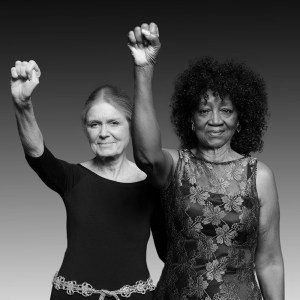
These sisters, calling me.

These sisters, calling me.

So, my own woman’s voice was the one most markedly absent in my life. I didn’t really know what to do about that, yet. As I continued trying to molt the image of myself as an engineer, which wasn’t for me, and try to find some kind of way to the butterfly underneath, I didn’t find me, quite yet, but I did find psychology. I took a class, and I loved it. It was, admittedly, human sexuality (I hadn’t taken psychology ever, before that, except one terribly boring high school psychology class, about ten years earlier, and human sexuality is nothing if not completely unboring). How could that go wrong, right? I took that class thinking, well, I don’t know what I want to do with my life, but I ought to stay sharp, until I figure it out. It was sort of like mental training. But it was amazing – I found myself intellectually stimulated, asking questions, growing as a person. So I took another. And I asked myself, what am I looking for, really? Why am I looking for my path, when it’s right here? So I set out to become a psychologist, because it brought out my passion, which ultimately led me to graduate school at Florida.

This came just a little bit later!

This came just a little bit later!

But I wasn’t a princess, yet. I had, actually, found this exotic thing called a “transsexual” (that’s the word they used, in those days). But that whole thing sounded, well, not me. There were too many problems with it. There was some kind of arcane process wherein some kind of surgery turned you into something you were not. But I didn’t want to be something I was not. I wanted everyone to know what I actually was. If there’s good magic and dark magic, that sounded an awful lot like dark magic, at least the way it was presented to me and the way I understood it at that time. And also I didn’t want to be a freak show – I totally respect people who flaunt societal expectations, and I think a new wave of people who are socially non-conforming in new ways, is doing new and really exciting things. In other ways, I, myself, am proud to not conform, but the truth is that I also kind of like fitting in, because I really love connectedness, and for me, if I couldn’t have that, I wouldn’t be authentic to me. In hindsight, since it’s such a trite plot-line in adventures, I had an obligatory near-miss with my destiny. I figured out I was indeed trans (not the arcane and dangerous sounding thing I’d heard about, but the real thing), but I figured it out just a few moments too late. About a year after I came to that realization, Jenny Boylan was the first modern, American trans professional to really tell her story of coming out while retaining her profession and her community – her connectedness. In fairness, I had missed Jan Morris entirely, who also would have appealed more to my sensibilities, than what I found, and she had originally published her book long, long ago. But, anyways, I missed the tidings of good news that were already out there, and I missed the tidings of good news that came just a few moments too late, and I made the strategic decision that coming out, and being fully authentic, wasn’t right for me (yet).

While I focused on getting out of engineering and becoming a psychologist, I accepted, but hid, this idea that I was trans. Although non-binary identities weren’t really a thing that I had been exposed to until after I ultimately came out, I essentially tried to create one for myself. Non-binary identities are great, when they’re representative of that towards which you are running, but they’re not so good when they’re just a form of running away. I didn’t talk at all about being trans, but I gave myself fairly broad ranging permission to stop much of the pretending. I did that, ultimately, for ten years. That identity occasionally made people uncomfortable, but far more people accepted me than didn’t, and I guess it was a gateway to authenticity. It wasn’t authenticity, however, and if you’ve ever been “this close” to what you’d always wanted, you know that it’s not a place to hang out for extended periods of time – that gets excruciating. And it was excruciating, although the truth is also that I made so many friends during those days, I had so many adventures, and I experienced so much joy, too.

In the meantime, though, adjusting to psychology as a culture took some work. I survived more than few faux pas, not the least of which was interviewing with someone (who would become my dissertation chair) who had been the president of two international bodies governing my sub-field and was in the process of becoming the leader of the other one, and telling him that I didn’t know exactly what this “neuropsychology” was about, but neuropsychologists seemed to ask interesting questions, and they work with interesting patients, so would you still let me in? Surprisingly, he did. It took my path away from Los Angeles, where what I thought I wanted had been, and to Gainesville, Florida, where what I needed was.

Seriously, you guys, I did not see either of these two, like, ever.

Seriously, you guys, I did not see either of these two, like, ever.

Gainesville was an adjustment, itself, too. Probably none of you are as naïve (or stupid is a good word, too) as I was, to think that all of Florida looked like a scene from those old Miami Vice shows. But that’s what I thought, and I was all ready to start stocking up on linen blazers and pastel. I arrived in Jacksonville (where my parents had actually moved, coincidentally or not so coincidentally, depending on how you look at it). Jacksonville is much more Gone With The Wind than it is Miami Vice. And then I got on the road, and I drove to Gainesville. And the swamp on the way to Gainesville is way more Anaconda than it is Miami Vice.

Also, when I got to Florida, I found I had to do rotations with children, and this was kind of a problem. The thing is, I was all excited about finding psychology, but I sort of hated kids. The only exposure I had to kids, besides having been one, was being stuck in nursery by my church, because I was a warm body, and it was my duty, which of course came with no training, and being basically thrown into a room full of crying babies. But I knew I had to learn, and so I decided to do what Buddhists call turning into the sharp points, and instead of minimizing the role of kids in my life, I started spending lots of time volunteering with them, at one of Paul Newman’s Hole in the Wall Camps, Camp Boggy Creek. That changed a lot. The Hole in the Wall Camps are camps for kids with serious illnesses. They’re the sort of place that generally elicit one of two polar-opposite responses, of overwhelming joy, or of revulsion and pity, and it says everything about you which response you have. But they’re also places where you can learn something. I’d never thought of childcare as something in which one learns skill. I thought it just took talent. I’ve never been very good at being talented, but I’m a great learner. And when I did learn, it turned out kids actually kind of liked me. I was good for them. And they were good for me. They wanted – needed – my friendship, my love, my spirit of adventure, but never my pity. And knowing them in their joy was that deep sense of fulfillment and connectedness that had brought me in search of a new career to begin with. It must have had some impact. A few months later, people in my graduate program thought I was studying to be a child psychologist, even more than a few of the child psychology trainees thought that.

That Camp was – is – a place where love burns bright. The love burned bright there, because, there, if only briefly, the fairytale was real. When I was there, I was a fairy-tale character. But far more importantly, getting to understand kids was another pivotal moment in my professional development. When I was an engineer, I had learned that magic was real, and that it came from my connections and relationships. Spending weekends at Camp Boggy Creek and my weekdays in a hospital, one foot in the fairytale and one foot in “reality,” I learned that I could bring the fairytale back with me. Much as the magic, once I learned to unleash it, it started following me everywhere I went. I found that I could create a forcefield around me, and in my forcefield, I could be a real-life fairytale character. Being a real-life fairytale character let me learn to be a doctor without pity, which is the only good kind, because pity has never really helped anyone – if that’s the other thing my kids taught me in those years, it was that, no matter how rough the things that were happening to them were, they never, ever wanted pity from me.

So, things were getting good. Now, I was just missing the princess part. I brought the magic and the fairytale with me to Chicago for a year. I got to live around the corner from the Obamas (not that I ever really saw them). And go on more adventures. When I got my marching orders for fellowship, it took me, surprisingly, back here, to West Michigan (Holland was my home for the second half of my childhood, but I hadn’t really planned on leaving the South, once I fell in love with it, let alone coming back to West Michigan). So, back to Grand Rapids I came, and this was where all the rest of the pivotal events in my ascension to princess status happened.

The next pivotal event was Hope Network. Although, after learning the fairytale was real in Florida, I had continued to work with kids all the way through my time there and in Chicago, I had actually wound up, at Mary Free Bed, in a fellowship working with adults. Although I had ranked the position really highly in the match, it hadn’t been perfectly what I was looking for. In a different way, Hope wasn’t what I was looking for, or what I thought I was looking for, either – I knew how to diagnose autism, but I didn’t really know too much about an autism center. It was kind of funny, really, because one of my dear friends in graduate school would have thrilled at this job, back then, and she got the job I thought I needed (at a famous research hospital), and I got the job she thought she needed. And we’re both the happier for it. I accepted a position with Hope way in advance of finishing my fellowship.

And then I got to Hope – you know, there have to be dramatic turnarounds in stories like this, and this is where the lighting turns dark and the music dips into a foreboding, minor key. The thing about stories is, the good ones never go in a straight line. I walked into an empty clinic. Having finally signed the mortgage on my first home, I was surprised with an unannounced non-compete agreement, but then far more worrisome, a ghost town. We had half a dozen people on staff, but we weren’t serving any kids, maybe for an hour or two a week, at most. We had a practice manager on staff, but we didn’t have a practice. And I started seeing patients and quickly ran rings around the rest of the clinic combined, but I couldn’t generate enough revenue to sustain us all. So I did a lot of going home and crying myself to sleep.

As luck would have it, my boss, who directed the Center, and who had no idea what he was doing, took us to a conference in Philadelphia that winter. There was one other person on the team who seemed to also be a heroine plucked out of her story and placed in this wasteland, my beloved friend and ever since then, my left-hand woman, Elyse. Heroines find other heroines. In this case, we got frozen yogurt. And I asked her what we were actually supposed to be doing – you know, if I had a magic wand (I didn’t yet, back then – I do, now – I got it for my birthday and it lights up and it’s kind of wonderful), I asked her, what was our Center supposed to look like? She was the only person on the team to whom I didn’t need to say, “Because you know it’s not supposed to look like this.” Because she knew, already. And Elyse told me what she knew – which turned out to be a lot – she was the first behavior analyst I really got to know well, and although I’ve gotten to know many more since then, she’s still one of the best I know, and she’s still my left-hand woman, although now our triumvirate is completed by my right-hand man, Joe. And there was my next lesson… sometimes, fairytale princesses need to stage coups, you know, build armies, ignite revolutions, raise hell.

Before I was all like,

Before I was all like, “Welcome to the Revolution!” I was like, “Awww, crap, what have I gotten myself into?”

Now, handling court intrigue is on my short list of talents (this is not one of my more endearing qualities, at least to the HR people). So, I sharpened my knives, but I didn’t even have to depose that director. Amusingly, ridiculously, call it what you want, he got re-tasked a couple months later. The next director – she was the fifth of the Center, in the two years it had been opened, listened to me in a way he had not. She encouraged me when I asked questions. She usually didn’t know how to get the answers, but she always understood why I was asking and never wrote me off. Like any good fairytale, friends and allies are where you least expect them. She got re-tasked, too, though, and eight months after my first job working as a psychologist, I was asked to direct the Center. So, I went from never having any formal management experience to having all this responsibility. Also like any good fairytale, alliances shifted and evolved – when I first met the major donor who had made my Center possible, she stormed in yelling about how the front office never answers the phone. About what she was angry, I had no idea. But I found out, and fixed it, and we’ve been friendly ever since, and she later proved to be a really powerful ally (that’s the thing, the best people make the best friends or the worst enemies, and it’s all a matter of perspective). In that first year of rebuilding the Center (this was three years ago), I spent a lot of time responding to people who had never tried to build an autism program, let alone fix the one we already had which was flopping around like a fish on a boat deck, but who still knew better than I did what it needed to look like. I got pushed, over and over, into death by committee instead of design thinking (sorry, I love freedom, and I empower my people, but I don’t really believe that dreams are democracies). And I had to grow a backbone, and quick (not all of you went to grad school, but grad school isn’t exactly built, too often, around encouraging the idea of backbone … all too often, we’re selected as much for our smarts as we are for our sense of masochism).

It took time, but it worked. Fortuitous winds blew. I got to be involved in changing Michigan law so that kids with autism could get the help they need. I had to “fake it till I make it” with respect to being an autism expert, and I read a lot of journal articles and listened to a lot of science, and I got there. I still think being an autism expert means I’m only marginally less ignorant than the rest of the population, because we know so little about autism, but I did establish myself, as rightfully as most people can claim it, to be a little bit of an expert. And a team started growing around us, and we started delivering results. By the end of our Fiscal Year 2013, we were getting close to fifteen times the size we’d been when I started two years earlier. Little kids were thriving – learning to communicate for the first time, learning to learn, learning to play, learning to have a brighter future. Sometimes – not always – they did so well that people wouldn’t believe it, even though they were watching it with their own eyes. Parents were going from autism victims and survivors to autism advocates. And we were building community.

After I became Director of the Center, I was packing up files the prior directors had left behind, and I found a printed out e-mail with my CV in it. It was written to the director who had hired me. It said, to my great amusement, that I wasn’t a very good candidate for the job, and I really didn’t have much experience or seem very promising, but the recruiter thought she ought to at least pass on the resume, anyways. I still cherish that letter – I’m going to get it framed at some point. And it’s yet another time in this story when I had a surprise up my sleeve. What can I say? I love an underdog story.

But I was still hiding. That summer, I brought friends to Actors Theatre (if I can put in a brief plug – go see their plays. They tell stories no one else in Grand Rapids tells, and they are stories that we all need to hear). They put on a play called Looking for Normal. In the play, what starts out as an apparent mid-life crisis turns on its head, when the main character admits to family for the first time that they are transgender, and need to transition, or start living authentically as who she is supposed to be. I was transfixed. And squirming – yes, yes, I know that’s an oxymoron, but never mind that. I was waiting for people to jeer or laugh. I was waiting for people to get pitchforks and torches out from under their seats (you know, if people try to sneak a text message in during the middle of a play, they would try and sneak pitchforks into the theatre). But they didn’t. They gave the play a standing ovation, cheering and cheering. And my assumptions about what I couldn’t do, myself, turned upside down.

This is the next to last lesson I learned, but it’s the most important. I could wield the magic, I could live in the fairytale, and even bring it home with me, I could have the dream, but it would be just that – a dream, just for a time, still pretend – if I was still in hiding. Hiding wasn’t where I belonged, and until I took my rightful place, the dream couldn’t come true, couldn’t be real or permanent. I’ve always taught my team the belief that we make a long-term commitment, to hold the hand of the AutismFamily, to be an adopted part of that family, and that we can’t just make them a promise today, but we have to build, and to be, in such a way that we can keep that promise tomorrow, and five, ten, fifteen years, or more, down the road. Just as we couldn’t make decisions that would let us serve them now, but then have to shut the doors in a year and leave them, stranded by the side of the road, I couldn’t keep surviving like this, and until I could come out of hiding, I wasn’t really in a position to make anyone, including this family I loved so much, long-term promises.

So, I took a deep breath. The fall of 2013, I invited one of the friends I’d taken to the play for coffee. And I came out. For the first time, ever. And like the theatre goers, but in a far more powerfully personal way, she didn’t laugh, jeer, doubt, boo, turned out not to have brought her pitchfork, but she accepted, believed, encouraged, loved. That was so profound that I didn’t sleep at all that night. I came out to another person, and another, and the same thing happened, except for the not sleeping part – I love to sleep, usually. In December, I asked my Executive Vice President of Talent Management to coffee. I came out to her. She took a deep breath, and she said, “We want you to do this right here. You tell us what you need.” I came out to my own manager at the time, another EVP, and she did the same. They came out to my CEO on my behalf, and he did the same. When he in turn came out on my behalf to my board, the benefactress who had come in yelling about the receptionist all those months earlier was my most passionate defender. All the people who shouldn’t have – the conservatives, the clergy, the risk averse – they supported me. In the meantime, I kept coming out in my personal life. To my astonishment, no one rejected me (and really, no one ever has). Because relatedness and connectedness is really at the center of everything I am, I had a really big professional network, plus almost fifty families in our day therapy program, hundreds of families I saw as evaluation patients, a lot of people who needed me to come out to them. So I did a lot of coming out. Which is kind of good, because, after a while, you know, I started to re-learn confidence. Hundreds of people have accepted you so far. Maybe your carriage isn’t ever going to turn into a pumpkin, and maybe you don’t need to lose a glass slipper at all. Parents responded with an awful lot of hugging and crying. With more than a few “I thought you were going to say you were dying, or that you were moving away, this is great!” And a couple of, “You know, we know a thing or two about having a child who wasn’t anything like we thought they would be, and then realizing they’re pretty great. You’ll be fine.”

In February 2014, I flew to Florida to come out to my parents. I didn’t really know what to expect, although I didn’t really expect them to do anything crazy. But I had in part delayed coming out all this time for fear of hurting them. I was ready, if it really came to it (fairytale princesses must be willing to risk everything) to sit on the curb, call a taxi, and go straight back to the airport. My daddy said, “I don’t know why you came all this way to ask if I accept you. Of course I accept you. You’re my child.” My mamma (my original inspiration for taking no prisoners), lived up to form and said, “If anyone has a problem with it, they have to come through me.”

It took a lot of planning, but I ultimately transitioned at work about ten months ago – although it seems like it was a lifetime ago, and in many ways, it was. The AutismFamily accepted me as their own, just as it always has. We planned for “acceptable casualties” when I came out, but we didn’t lose any patients. Rather, my Center became sustainable for the first time, ever, in the middle of me coming out. My team celebrated me (and may possibly have gotten me drunk, but don’t tell HR that!). While I was walking through the doors of my Center as myself, for the first time, we were passing the million dollar annual revenue mark, for the first time, and we’re on track to pass the two million dollar mark easily, a year later. We keep running out of space and we’re not even slowing down, but learning to move faster. But much, much more importantly, and this is yet another lesson – I learned that, as a leader, when I was brave, my bravery had an amplifying effect. Far from being afraid or rejecting or running away from who I was, I found, over and over again, that people saw me as brave, and when they did, they decided to be brave alongside me. In their eyes, I saw love, yes, and acceptance, but I saw something much more profound – in allowing them to love me, I gave them pride. People with pride can do anything.
This Prince Charming, though.

This Prince Charming, for real

Just one thing left for this story, right? Prince Charming? Yes, that happened, too. In January of 2014, when I wasn’t looking for love, a friend who is never social asked me to come out for a drink. I couldn’t say no. I teetered up the icy back fire escape of the restaurant, trying not to fall. At the top of the stairs was Teri, in his vest and necktie, smoking a cigarette (of course I made him quit) with friends. He opened the door for me, and our eyes met, and I knew. I got him to come over and say hello, found an excuse to keep talking to him, met up with him a few more times in a group, and then we went out on a date. He almost didn’t come, because his car wouldn’t start, and he didn’t have any money. So I picked him up (I might be a Princess, but this isn’t the old days anymore, you gotta do what you gotta do). He seemed nervous, and I touched his arm to reassure him (and turn up the heat). Apparently that’s when he finally figured out it was really a date. He didn’t kiss me, that night, but he did the next time. And we’re enjoying living happily ever after, even if our life is still full of dragons that need dealing with and villages that need help. I encourage Teri’s creativity as a writer and passion for serving youth through the fabulous youth group at the Network, Grand Rapids’ LGBT Community Center, and he encourages me in my role in the autism revolution and in my own role as an LGBT advocate. There isn’t really a good lesson in this part of the story, except, if your Prince Charming (he, she, or they) opens the door for you, and your eyes meet, and you fall in love… for the love of God, don’t ever let go.

So mine is a modernized, but real-life, fairytale story, of a princess whose dreams came true. I’m a princess who took her castle from an embarrassment to something for which people move to Grand Rapids, just to bring their kids. I’m a princess who has created almost fifty full-time jobs in the last four years, with lots more on the way – not just jobs, but with a career pathway, professional development. Something like 30% of my staff is pursuing graduate education – when I say I’m in the business of helping kids chase their dreams, I get to have a broad definition of kids. I’m a princess who added more than two million dollars a year to the local economy and is just getting started. Who taught a large non-profit a thing or two about its own mission. And along the way, found not just the love of her Prince Charming, but a whole lot more besides that.

So, adding up all the lessons along the way, because storytime is almost over, the moral of my story, dear ones, is simple, and complex. It isn’t that magic is real – of course it is, any child knows that. It isn’t that life has purpose, anyone who’s really lived knows it does, and if it didn’t come with purpose, they made purpose. It isn’t that you can survive being different – I’m neither the first nor the best to do that. It isn’t that there isn’t any kind of love except love given freely – I can’t love against my will, and neither can you. It isn’t that we used to leave half the talent on the table, because we wouldn’t hire women, and now we leave talent, still, on the table, when we won’t hire ethnic, gender, or sexual minorities, again, you’re smart people, and you can do basic math. My moral isn’t any of those things.

I tell my team one more thing I want to share with you, which is really the moral of my story. I tell them there are two autism revolutions. The first, and less interesting one, is the one we bring – helping identify kids at very young ages and providing them the intensive therapy they need to learn to talk and listen and play and learn, so that they can chase a future of their own choosing. The second, and far more interesting autism revolution, isn’t anything we do at all. It’s the unexpected, unknown, unforeseeable ways that our kids are going to change the world, armed with the skills we’ve given them. The moral for our lunch story-time is much the same. My diversity moral isn’t that I was better for Hope Network embracing me (although I was), but it is about how Hope Network became better when it helped me stop pretending. My moral is that when we take the risk, collectively, organizationally, together, to let our people live out their fairytales, let them unleash their magic, give them the freedom to rebel against injustice, let them find the loves of their lives, dreams come true. We stop being 501(c)(3)’s and NPOs and all the acronyms and codes and all the blah-blah-blah, and we start being those places where the dreams come true. As leaders, we stop managing departments and we start laying the seeds that will change the world. That is your destiny, and nothing less. You have no idea what your dreams, if you allow them to come true, will do, and you have far less idea what the dreams you build in future generations of warriors and princesses will be or what they will do, but if you follow that path, it’s going to be breathtaking, and just like me, although somedays, it’ll be hard, you’ll never, ever regret it.

Thank you.