How I Became a Real-Life, Fairytale Princess

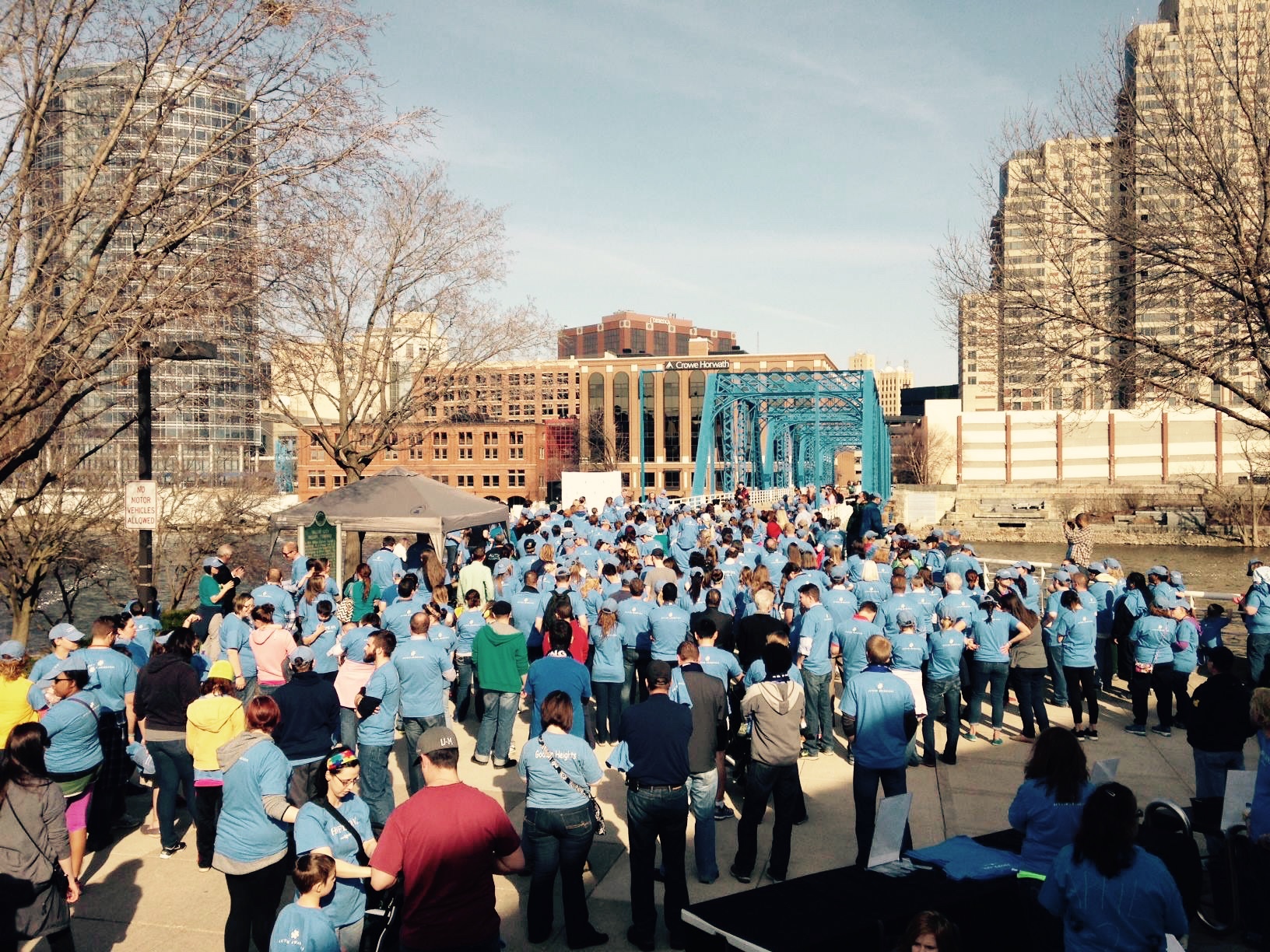
I had the opportunity to provide a lunchtime keynote speech, participate in a panel, and provide a workshop during the 2015 annual conference of the Young Nonprofit Professionals Network of Grand Rapids. I was particularly honored to speak alongside some really powerful guests, including a number of personal friends and the tremendous damali ayo. I wrote a short, separate post with a link to this full text and also a link to my presentation visuals for the afternoon. This is the full text of my lunchtime keynote.

Thank you so much for inviting me to speak, today. I’m thrilled to be here, with all of you, with all of the energy, the passion, the dedication, and the commitment you bring to the various dreams and missions you are carrying out. Uniting them is a drive to make this world a better place, not just in the abstract, but in the actual, within our own lifetimes and lovetimes. And thank you, as well, to damali ayo for making time to be here with us today – your words and your work are so inspiring, and I am so thankful to have had and to be having the opportunity to learn from and with you.

This afternoon, I will be giving a more formal presentation, Queering the Value Equation, and I hope you come (not that the other choices aren’t very good, too, but come to mine!). Right now, while you digest both your food and the ideas you heard this morning, I want to get a little more personal. I’ve written before that I am a real-life, fairytale princess. My dream and my mission revolve around young children, so I’m going to do what “kid people” do, and offer you a little storytime. For your lunchtime story, I’d like to tell you how I got to princesshood. So, I’m going to tell you part of my story, the mixed up tale that brought me to the autism revolution, and how I found myself, and love, along the way. In my time at Hope Network, I’ve gotten the chance to learn from an excellent teacher of storytellers, but I can’t make a story really, really good all by myself. For a story to be really, really good, though, you’ll have to believe alongside me. I hope you’ll do that.

Like any good story, it’s a long story. I don’t have time to tell you all of those parts here, today, but I do want to start briefly with how I became a nonprofit professional – it wasn’t my original aim. I actually studied engineering in college, and liked it enough to get a master’s degree. I worked in the engineering world for about five years, and although I think people have an increasingly hard time believing it, and sometimes I myself have a hard time believing it, I was actually a really good engineer. I learned, in particular, the art of magic-working as an engineer, and particularly that magic doesn’t come just from one’s own internal power, but it comes from connections and community. I had the chance, relatively late in my five year engineering career, to take on “fixing” a project that should have had a five year development cycle, but needed to be started over, eight months before the finish line. It was maybe the first time in my life I really worked magic, and it taught me an important lesson. What I did to pull it off wasn’t in the technology – I could solve a mean equation, but that wasn’t what helped me do what needed to be done. Rather, it was deeply within relationships. Building relationships with our customer to help them understand just how perilous the situation was, without paralyzing them with fear. Building relationships with our plant staff, who were often angry, burnt out, and felt under-appreciated. Who were never valued too much, but without whom the miracle couldn’t happen. Managing all those feelings, all those fears, pushing them but not overwhelming them. Bringing them together, even if they didn’t realize it. To make magic happen. And I – we – we did it. We launched that product on time. Not quite without a hiccup, but those are stories for another time. Nonetheless, we launched our product on time, and it worked, and the magic we wrought together saved the day.

Ummm, yeah, it didn't work anything like this.

Ummm, yeah, it didn’t work anything like this.

It worked, but it was the beginning of the end. After I’d proven to myself that I could do that – not just solve equations, not just make scientific discoveries or extend science, but build things that actually worked – I knew that I wasn’t where I was supposed to be. For me, personally, although I like solving problems, I wanted a more human, connected, personal set of problems to which I could take my analytical abilities. That took a while to find. Professionally, I spent more than two years taking night classes while working 60 hours a week or more as an engineer. I dismissed some ideas, for me, right away – going to law or business school – there isn’t anything wrong with either of those things, but for me, they were dangerous because they were surface and not deep gratification of my need to change. I didn’t want to put the effort in, just to end up behind another desk, pushing other paper, feeling equally unfulfilled. See, this is something you have to know about me – I can’t live, if the fairytale dies. I don’t have life events. I go on adventures. I don’t mean taking exotic vacations (the truth is that I’m usually too busy trying to change the world to take vacations, but I’m trying to learn, I really promise I am), but this is rather how I’ve always needed to see my life, and at that point, as a young professional, I was finally committing to finding some way to make my life full of adventure, to take my rightful place. Maybe you’ve had a moment like that in your life – where you could do what was safe, or you could do what was good. Like Aslan in C. S. Lewis’s stories, I chose in that moment to be good, but not safe. And I needed to do that, to inch closer to being the fairytale princess I was supposed to be.
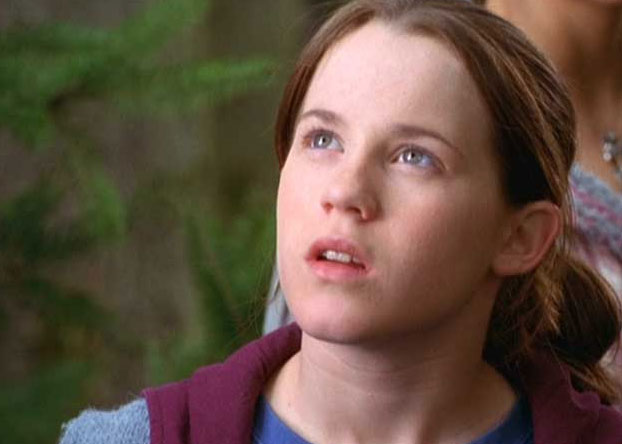
Meg Murry, I will always be in your debt.

Meg Murry, I will always be in your debt.

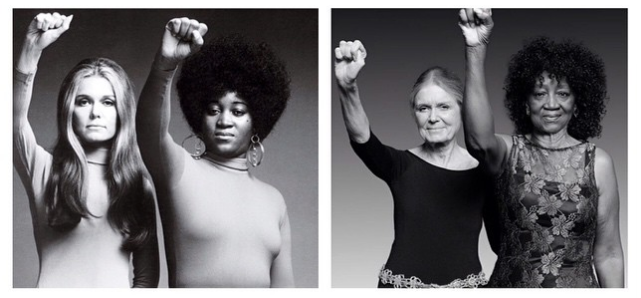
About that… being a fairytale princess. To do that, I needed to find my voice as a woman. Which was somewhat complicated by this whole business of people thinking I was a boy. For a long time, I’d been cultivating girl and women role models, from Meg in Wrinkle in Time and Madeleine L’Engle, to Elizabeth Bennet and Jane Austen, to Toni Morrison and Zora Neale Hurston, and their characters, later, in college. I learned to be as much like my inspirations as I knew how to be while letting people continue thinking I was a boy. In the middle of my engineering career, I had a little time off to myself. Really, I got laid off a couple weeks before 9/11, and there just weren’t jobs to get. During that time, I found feminism, which made things better, and worse. Gloria Steinem and others contextualized in a powerful way for me, what I had already found in Morrison and so many others. They taught me what women’s voices sounded like, and they taught me how to know, instinctively, when they were absent, and how to think about drawing them out (which is the “better” part). But I couldn’t quite master drawing my own out (which is the “worse” part).

These sisters, calling me.

These sisters, calling me.

So, my own woman’s voice was the one most markedly absent in my life. I didn’t really know what to do about that, yet. As I continued trying to molt the image of myself as an engineer, which wasn’t for me, and try to find some kind of way to the butterfly underneath, I didn’t find me, quite yet, but I did find psychology. I took a class, and I loved it. It was, admittedly, human sexuality (I hadn’t taken psychology ever, before that, except one terribly boring high school psychology class, about ten years earlier, and human sexuality is nothing if not completely unboring). How could that go wrong, right? I took that class thinking, well, I don’t know what I want to do with my life, but I ought to stay sharp, until I figure it out. It was sort of like mental training. But it was amazing – I found myself intellectually stimulated, asking questions, growing as a person. So I took another. And I asked myself, what am I looking for, really? Why am I looking for my path, when it’s right here? So I set out to become a psychologist, because it brought out my passion, which ultimately led me to graduate school at Florida.

This came just a little bit later!

This came just a little bit later!

But I wasn’t a princess, yet. I had, actually, found this exotic thing called a “transsexual” (that’s the word they used, in those days). But that whole thing sounded, well, not me. There were too many problems with it. There was some kind of arcane process wherein some kind of surgery turned you into something you were not. But I didn’t want to be something I was not. I wanted everyone to know what I actually was. If there’s good magic and dark magic, that sounded an awful lot like dark magic, at least the way it was presented to me and the way I understood it at that time. And also I didn’t want to be a freak show – I totally respect people who flaunt societal expectations, and I think a new wave of people who are socially non-conforming in new ways, is doing new and really exciting things. In other ways, I, myself, am proud to not conform, but the truth is that I also kind of like fitting in, because I really love connectedness, and for me, if I couldn’t have that, I wouldn’t be authentic to me. In hindsight, since it’s such a trite plot-line in adventures, I had an obligatory near-miss with my destiny. I figured out I was indeed trans (not the arcane and dangerous sounding thing I’d heard about, but the real thing), but I figured it out just a few moments too late. About a year after I came to that realization, Jenny Boylan was the first modern, American trans professional to really tell her story of coming out while retaining her profession and her community – her connectedness. In fairness, I had missed Jan Morris entirely, who also would have appealed more to my sensibilities, than what I found, and she had originally published her book long, long ago. But, anyways, I missed the tidings of good news that were already out there, and I missed the tidings of good news that came just a few moments too late, and I made the strategic decision that coming out, and being fully authentic, wasn’t right for me (yet).

While I focused on getting out of engineering and becoming a psychologist, I accepted, but hid, this idea that I was trans. Although non-binary identities weren’t really a thing that I had been exposed to until after I ultimately came out, I essentially tried to create one for myself. Non-binary identities are great, when they’re representative of that towards which you are running, but they’re not so good when they’re just a form of running away. I didn’t talk at all about being trans, but I gave myself fairly broad ranging permission to stop much of the pretending. I did that, ultimately, for ten years. That identity occasionally made people uncomfortable, but far more people accepted me than didn’t, and I guess it was a gateway to authenticity. It wasn’t authenticity, however, and if you’ve ever been “this close” to what you’d always wanted, you know that it’s not a place to hang out for extended periods of time – that gets excruciating. And it was excruciating, although the truth is also that I made so many friends during those days, I had so many adventures, and I experienced so much joy, too.

In the meantime, though, adjusting to psychology as a culture took some work. I survived more than few faux pas, not the least of which was interviewing with someone (who would become my dissertation chair) who had been the president of two international bodies governing my sub-field and was in the process of becoming the leader of the other one, and telling him that I didn’t know exactly what this “neuropsychology” was about, but neuropsychologists seemed to ask interesting questions, and they work with interesting patients, so would you still let me in? Surprisingly, he did. It took my path away from Los Angeles, where what I thought I wanted had been, and to Gainesville, Florida, where what I needed was.

Seriously, you guys, I did not see either of these two, like, ever.

Seriously, you guys, I did not see either of these two, like, ever.

Gainesville was an adjustment, itself, too. Probably none of you are as naïve (or stupid is a good word, too) as I was, to think that all of Florida looked like a scene from those old Miami Vice shows. But that’s what I thought, and I was all ready to start stocking up on linen blazers and pastel. I arrived in Jacksonville (where my parents had actually moved, coincidentally or not so coincidentally, depending on how you look at it). Jacksonville is much more Gone With The Wind than it is Miami Vice. And then I got on the road, and I drove to Gainesville. And the swamp on the way to Gainesville is way more Anaconda than it is Miami Vice.

Also, when I got to Florida, I found I had to do rotations with children, and this was kind of a problem. The thing is, I was all excited about finding psychology, but I sort of hated kids. The only exposure I had to kids, besides having been one, was being stuck in nursery by my church, because I was a warm body, and it was my duty, which of course came with no training, and being basically thrown into a room full of crying babies. But I knew I had to learn, and so I decided to do what Buddhists call turning into the sharp points, and instead of minimizing the role of kids in my life, I started spending lots of time volunteering with them, at one of Paul Newman’s Hole in the Wall Camps, Camp Boggy Creek. That changed a lot. The Hole in the Wall Camps are camps for kids with serious illnesses. They’re the sort of place that generally elicit one of two polar-opposite responses, of overwhelming joy, or of revulsion and pity, and it says everything about you which response you have. But they’re also places where you can learn something. I’d never thought of childcare as something in which one learns skill. I thought it just took talent. I’ve never been very good at being talented, but I’m a great learner. And when I did learn, it turned out kids actually kind of liked me. I was good for them. And they were good for me. They wanted – needed – my friendship, my love, my spirit of adventure, but never my pity. And knowing them in their joy was that deep sense of fulfillment and connectedness that had brought me in search of a new career to begin with. It must have had some impact. A few months later, people in my graduate program thought I was studying to be a child psychologist, even more than a few of the child psychology trainees thought that.

That Camp was – is – a place where love burns bright. The love burned bright there, because, there, if only briefly, the fairytale was real. When I was there, I was a fairy-tale character. But far more importantly, getting to understand kids was another pivotal moment in my professional development. When I was an engineer, I had learned that magic was real, and that it came from my connections and relationships. Spending weekends at Camp Boggy Creek and my weekdays in a hospital, one foot in the fairytale and one foot in “reality,” I learned that I could bring the fairytale back with me. Much as the magic, once I learned to unleash it, it started following me everywhere I went. I found that I could create a forcefield around me, and in my forcefield, I could be a real-life fairytale character. Being a real-life fairytale character let me learn to be a doctor without pity, which is the only good kind, because pity has never really helped anyone – if that’s the other thing my kids taught me in those years, it was that, no matter how rough the things that were happening to them were, they never, ever wanted pity from me.

So, things were getting good. Now, I was just missing the princess part. I brought the magic and the fairytale with me to Chicago for a year. I got to live around the corner from the Obamas (not that I ever really saw them). And go on more adventures. When I got my marching orders for fellowship, it took me, surprisingly, back here, to West Michigan (Holland was my home for the second half of my childhood, but I hadn’t really planned on leaving the South, once I fell in love with it, let alone coming back to West Michigan). So, back to Grand Rapids I came, and this was where all the rest of the pivotal events in my ascension to princess status happened.

The next pivotal event was Hope Network. Although, after learning the fairytale was real in Florida, I had continued to work with kids all the way through my time there and in Chicago, I had actually wound up, at Mary Free Bed, in a fellowship working with adults. Although I had ranked the position really highly in the match, it hadn’t been perfectly what I was looking for. In a different way, Hope wasn’t what I was looking for, or what I thought I was looking for, either – I knew how to diagnose autism, but I didn’t really know too much about an autism center. It was kind of funny, really, because one of my dear friends in graduate school would have thrilled at this job, back then, and she got the job I thought I needed (at a famous research hospital), and I got the job she thought she needed. And we’re both the happier for it. I accepted a position with Hope way in advance of finishing my fellowship.

And then I got to Hope – you know, there have to be dramatic turnarounds in stories like this, and this is where the lighting turns dark and the music dips into a foreboding, minor key. The thing about stories is, the good ones never go in a straight line. I walked into an empty clinic. Having finally signed the mortgage on my first home, I was surprised with an unannounced non-compete agreement, but then far more worrisome, a ghost town. We had half a dozen people on staff, but we weren’t serving any kids, maybe for an hour or two a week, at most. We had a practice manager on staff, but we didn’t have a practice. And I started seeing patients and quickly ran rings around the rest of the clinic combined, but I couldn’t generate enough revenue to sustain us all. So I did a lot of going home and crying myself to sleep.

As luck would have it, my boss, who directed the Center, and who had no idea what he was doing, took us to a conference in Philadelphia that winter. There was one other person on the team who seemed to also be a heroine plucked out of her story and placed in this wasteland, my beloved friend and ever since then, my left-hand woman, Elyse. Heroines find other heroines. In this case, we got frozen yogurt. And I asked her what we were actually supposed to be doing – you know, if I had a magic wand (I didn’t yet, back then – I do, now – I got it for my birthday and it lights up and it’s kind of wonderful), I asked her, what was our Center supposed to look like? She was the only person on the team to whom I didn’t need to say, “Because you know it’s not supposed to look like this.” Because she knew, already. And Elyse told me what she knew – which turned out to be a lot – she was the first behavior analyst I really got to know well, and although I’ve gotten to know many more since then, she’s still one of the best I know, and she’s still my left-hand woman, although now our triumvirate is completed by my right-hand man, Joe. And there was my next lesson… sometimes, fairytale princesses need to stage coups, you know, build armies, ignite revolutions, raise hell.

Before I was all like,

Before I was all like, “Welcome to the Revolution!” I was like, “Awww, crap, what have I gotten myself into?”

Now, handling court intrigue is on my short list of talents (this is not one of my more endearing qualities, at least to the HR people). So, I sharpened my knives, but I didn’t even have to depose that director. Amusingly, ridiculously, call it what you want, he got re-tasked a couple months later. The next director – she was the fifth of the Center, in the two years it had been opened, listened to me in a way he had not. She encouraged me when I asked questions. She usually didn’t know how to get the answers, but she always understood why I was asking and never wrote me off. Like any good fairytale, friends and allies are where you least expect them. She got re-tasked, too, though, and eight months after my first job working as a psychologist, I was asked to direct the Center. So, I went from never having any formal management experience to having all this responsibility. Also like any good fairytale, alliances shifted and evolved – when I first met the major donor who had made my Center possible, she stormed in yelling about how the front office never answers the phone. About what she was angry, I had no idea. But I found out, and fixed it, and we’ve been friendly ever since, and she later proved to be a really powerful ally (that’s the thing, the best people make the best friends or the worst enemies, and it’s all a matter of perspective). In that first year of rebuilding the Center (this was three years ago), I spent a lot of time responding to people who had never tried to build an autism program, let alone fix the one we already had which was flopping around like a fish on a boat deck, but who still knew better than I did what it needed to look like. I got pushed, over and over, into death by committee instead of design thinking (sorry, I love freedom, and I empower my people, but I don’t really believe that dreams are democracies). And I had to grow a backbone, and quick (not all of you went to grad school, but grad school isn’t exactly built, too often, around encouraging the idea of backbone … all too often, we’re selected as much for our smarts as we are for our sense of masochism).

It took time, but it worked. Fortuitous winds blew. I got to be involved in changing Michigan law so that kids with autism could get the help they need. I had to “fake it till I make it” with respect to being an autism expert, and I read a lot of journal articles and listened to a lot of science, and I got there. I still think being an autism expert means I’m only marginally less ignorant than the rest of the population, because we know so little about autism, but I did establish myself, as rightfully as most people can claim it, to be a little bit of an expert. And a team started growing around us, and we started delivering results. By the end of our Fiscal Year 2013, we were getting close to fifteen times the size we’d been when I started two years earlier. Little kids were thriving – learning to communicate for the first time, learning to learn, learning to play, learning to have a brighter future. Sometimes – not always – they did so well that people wouldn’t believe it, even though they were watching it with their own eyes. Parents were going from autism victims and survivors to autism advocates. And we were building community.

After I became Director of the Center, I was packing up files the prior directors had left behind, and I found a printed out e-mail with my CV in it. It was written to the director who had hired me. It said, to my great amusement, that I wasn’t a very good candidate for the job, and I really didn’t have much experience or seem very promising, but the recruiter thought she ought to at least pass on the resume, anyways. I still cherish that letter – I’m going to get it framed at some point. And it’s yet another time in this story when I had a surprise up my sleeve. What can I say? I love an underdog story.

But I was still hiding. That summer, I brought friends to Actors Theatre (if I can put in a brief plug – go see their plays. They tell stories no one else in Grand Rapids tells, and they are stories that we all need to hear). They put on a play called Looking for Normal. In the play, what starts out as an apparent mid-life crisis turns on its head, when the main character admits to family for the first time that they are transgender, and need to transition, or start living authentically as who she is supposed to be. I was transfixed. And squirming – yes, yes, I know that’s an oxymoron, but never mind that. I was waiting for people to jeer or laugh. I was waiting for people to get pitchforks and torches out from under their seats (you know, if people try to sneak a text message in during the middle of a play, they would try and sneak pitchforks into the theatre). But they didn’t. They gave the play a standing ovation, cheering and cheering. And my assumptions about what I couldn’t do, myself, turned upside down.

This is the next to last lesson I learned, but it’s the most important. I could wield the magic, I could live in the fairytale, and even bring it home with me, I could have the dream, but it would be just that – a dream, just for a time, still pretend – if I was still in hiding. Hiding wasn’t where I belonged, and until I took my rightful place, the dream couldn’t come true, couldn’t be real or permanent. I’ve always taught my team the belief that we make a long-term commitment, to hold the hand of the AutismFamily, to be an adopted part of that family, and that we can’t just make them a promise today, but we have to build, and to be, in such a way that we can keep that promise tomorrow, and five, ten, fifteen years, or more, down the road. Just as we couldn’t make decisions that would let us serve them now, but then have to shut the doors in a year and leave them, stranded by the side of the road, I couldn’t keep surviving like this, and until I could come out of hiding, I wasn’t really in a position to make anyone, including this family I loved so much, long-term promises.

So, I took a deep breath. The fall of 2013, I invited one of the friends I’d taken to the play for coffee. And I came out. For the first time, ever. And like the theatre goers, but in a far more powerfully personal way, she didn’t laugh, jeer, doubt, boo, turned out not to have brought her pitchfork, but she accepted, believed, encouraged, loved. That was so profound that I didn’t sleep at all that night. I came out to another person, and another, and the same thing happened, except for the not sleeping part – I love to sleep, usually. In December, I asked my Executive Vice President of Talent Management to coffee. I came out to her. She took a deep breath, and she said, “We want you to do this right here. You tell us what you need.” I came out to my own manager at the time, another EVP, and she did the same. They came out to my CEO on my behalf, and he did the same. When he in turn came out on my behalf to my board, the benefactress who had come in yelling about the receptionist all those months earlier was my most passionate defender. All the people who shouldn’t have – the conservatives, the clergy, the risk averse – they supported me. In the meantime, I kept coming out in my personal life. To my astonishment, no one rejected me (and really, no one ever has). Because relatedness and connectedness is really at the center of everything I am, I had a really big professional network, plus almost fifty families in our day therapy program, hundreds of families I saw as evaluation patients, a lot of people who needed me to come out to them. So I did a lot of coming out. Which is kind of good, because, after a while, you know, I started to re-learn confidence. Hundreds of people have accepted you so far. Maybe your carriage isn’t ever going to turn into a pumpkin, and maybe you don’t need to lose a glass slipper at all. Parents responded with an awful lot of hugging and crying. With more than a few “I thought you were going to say you were dying, or that you were moving away, this is great!” And a couple of, “You know, we know a thing or two about having a child who wasn’t anything like we thought they would be, and then realizing they’re pretty great. You’ll be fine.”

In February 2014, I flew to Florida to come out to my parents. I didn’t really know what to expect, although I didn’t really expect them to do anything crazy. But I had in part delayed coming out all this time for fear of hurting them. I was ready, if it really came to it (fairytale princesses must be willing to risk everything) to sit on the curb, call a taxi, and go straight back to the airport. My daddy said, “I don’t know why you came all this way to ask if I accept you. Of course I accept you. You’re my child.” My mamma (my original inspiration for taking no prisoners), lived up to form and said, “If anyone has a problem with it, they have to come through me.”

It took a lot of planning, but I ultimately transitioned at work about ten months ago – although it seems like it was a lifetime ago, and in many ways, it was. The AutismFamily accepted me as their own, just as it always has. We planned for “acceptable casualties” when I came out, but we didn’t lose any patients. Rather, my Center became sustainable for the first time, ever, in the middle of me coming out. My team celebrated me (and may possibly have gotten me drunk, but don’t tell HR that!). While I was walking through the doors of my Center as myself, for the first time, we were passing the million dollar annual revenue mark, for the first time, and we’re on track to pass the two million dollar mark easily, a year later. We keep running out of space and we’re not even slowing down, but learning to move faster. But much, much more importantly, and this is yet another lesson – I learned that, as a leader, when I was brave, my bravery had an amplifying effect. Far from being afraid or rejecting or running away from who I was, I found, over and over again, that people saw me as brave, and when they did, they decided to be brave alongside me. In their eyes, I saw love, yes, and acceptance, but I saw something much more profound – in allowing them to love me, I gave them pride. People with pride can do anything.

This Prince Charming, though.

This Prince Charming, for real

Just one thing left for this story, right? Prince Charming? Yes, that happened, too. In January of 2014, when I wasn’t looking for love, a friend who is never social asked me to come out for a drink. I couldn’t say no. I teetered up the icy back fire escape of the restaurant, trying not to fall. At the top of the stairs was Teri, in his vest and necktie, smoking a cigarette (of course I made him quit) with friends. He opened the door for me, and our eyes met, and I knew. I got him to come over and say hello, found an excuse to keep talking to him, met up with him a few more times in a group, and then we went out on a date. He almost didn’t come, because his car wouldn’t start, and he didn’t have any money. So I picked him up (I might be a Princess, but this isn’t the old days anymore, you gotta do what you gotta do). He seemed nervous, and I touched his arm to reassure him (and turn up the heat). Apparently that’s when he finally figured out it was really a date. He didn’t kiss me, that night, but he did the next time. And we’re enjoying living happily ever after, even if our life is still full of dragons that need dealing with and villages that need help. I encourage Teri’s creativity as a writer and passion for serving youth through the fabulous youth group at the Network, Grand Rapids’ LGBT Community Center, and he encourages me in my role in the autism revolution and in my own role as an LGBT advocate. There isn’t really a good lesson in this part of the story, except, if your Prince Charming (he, she, or they) opens the door for you, and your eyes meet, and you fall in love… for the love of God, don’t ever let go.

So mine is a modernized, but real-life, fairytale story, of a princess whose dreams came true. I’m a princess who took her castle from an embarrassment to something for which people move to Grand Rapids, just to bring their kids. I’m a princess who has created almost fifty full-time jobs in the last four years, with lots more on the way – not just jobs, but with a career pathway, professional development. Something like 30% of my staff is pursuing graduate education – when I say I’m in the business of helping kids chase their dreams, I get to have a broad definition of kids. I’m a princess who added more than two million dollars a year to the local economy and is just getting started. Who taught a large non-profit a thing or two about its own mission. And along the way, found not just the love of her Prince Charming, but a whole lot more besides that.

So, adding up all the lessons along the way, because storytime is almost over, the moral of my story, dear ones, is simple, and complex. It isn’t that magic is real – of course it is, any child knows that. It isn’t that life has purpose, anyone who’s really lived knows it does, and if it didn’t come with purpose, they made purpose. It isn’t that you can survive being different – I’m neither the first nor the best to do that. It isn’t that there isn’t any kind of love except love given freely – I can’t love against my will, and neither can you. It isn’t that we used to leave half the talent on the table, because we wouldn’t hire women, and now we leave talent, still, on the table, when we won’t hire ethnic, gender, or sexual minorities, again, you’re smart people, and you can do basic math. My moral isn’t any of those things.

I tell my team one more thing I want to share with you, which is really the moral of my story. I tell them there are two autism revolutions. The first, and less interesting one, is the one we bring – helping identify kids at very young ages and providing them the intensive therapy they need to learn to talk and listen and play and learn, so that they can chase a future of their own choosing. The second, and far more interesting autism revolution, isn’t anything we do at all. It’s the unexpected, unknown, unforeseeable ways that our kids are going to change the world, armed with the skills we’ve given them. The moral for our lunch story-time is much the same. My diversity moral isn’t that I was better for Hope Network embracing me (although I was), but it is about how Hope Network became better when it helped me stop pretending. My moral is that when we take the risk, collectively, organizationally, together, to let our people live out their fairytales, let them unleash their magic, give them the freedom to rebel against injustice, let them find the loves of their lives, dreams come true. We stop being 501(c)(3)’s and NPOs and all the acronyms and codes and all the blah-blah-blah, and we start being those places where the dreams come true. As leaders, we stop managing departments and we start laying the seeds that will change the world. That is your destiny, and nothing less. You have no idea what your dreams, if you allow them to come true, will do, and you have far less idea what the dreams you build in future generations of warriors and princesses will be or what they will do, but if you follow that path, it’s going to be breathtaking, and just like me, although somedays, it’ll be hard, you’ll never, ever regret it.

Thank you.

Queering the Value Equation

I had the opportunity to provide a lunchtime keynote speech, participate in a panel, and provide a workshop during the 2015 annual conference of the Young Nonprofit Professionals Network of Grand Rapids. I was particularly honored to speak alongside some really powerful guests, including a number of personal friends and the tremendous damali ayo.

I had the opportunity to give the lunchtime keynote, which focused on my own personal and professional story.

My afternoon talk was called Queering the Value Equation. In it, my goal is to show that reticence to be inclusive in nonprofit organizations is often directly related to reticence to fully, authentically embrace the organizational mission*, and investment in developing a culture of authenticity both solves the “LGBT question” and makes the organization real. For a variety of reasons, the most prominent of which is that I no longer give the kinds of presentations that involve a lot of bullet points, but rather the kind of presentations that tell a story**, I rarely do handouts, and I do not print a copy of my slides for people. I did, however, decide to make the visuals for my afternoon presentation available online, at least for now, via the beta iCloud Keynote. To see the visuals for that presentation, please head on over to here, using an iCloud supported browser. Think of it as a trial, and maybe I’ll decide to do it again in the future. Maybe I won’t.

Click the picture to see the afternoon presentation visuals

Click the picture to see the afternoon presentation visuals

* And I really mean the mission (or better yet, dream), not the mission statement. Mission statements, at their best, can be  powerful rallying cry or call to arms, but much more often, they are about as useful as traditional, annual performance evaluations.

** I do feel there is a certain element of intellectual property, as well, in the way I give presentations, which is mine and mine alone. I am pleased to give away passion and some knowledge, but I retain ownership over my art form. In case you’re wondering if I still think like a libertarian….

Sisterhood is the Best Part of Being a Woman

The following is the text of my comments to the National Organization for Women Greater Grand Rapids Chapter. I was so glad to have the opportunity to speak alongside the fierce and inspiring Pastor Chaka Holley and the brave words of Lyza Ingraham, and alongside powerful award recipients including Kathy Humphrey and Lady Ace Boogie. The theme for the evening was “Voices from the Margin.” Apropos of the comments I made in the fifth footnote to this article, I chose to talk feminist ideology and feminist movement, although I very much enjoy telling my own, personal story. 

Thank you so much for inviting me to speak tonight, and just for the opportunity to be here, among so many fierce and committed sisters. I want to take a few minutes to talk about the Sisterhood, why it’s the best part of being a woman, and why sisterhood must be at the core of future feminism.

Sisterhood and solidarity are enduring and familiar to us as feminists and womanists

Sisterhood and solidarity are enduring and familiar to us as feminists and womanists

We have a long tradition of strong bonds among women. For a long, long time, while societal pressures isolated us as women – isolated us in our homes and childcare, isolated us in relationships that use a cloak of invisibility to keep us from escaping violence, isolated us in the pink collar ghetto or in the non-profit worlds many of us run in, often running according to mysterious and handicapping rules that the rest of society is free to ignore – for a long, long time, solidarity with other women – Sisterhood – has been our antidote to this. Sisterhood is a big part of what got us where we are – it shapes the way in which we are like no other movement, and our ideology is really like no other ideology. The sisterhood isn’t something sisters need to apply for – we shouldn’t ask why “they” haven’t joined the sisterhood, but how or why we have estranged them. The sisterhood is the birthright of all women.

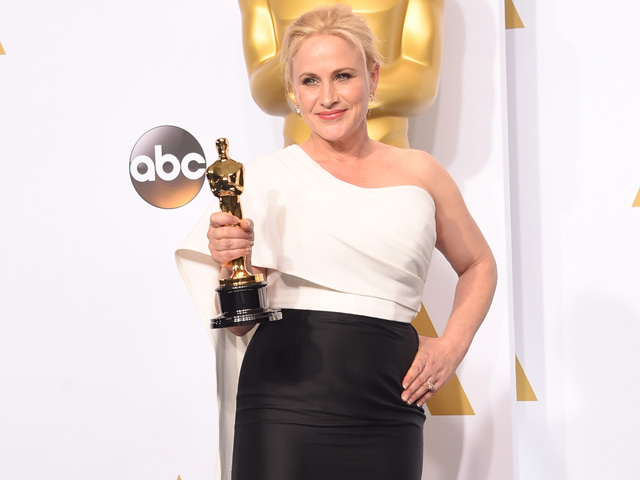
Patricia Arquette is still a sister. But we need as sisters to call bad actresses back in.

Patricia Arquette is still a sister. But we need as sisters to call bad actresses back in.

As sisters, I don’t think we’re perfect, and I’m not back-tracking to the idea that, if we just put women in all the positions of power, there will never be another war. Don’t get me wrong, we’re going to put women in all the positions of power, anyways. But, one of the things we need to continue understanding better is feminine relational aggression. We should be paying attention, because probably many of us have gotten sucked into it, at one time or another, and many times, this is how we led the sisterhood astray. Sisterhood cannot mean ignoring, or worse, supporting bad actresses, and we need to know that, many times, when those bad actresses strike, it is relational aggression that is happening within the sisterhood. A feminism that keeps having “Patricia Arquette moments” will not do justice to representing all our sisters. But isn’t sisterhood a way to understand our own role in recognizing when sisters go astray and calling them back into the conversation? We just have to be good big sisters, right? We can’t be big sisters who victimize our little sisters, or exclude them. If we’re good big sisters, good sisters in general, to each other, it will be far more, and not less, natural for us to see it as our civic duty to the Sisterhood to fix the problems in feminism. In that light, whether they were actual sisters, or that girl a year ahead of us in school, or that women a step or two more senior than us in our chosen professions, I know for me, as far as I look back, there have always been big sisters looking out for me, big sisters to whom I looked to know my way. And now, I’m still looking to big sisters, every day, to know my way. I need to work harder as a big sister, myself, to help other sisters build their identity and find their ferocity.

Click on the image to learn more about how not having access to water affects women throughout their lives.

Click on the image to learn more about how not having access to water affects women throughout their lives.

If we can unite as a sisterhood, we have some critical opportunities. First, we are on the precipice of women in visible leadership like never before. The difficult choice in front of us is this – and I say this without a hint of irony as a transgender woman – when we get our chance to lead, will sisters lead by pretending to be men? Or will we lead authentically, as the women we are? Will we just keep talking about why women say they’re sorry, too often, and never about how men say they’re sorry, not often enough? Will we keep arguing about pantsuits and “girl” bodies, or will we talk about girl hearts and girl minds in leadership? Second, we have unprecedented visibility of ethnic minority, queer, and other sisters. We are just that – sisters – so will the sisterhood be a sisterhood for all of us, or just the “right sort” of sisters? Will it continue being okay for some sisters to not have water, education, menstrual, prenatal, child care, to not have choices? Will we parade in voices from the margin so we can feel sorry for “them” (I suspect some of my minority or queer sisters had the same groan I had over that thought) or will we push each other as sisters to spend all our time at the margins, where all the opportunity is? Finally (and I think you know this is the right answer), when we get all our sisters into the fight, into the margins, will we recognize that it will make a better sisterhood for everybody?

Let me start where I began – sisterhood is the best part of being a woman. It is our shared destiny as sisters that is our greatest challenge and our greatest opportunity. So let us all rise and fall, together, as sisters.

The Hidden Danger to the Sisterhood of Hierarchical Assumptions

I believe that one of the most worrisome, hidden dangers to the feminist movement of the fourth wave, is hierarchical sexism. This is sexism in the form of beliefs and attitudes that the masculine is better than the feminine and that the typical behaviors of men are better than the typical behaviors of women*. No feminist actually explicitly believes that men are better than women, mind you. But pervasive in our dialogue is the idea that masculine behavior is better than feminine behavior. This argument is supported from the other direction, too – masculinity is better (generally) than femininity in subjects, but femininity is better than masculinity in the isolated context of asking what may be objectified.

Heels can be a tool of patriarchy, but, somewhat amazingly, jackboots cannot. This was seen in the conversation between Laverne Cox and bell hooks about whether one can wear heels and not pander to the patriarchy, but it is much broader than that. Masculine garb is the attire of leadership. At the same time, women who simply prefer it face criticism for refusing to be objectified, prominently, Ms. Clinton. Thus, women find ourselves “damned if she does, damned if she doesn’t.”

Photo of Military Presence in Georgia

Jackboots have never been used to advance the patriarchy? Really? Really?

The dialog around how often women say, “I’m sorry,” is entirely rooted around women apologizing less often. It carries the implicit assumption that masculine behavior is the baseline against which femininity should be measured. Women are taught to stop apologizing for taking up space, a very feminine behavior, far more than men are taught to stop assuming a right to take up space (although, finally, the latter is also happening). It is never suggested that men apologize more, and only that women apologize less**. Again, in contrast, when women are expected to take up space, it is typically for objectification (so our naked bodies are on far more billboards… sometimes selling the most seemingly non-sexual of things).

Dude, stop the spread, please.

If one really wanted to press the analysis, she might observe that men are asked, rather sheepishly, to change their specific behavior, but they are not asked to think about occupying space in the way most women think about occupying space.

We fight objectification (masculinity is far more rarely objectified), but we struggle immensely with the idea that women can ethically choose to be in object roles, even though we know perfectly well how many sentences in our language require both a subject and a direct object (this is part of the complex question of ethical sex work, although to me, this in itself is not enough to define the road to ethical sex work). Yet, again, damned if she does and damned if she doesn’t.

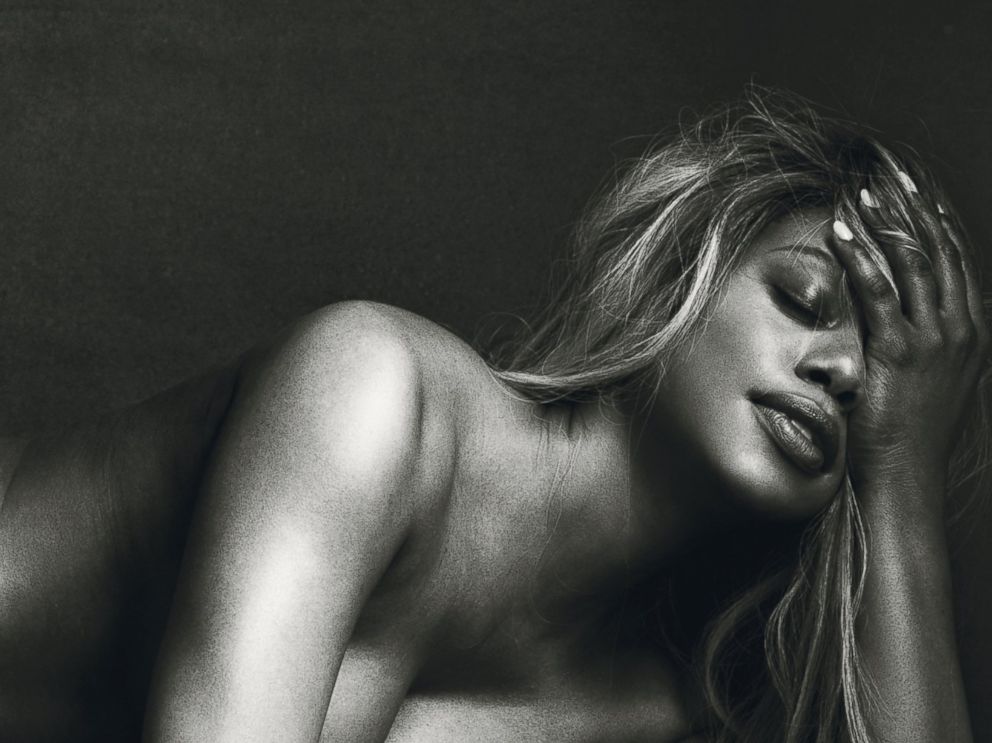
When powerful women choose to play object roles - in big ways, like an Allure photoshoot, and in small ways, like wearing sexy clothes to the bar - we frequently face criticism for  being sexy (and open to objectification)... while ignoring the inescapable fact that a great many of us want to be seen as pretty (and yes, sometimes sexy).

When powerful women choose to play object roles – in big ways, like an Allure photoshoot, and in small ways, like wearing sexy clothes to the bar – we frequently face criticism for being sexy (and open to objectification)… while ignoring the inescapable fact that a great many of us want to be seen as pretty (and yes, sometimes sexy).

And – to our credit, we’ve picked up on this one a little bit – we have many conversations about whether women leaders can butch it up enough to lead, but we never talk about whether male leaders are feminine enough. Womanning up is not a thing at all***, and no one talks about how, if he spent a little time thinking like a woman, Vladimir Putin might engage in a few less atrocities – no, in order for there to be any sale to men of his ilk (say, our own Dick Cheney), sale must be made entirely on the idea that it is actually more masculine, more manly, to stop the bloodshed****.

This is the state, too, of conversations inside feminism, not just out in the broader world. Serrano and others, particularly in queer theory or queer feminism, argue the dangers inherent in this explicitly because masculinity and femininity are not the same as maleness and femaleness, but inside the sisterhood, we need to be particularly wary because, even if they are not the same concept, they are highly intercorrelated. This is a concept queer theorists seem to struggle with immensely – yes, gender identity and sexual orientation are two different things, but they are highly intercorrelated – it is not a coincidence, and any neuroscientist or biologist could tell you it is not a coincidence – that masculine people of any sex are relatively more likely to be attracted to femininity, and vice versa.

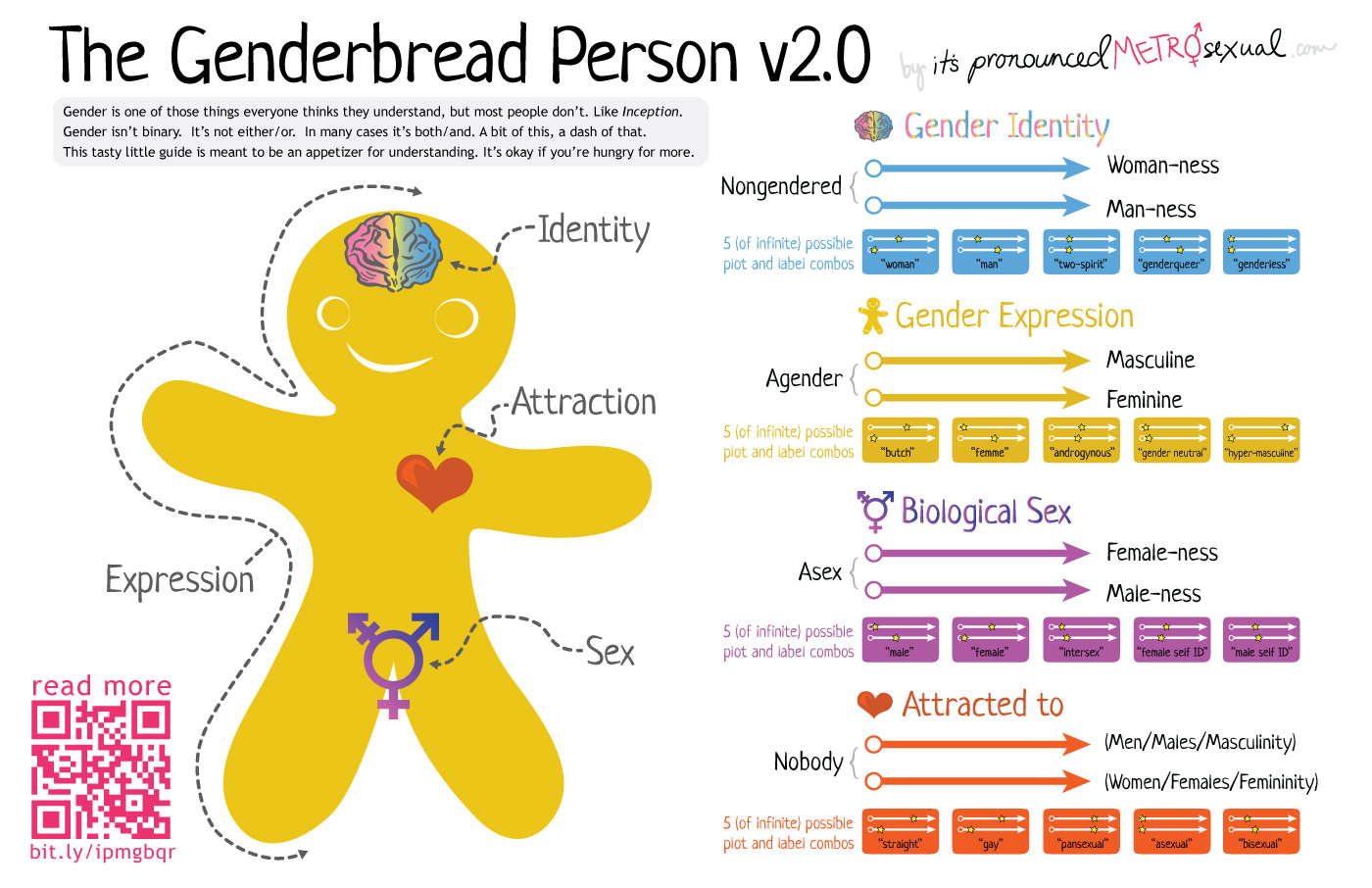
The Genderbread Person is useful to illustrate that gender identity, sexual orientation, etc., are different things, but there is danger in assuming that two different things are automatically entirely uncorrelated.

The Genderbread Person is useful to illustrate that gender identity, sexual orientation, etc., are different things, but there is danger in assuming that two different things are automatically entirely uncorrelated.

This is also really a message that is recapitulated in many other -isms, and thus sharpening this dialectic sharpens our intersectionalism. Poor people are expected to understand and demonstrate some of the behaviors of affluence (or at least the lower middle class – most visibly seen by the fact that scarcely any Americans view themselves as not part of the middle class). In other contexts, at other times, they are expected to “act poor,” so that the barrier between affluent and poor people can be preserved. And thus poor people face criticism for having, perhaps, an iPhone, eating fish, having stylish boots or a statement purse (it is not the poor who are meant to be making statements!), or a decently clean and late model vehicle. Black professionals struggle with being open to criticisms that they are “acting too black” in the workplace, and at the same time, we can levy harsh expectations to “act black” on superstar African American musical artists and others. And queer people are at their most acceptable either when they are highly socially conforming, or when they’re highly “gay,” so that they can easily be read and othered.

Thus, this is important as a general concept. Any system in which the behaviors more natural to one group are assumed to be better than the behaviors more natural to another, without some more meaningful reason than the -ism, is dangerous to all of society. But, again, my provenance is the Sisterhood, and although I care about all these groups, I do care first and foremost about the cause of us as women.

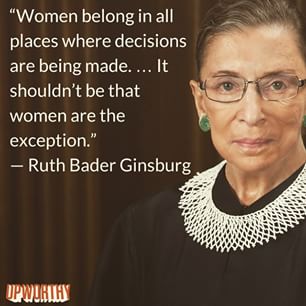
Notorious, indeed.

Notorious, indeed.

And we sisters want a world that is made better because it is full of women leaders. There will be enough female heads of state when they are all women. There will be enough female Supreme Court Justices when they are all women. But here’s the tricky part: we want them to be all women, but are we ready for each one of them, to be, herself, all woman? Meaning, can women be seen as authentic with whatever mix of masculine and feminine traits they take on? Are we ready for unabashedly feminine leadership? Are we ready for femininity in leading men? Are we ready to see a world that changes, and changes we believe for the better, because it is full of the feminine leadership that patriarchy systematically weeded out (whether witnessed in men or in women), or are we only sufficiently invested to get to a world that is full of leaders who are women acting like men?

To me, if we accept the latter, we feminists risk unwittingly losing our fight altogether.

* Cross-reference, later in the article, this concept of intercorrelation, and how queer people don’t like intercorrelation, even though not liking intercorrelation is sort of like not liking the gravitational constant. The truth is, of course, that we all occupy dynamic space composed of some masculinity and some femininity – I am not, myself, wholly feminine in my predilections, and I have just a pinch of my own androgyny.

** Placing me in the somewhat amusing role of taking up space to voice my demand that I be allowed to say sorry whenever I damn well please.

*** This is evident in a much deeper way in American coming of age expectations. Girls are often considered women based solely on menarche, and thereafter their (young adult) womanhood is not called into expectation, whereas manhood is defined largely on “acting like a man.” For the longest time, I saw how this was harmful and problematic to young boys, but it is deeply problematic to women, as well – it sends a clear hierarchical message that womanhood is just something that happens (perhaps transforming the girl from “jailbait” to the woman who is “fair game”) not a chosen feminine object role but clearly objectification. Only manhood in this calculus is seen in aspirational terms.

**** And as I mentioned, previously, as in the case with Forster’s pithy analysis of colonialism in India, if femininity or womanhood is in this conversation, it is included primarily to discuss how it’s presence modifies masculinity.

Is the Era of the Community Center Over?

The following are my remarks at Identifying Our Resource Center, an event that occurred on Tuesday, April 21, 2015, as a joint effort between Holland is Ready, PFLAG Holland/Lakeshore, and Holland Area Pride, three community organizations advocating for LGBT inclusion in Holland, MI, my hometown.

Good evening, and thank you so much for having me out.

I want to start, briefly, by telling you my story, because our lives and our stories matter, and a movement that doesn’t have time for us, as people, and our stories, is not a movement for me. God began calling me to accept who I am and, well, finally act like a grown woman, a little less than 15 years ago. I hemmed, and I hawed, and I said it was too hard, I wasn’t brave enough, or strong enough. God said, “No, little girl, I’ve got you.” I didn’t believe it, right away. It wasn’t until 2013 that I finally started being ready. My 38-year-long, less than impressive, farce of pretending first to be a boy, then a man, then an androgynous more-or-less man, none of which were me, was getting in the way of my mission to kids with autism. In the prior two years, I built the best place in West Michigan for early diagnosis and early treatment for preschoolers with autism. That revolution needed to grow and expand, because there are kids out there who need me, and I was wasting time and energy, pretending. So I gave in, I came out, and I ended the charade. I was scared at first, but I was met with overwhelming love, positivity, support, and celebration. I came out without losing a single friend, family member, colleague, or business contact, and I gained a sea of new loves and new connections in all those areas. When people saw me being brave, they chose to see my transition as an opportunity to be brave alongside me, and they found that we were all better, together, for it.

You have no idea what I'll do for my AutismFamily.

You have no idea what I’ll do for my AutismFamily.

In early 2014, God spoke to me again, when I walked up the rickety back steps of a bar, and there, before me, was the one. God said, “Love him.” I said, “I don’t know, I’m not looking for all that trouble.” God said, “No, I said, love him. He needs you. And you need him. You don’t see it now, but he was the one I made you for.” I hemmed and I hawed, again, and God said, “You know I’m always right.” To which I replied, “I have noticed that. It’s kind of annoying.” God said, “Yes, but it’s also true. Someday, you’ll learn to just accept that. But I’m not asking you for that, today. Today, I’m telling you to love Teri.” And I said, “Okay, done.” And God said, “Thank you.” He kind of gets to have the last word.

...or for my mister.

…or for my mister.

I am telling these two stories for a specific reason, to set the stage for understanding where we are, today. As you may know, in 2014, I was asked to get involved at a number of levels, both here in Grand Rapids and at the state and national levels, in LGBT activism. One of the tasks set before me was to re-invent our notion of LGBT Community in Grand Rapids, for the contemporary world. I’ve written in detail about what I learned in this process, but I am here tonight to ask you a provocative (and hopefully somewhat less offensive than it sounds) question: Is the era of the community center over?

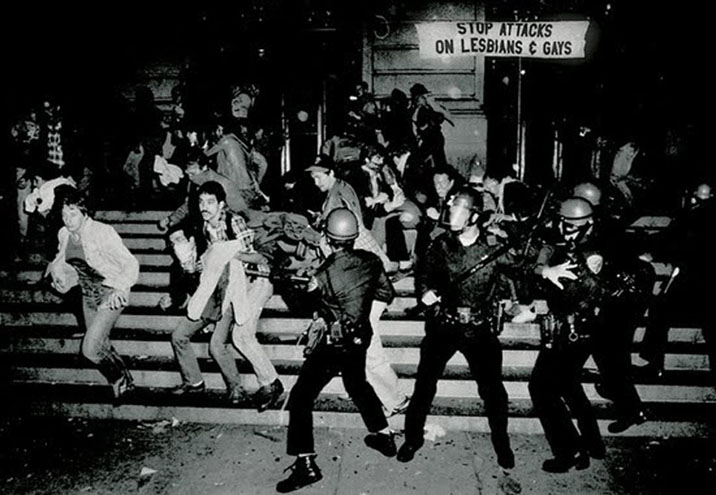
We’ve come a long way since the sentinel events in our history, such as Stonewall. In the just under fifty years since that event, we’ve come into a world where stories like mine are becoming increasingly believable. Many times, in middle and larger cities, for lesbians and gay young men from non-marginalized backgrounds, stories like mine are becoming almost normal. They’re pretty rare, still, for trans people, but I’m neither the first nor the last. Let me be clear: what happened to me when I came out should not be a lucky blessing. It is what every single person who comes out deserves. And while it is becoming increasingly common, it is not universal, and it is not enough to rest on our past accomplishments and live in a bifurcated world where a growing population of connected LGBT people thrive, and a remaining segment of our community suffers.

Fifty years ago, Stonewall was a game changer. What will tomorrow's game changer be?

Fifty years ago, Stonewall was a game changer. What will tomorrow’s game changer be?

The community center has been a staple of these fifty years of progress. Many times, it began as a sort of safe house – sometimes, even in very covert ways (a storied community center serving the trans* people of the Boston area even had a cloak and dagger process of calling from a designated pay phone and being whisked away in an unmarked car to be sussed out and cleared as not a threat!). Often times, this remains the mentality of fighting for LGBT community. We spend too much time asking, “Which restaurants are LGBT friendly,” and not enough time asking, “Why are there any that aren’t?” We don’t come out to our doctors, because we’re afraid they will reject us. We build supports for homeless and runaway youth but we don’t think about how to get to a world where no youth is homeless because of their gender or sexual identity. We create “gayborhoods” as an act of self-imposed segregation.

I want to make the argument, today, that it’s time for us to stand a little bit taller than that. This conversation very much mirrors what I’ve been doing leading my part of the Autism Revolution. To quote a country song, “I will plant my heart in the garden of my dreams, and I will grow up where I want, wild and free.” This isn’t a hypothetical argument. Look around you. The partners for the Pride festivals in Grand Rapids and Kalamazoo aren’t some sex shop or little nightclub. They’re Experience Grand Rapids. Bell’s Brewery. Our LGBT professional development program, OutPro, is the only one in the country that is an official program of our Chamber of Commerce, but we see similar actions happening nationwide. Fort Lauderdale last year became the first city whose convention and visitor’s bureau officially began attracting transgender tourism dollars. Five states and a number of cities now require insurance to provide access to transgender healthcare. It’s even pretty easy to find an inclusive church these days.

It is likely this will continue apace – vibrant companies, cities, and civic organizations will continue to court inclusion because it is good for business, good for community, good for everybody. But if we want to go even farther, to end the bifurcation and marginalization of a segment of our community, we need not just evolution, but revolution. If this is what you want, putting in place yesterday’s best practice just isn’t good enough, and yesterday’s weapons will not win tomorrow’s battle. So, what are tomorrow’s weapons? What does the LGBT community of tomorrow look like? My claim to you is the LGBT community of tomorrow must be Networked, Intersectional, and Engaged. And rather than having a community center to which we can go, in this future vision, we will be at the center of the community.

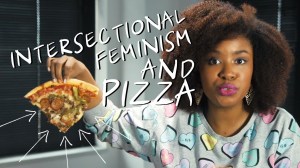
Listen to the pizza, y'all.

Listen to the pizza, y’all.

First, we must be networked. The scale of what needs to be done today cannot be done in a purely grass-roots fashion – the movement forward must span all the way from the activists and developers of queer ideology and philosophy, to the scientists, inventors, businesspeople, leaders, and everyone else. You must leverage a much broader conception of local talent and organizational partners. Second, we must be intersectional – it is dead clear that the bifurcation in the LGBT community is due to multiple marginalization – LGBT people who suffer not just because they are LGBT, but because they come from underprivileged ethnic minorities, from poverty, from lack of access to education, from core city wastelands, sexual victimization, mental illness, physical disability, and the list goes on. If we do not talk more constructively about how each of these things affects the experience of being LGBT, we will not create a world in which we are permanently and fully entrenched in society. Third, we must be engaged. To keep the success stories of the LGBT community engaged in the process, and to get people who are passive allies – who respect us but don’t fight alongside us – activated, we need to leverage much more heavily all the ways in which LGBT people are friends, spouses, parents, anchors to neighborhoods, schools, churches, businesses, how we are leaders not just in the LGBT community but out there in the world, and how we make the world better for everybody.

Together, these three things will provide us an opportunity to have a world in which the kind of experience I have as an LGBT person is a right and an expectation, and where we can all stand truly proud and tall. I’m not necessarily saying that a physical building cannot be part of this vision – but I am saying that the era of the cloistered and secretive community center, for a community in hiding, is over, and that we are now entering the era in which we put LGBT people at the center of all our communities, and lay the groundwork to keep us there, for many years to come. We are trying to do this in Grand Rapids, with the Network, with OutPro, and as queer and ally civic leaders. This is our revolution, and we welcome you to join it. Thank you.

On Fighting Commercial Sexual Exploitation of Children and Navigating Co-Advocacy

When I walked into the Autism revolution, about four years ago, I had a lot to learn about co-advocacy. I had to learn to co-advocate with people who believe something different than I believe, either because they come from different values, or because they interpret the same data as me, but they do so through different lenses. Some of these were other professionals, but adding onto this, I had to learn to co-advocate with parents (who, unlike me, actually have kids with autism) and autistic self-advocates. One particularly difficult thing was to co-advocate with people who believe vaccines cause autism. The evidence does not support this claim, in spite of extensive testing. I think there’s a limited hold out for a complex relationship between autism and vaccines*, but a gross one – in which vaccines cause autism, appears unlikely.

What did I do? Well, primarily, I respected differences, and asked for respect for differences. When parents ask me about vaccination (e.g., for the younger or not-yet-born sibling of a child I evaluate), I tell them that, while there is a lot we do not know, all the evidence we have says that the risk of not vaccinating is much, much worse than the risk of vaccinating, and if/when I have to make this decision for my child, at this point my plan is to follow national recommendations for vaccination. In return, I don’t fight or argue about vaccination. I don’t insult parents who are using the information available to them to make the best decision they can, although I tell them what I think if I am asked. Although I do believe in herd immunity, at least for the time being, I take the nuanced decision, most of the time, to not be a partisan in this argument, e.g., about legal regulations that increase pressure to comply with vaccination (I do think this needs to be resolved somehow). And I focus on what we believe in common – that kids with autism are crawling or walking around, right now. Most of the anti-vaccination parents I know respect my desire to do everything I know how to do (and figure out new things I don’t know how to do, yet), to help the kids we have now develop the ability to identify, chase, and catch their dreams, whatever they may be.

Why this digression into autism? Tuesday, at the annual meeting of the American Association of Children’s Residential Centers, I got to go to some excellent workshops on commercial sexual exploitation of children (CSEC). What is that? Well, it is a broader definition of whenever children are used in the sex trade. It includes prostituting children, or selling sexual access to them. It includes trafficking them for the purpose of sexual slavery. It includes child pornography. So CSEC is a wide net. The best available information we have is that about half of people who end up in the sex trade do so by age thirteen**, and so it also means that CSEC is big business, with an estimation of 200,000 children in the US caught up in this. 

There is increasing visibility to this issue (incidentally, as many as 1/3 of CSEC victims are boys... their visibility is only just beginning...)

There is increasing visibility to this issue (incidentally, as many as 1/3 of CSEC victims are boys… their visibility is only just beginning…)

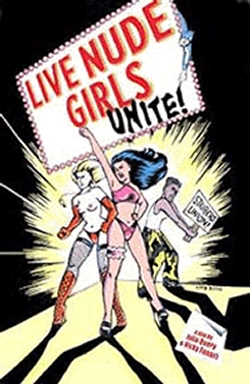
One interesting (but potentially heart-wrenching) complication of this conversation is that it poses child/youth welfare advocates (like me) and people who identify as victors over CSEC or survivors (like the brave and fierce woman who gave part of the plenary) potentially at odds with feminist sex workers (including some friends and allies). They have been gaining significant visibility within the national feminist conversation, in the last couple of years. They emphasize a point with which I unconditionally agree: feminism must be for all girls and all women. If I want to stand proud and tall as a woman, feminist sex workers should be able to do the same, and if I should be celebrated as a proud, tall woman, so should they.

This conversation probably isn't just going to go away...

This conversation probably isn’t just going to go away…

Feminist sex workers, as adults in an industry, including some personal friends, are trying to make inclusionary inroads, as well as to fight for women as subjects and not just objects of the sex trade. What they seek is the ethical commercial use of sexuality. In fairness to them, the use of sexuality commercially is pandemic and arguably endemic to the commercial economy***. If commerce can even be de-linked from sexuality, this is a long-term fight for the sisterhood, and not one that will be won today. In the meantime, ethical use of sexuality commercially, and particularly ethical use of adult women’s sexuality, commercially, thus remains a vitally important fight for all women (yes, all women). This is especially in an American Life where sexual messaging is getting much more pervasive over time. See for instance this, which came across my Facebook wall just today.

In the meantime, I am honestly somewhat ambivalent about the idea that at least some elements of commercial use of sexuality  – pornography, prostitution, and I don’t really know what I think about things like sex hotlines or professional dominatrices – can be ethical for either men or women, but particularly when it is women who are being sold or selling themselves. And my ambivalence is a moderate position – many voices in the CSEC world, if asked this abstract question, say that this is like asking how to make slavery ethical. And I think their point deserves more than to be brushed off, since they are not talking abstractly but from personal experience.

So there’s the dilemma – we are all advocates for women and children, but how do we advocate for helping girls and young women “escape” from sex work, rescue themselves, survive and become victors over their captors, alongside people who advocate for an ethical sex trade?

Well, first, we start with common ground. I’m a libertarian in my moral philosophy (apparently, just today, I found another hero, Madeleine L’Engle, was, too!), and I believe strongly in work and diligence. I think having a job (and I get to have not just a job, but an overarching passion) is a good thing, and I want to see all people working and being productive citizens. Well, I want to see all adults working and being productive citizensJust because I believe work is ethical (and I’m proud to work) does not mean I believe child labor is ethical. So if my feminist sex worker friends turn out to be right, and they can create an ethical system, maybe we’ll end up fighting for a future world where CSEC does not happen, at least in the sense that child labor is greatly reduced or eliminated here****, and in the sense that we are relatively aligned on the goal of eliminating it everywhere, without any suggestion of eliminating work or productivity or self-sufficiency for adults, anywhere. Feminists who want an ethical sex trade should not want children in the sex trade, for all the obvious reasons why this will never be ethical. So this aligns us in a powerful way.

I'm late to the party... this Krishnan is way more fierce than I am, although hopefully the more Krishnans we get in on this, the better. Click the pic to listen to Sumitha's TED talk.

I’m late to the party… this Krishnan is way more fierce than I am, although hopefully the more Krishnans we get in on this, the better. Click the pic to listen to Sumitha’s TED talk.

And certainly, CSEC survivors, victors, whatever identity they choose for themselves – these women (and men) are all about being proud of themselves and owning their own dignity. So, second, we respect each other. I am a radical feminist who is not sex-worker exclusionary, and will not be sex-worker exclusionary – whether those sex workers are victims or agents of their own destiny. My road to helping the victims of CSEC is not via fighting feminist sex workers, and although working in the CSEC space is still something I don’t understand well, I don’t think it’s any place for anyone who believes in a feminism that doesn’t have room for all women. I ask back for respect for my very clear, consistent, and credible stance of being a sister who fights for all the sisters, not just the sisters who look like me.

This is a good thing. Like my experience with autism, which made me a better neuropsychologist, a better leader, and a better supporter, this makes me a better woman, a better feminist, and a better ally. I’m so thankful that I had this conversation as part of my experience at AACRC, really glad I got to meet a victor of CSEC and get to know her story a little bit*****, and glad that this will make me a better ally. When it comes to sex work – a thing I haven’t experienced, even if I have tools and abilities and visibility that I could leverage as an ally to help end CSEC – I’m going to have to be corrected by both victors over exploitation and feminist sex workers, because I’m sure I’m ignorant. I am going to have to be warned, harken, and correct, when I overstep my ally role. But being together, and running into the arms of all my sisters who are part of this conflict, and not away from them, is going to be crucial if I am serious about making this world a better place … for kids with autism and their families, for my wizards in training, for all girls, for all women, and for all people.

Yet another heroine of mine.

Yet another heroine of mine.

And serious, friends, is the kind of princess I am.

* The hypothesized pathway here is immunological, which makes some potential sense based on the fact that immunological response regulates cortisol levels, which in turn regulate testosterone, and, as I’ve pointed out before, spiking fetal testosterone is the best available mechanistic pathway for not why, but how autism happens. The holdout I have in mind is the possibility that some children, who are already autistic, have a catastrophic immunological response to vaccination. This does not cause autism, but it takes the child’s situation possibly from one where autism is associated with relatively limited disability, to one in which it is associated with severe deficit. There is not current evidence for this, excepting the anecdotal stories of children regressing after vaccination, but in fairness, this is not the hypothesis the vaccination studies have generally been evaluating, so it cannot be ruled out, yet (versus the existing “null hypothesis,” that the timing of regression and vaccination is a coincidence).

** The methodology at arriving at some of these numbers is tricky. I was asked an interesting question on Twitter about the median number being this low, and there is some data that suggests that there is a big clustering of youth with CSEC onset around 12-14 years of age. On Twitter, I didn’t want to get overly technical, but the technical response to the claim that the numbers are unlikely to be true due to the assumption that median and mean are close together in large samples, and the median in this range indicating a large population of very young children in prostitution is not necessarily true for two reasons, namely that the distribution is not Gaussian and is also likely leptokurtic (the point about the 12-14 year old population). To the former point, about Guassian distribution, there is clear heterogeneity in this population – child pornography and victimization by pedophiles usually occurs at younger, prepubescent ages, whereas youth victimized by pimps or otherwise prostituted are typically older. But to say this in another way, adults in the sex trade are victims of CSEC something like 80% of the time.

*** Echoing the aphorism / joke that the sale of women’s bodies to men is the oldest profession.

**** Which is not good enough – it still happens all too often in developing countries, and not in an abstract sense, but often contributes directly to the economies that make our iPhones and our body con dresses and our statement necklaces.

***** Without side-tracking this story, one of my favorite things about this, which I tweeted, was that when she was introduced, the psychiatrist from Devereaux who introduced her explicitly and firmly stated that we would not start by asking her to “share her story,” because this is objectifying, gratuitous, and can be re-traumatizing. This totally made my conference – I talked to this sister after the program and we gave each other a big hug. I shared with her how, as a transgender woman, I loved this so much, because often times, I feel paraded out to tell a story or narrative that isn’t the one I want to tell, to satisfy the gratuitous needs of others. This is exactly in line with why I don’t do before and after pictures, I rarely, if ever, talk with cisgender people about my medical transition decisions, and I insist on owning a narrative in which I am proud to be transgender, in which I love who I am, I love what I am, and I love my life. For real – I go into work everyday to do the job of a lifetime, leading a passionate, creative, loving, and talented group of young professionals, and I come home every night, to lie in the arms of my once in a lifetime love. I could not have written a work of fiction that I love more than my actual life.

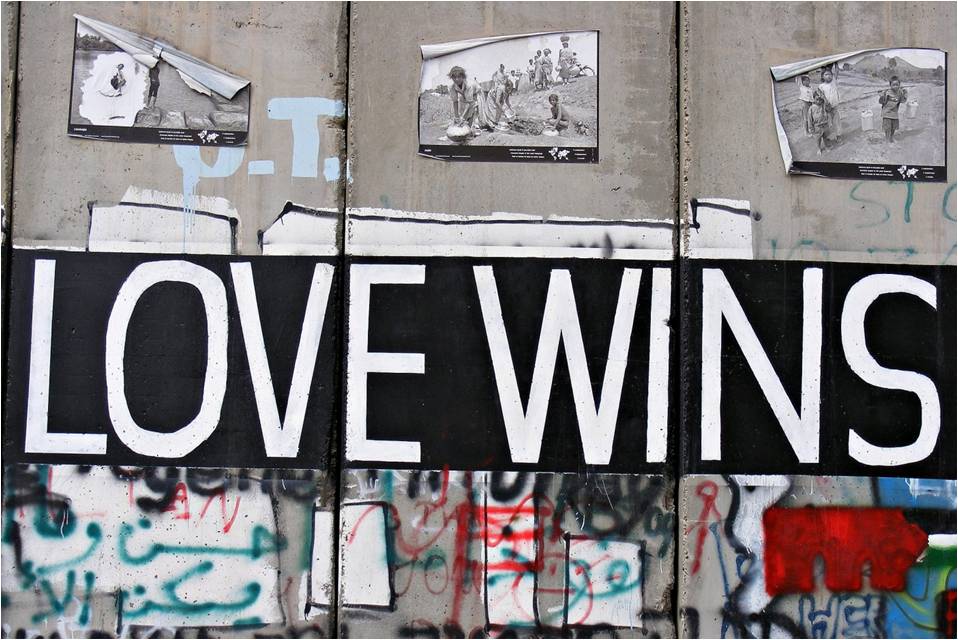
Of Course Love Wins, But It Has To Be In Your Heart

Anaïs Nin wrote, “We write to taste life twice, in the moment and in retrospect.” Sometimes, I feel the need to add, “…and hope to understand it, at least once.” A lot of this blog is like that for me – trying to make sense of things that happen, what they portend, what they imply, and where they must lead me, the woman I must be who gives account of the things I see and experience.

I am in Savannah, GA, for the week, for the American Association of Children’s Residential Centers annual meeting. I’ve written about it before (and again) – I love being a part of this organization. I love the opportunity to learn, this group of beloved friends who give so much more than I ever feel able to return. Tomorrow, I’ll get to spend a day learning about commercially sexually exploited youth – I would so love to do more beyond buying pajamas made by survivors of the sex trade (they are pretty fab, though, and the cute black tee is a great code sign to other radical feminists in the room). I am so ignorant, and just coming to understand that kids, right here, under our noses, are being drawn into commercial sexual exploitation, and it makes my blood boil. The rest of the week, I’ll be supporting a presentation and a luncheon on supporting sexually and gender diverse youth. I also need to pick up the thread of talking about how we innovate in education for youth in residential treatment – I pledged to lead writing a position paper on this, and I need to make good. Of course, I’ll be talking about bringing the autism revolution (like I could stop).

Someday, I'll be, big enough so you can't hit me...

Someday, I’ll be, big enough so you can’t hit me…

Some of you saw this on Facebook, but on my way into town, yesterday afternoon, I had a small, but unnerving experience, that stuck with me, and here I am, living life twice, trying to understand it once. I caught a taxi at the airport for the 20 minute drive into town. The driver was polite and gentle, making small talk and making me feel at home* and welcome to his beautiful city. He asked about where I was from and what I was doing in town, and had some questions about kids who are served in residential settings. He even put on his Bob Marley CD for me.

Then I caught something out of the corner of my eye. I knew what it was, somehow, instinctually, but I leaned in to be sure. On his rearview mirror was a Post-It note, just a little yellow Post-It note, with three Bible verses penned down. They weren’t just any verses of scripture, though. They were what I sometimes call Deadly Passages (get a copy, or borrow mine, and watch my beloved Actors’ Theatre’s take on them). The sticky note started with Leviticus 18:22.

Do not have sexual relations with a man as one does with a woman; that is detestable.

Considered in isolation, each of these verses (from the New and Old testaments) are most likely part of historically bound conversations. They call for frank discussion, today, about the predecessors of our Christianity and all the things that are neither love nor compassion that have been and are still done in God’s name. But taken together (the next verse on his sticky called for the punishment of stoning to death), these verses form a powerful credo of hate in the guise of Christianity. Like a wolf in sheep’s clothing, they are not a prayer to God but a call to evil. And every bit as much as my tee is a call to the sisterhood among feminists, they are a call to solidarity amongst minions of hate and injustice. Taken apart and in context, they are, perhaps, God’s word. But together, they are an incantation from somewhere else, altogether.

I maintained my composure, but I was honestly afraid. All kinds of thoughts went through my mind. I love life, so much. I thought of Teri and Iago back home, of all my little children, and the opportunity we are trying to create for them. My driver seemed kind, but flashing through my consciousness was the possibility of being killed, cut up, thrown in a ditch or swamp or dumpster. And I felt ashamed for hiding behind the cloak of invisibility that I have that someone who can easily be “read” as LGBT might not have in my place. I didn’t say or do anything, until I got to the hotel – I kept making small talk, and being friendly, as if nothing had happened. When the driver got my bag out for me, and I’d paid and tipped and all that, I told him, finally, that I did not mean any disrespect, but I had noticed his sticky note, and I needed him to know that God is about love, and not hate, and that we are called to love others, not to hate them. He mumbled something about his friend reading the Bible and them going through it together, and we parted.

I tried to stay cool the rest of the evening, although it made me unsteady. To my shame, I did not tell Teri about it right away – even at the end of the night, I talked to him and told him I love him and miss him without bringing it up. This morning, when I woke up, I was crying, and that’s when I decided to post about it and share the experience, but also to work harder to process it. I got a lot of support. One friend admitted that she would have assumed I was over-reacting (I felt this way, more than a little, myself), but she had just recently learned that someone she loved had lost a friend to an LGBT hate crime, and so she was beginning to understand that this is real.

The truth is that, even in that situation, the web of privilege in which I move was protecting me – privilege of class, education, and status that allow me to distance myself and command respect, privilege of affluence that keeps me out of many dangerous situations, and many other privileges. And likewise, in truth, the taxi driver was just some mild-mannered man. I don’t know how he came to have those verses on his mirror. But I do suspect this. He may have grown up ignorant – he may have feared people who are not like him. But someone is teaching him to hate, and even though it didn’t turn to violence against me, violence is where the road of hate leads.

And hate is real. Hate is directed at all kinds of people. With respect to the LGBT community, stoning us to death is not just hypothetical. It is happening, today, out there. My taxi driver came from Jamaica many years ago. Here’s a story just two months ago of a Jamaican gay youth not “just” killed, but actually stoned to death. I didn’t find it because I was hunting for a Jamaican story – it was actually the first hit I found when I googled “LGBT stoned to death.” Jamaica is also on a list of countries where consensual sex by gay people is a crime. Other countries, as well, particularly Uganda, feature violence being stoked by Christians, including American Christians, against LGBT people. It isn’t just ISIS. And it isn’t just Islamist Extremists – it is also Christianist Extremists. In both places, verses like the one above are abused to foment hate and incite violence. And it isn’t even just in underdeveloped nations or distant places where people who “don’t look like us” commit atrocities. It’s here in the United States, as well.

Hate doesn’t just happen to LGBT people, either. Whenever I talk about life after the early interventions we provide kids with autism, I brag about my friend Anthony Ianni. An autistic adult thriving and changing the world, powerful on the basketball court and behind the podium, this amazing man is a bullying survivor speaking out against bullying. People at Hope came to me, when they heard about an autistic youth who had feces and urine poured over him when his friends tricked him under the guise of the ALS Ice Bucket Challenge. They came to me, because they knew I would be mad as hell, which I was.

Theirs... and ours.

Theirs… and ours.

Since I’m expropriating quotes, let me expropriate Edmund Burke next. The only thing necessary for the triumph of evil Christians is for good Christians to do nothing. Let us think seriously about that. Christians are not standing up to this abuse of our God and our beliefs. We are not standing up to the hate and intolerance being preached in God’s name. The thing in the hearts of people who use these Deadly Passages as a clobber against LGBT people is not love, is not Christ, and we must recognize that, and help them back to God’s love. When we do not respond, we risk the possibility that the thing in our own hearts is also not love. And Rob Bell is right – of course he’s right – of course love wins. How could love lose**?

Of course love wins. How could it not?

Of course love wins. How could it not?

The question is not whether love wins, but whether we are love.

So let me do my harshest quote expropriation of all: if any of us Christians is not for all people, as Christ is for all people, then we are anathema***.

* I am so excited to be visiting the South. Having spent years near here, in the South, I became a bit of a Southern belle, and I always try to be friendly to people who cross my path, and I so love the gentility of it, the good side of Southern culture, being able to extend and receive politenesses and all the little things we Southerners try to do, at our best, to make the day a little more pleasant for the people we meet.

** Never lose, never choose to, bruise crews who do something to us, talk go through us. I can’t resist. Even though this isn’t a funny blog.

*** When I lived in Grand Rapids’ Midtown neighborhood, I lived around the corner from a streetside church, which had the original verse in big letters over its entrance like a store sign. They made pretty terrible neighbors  … well, as they say in the South, “Bless your heart.”

I Am A Real-Life, Fairytale Princess

I am a real-life, fairytale princess.

No, I mean it. Not just by my namesake, but in myself, as well.

What does it mean to be a real-life, fairytale princess? It’s practicing the dark magic of a uniquely feminine brand of self-hatred. It means growing up never, ever feeling like I’m good enough, brave enough, strong enough, pretty enough for anybody. It’s growing up too soon, while trying to retain and always display childlike innocence. It means having spent much more of my life escaping dungeons and traversing wastelands than wearing ball gowns or tiaras. It’s being seen as the subject but always serving the role of the object. It’s being judged for things I didn’t do, words I didn’t say, thoughts I didn’t even have, and having to accept and rise to the judgment. It’s learning to be, never enough, but brave as I know how, while always looking pretty. It’s knowing how to look beautiful for others, and letting others draw courage from my beauty, when feeling far from pretty on the inside.

I'm not saying, I never get to wear pretty dresses....

I’m not saying, I never get to wear pretty dresses….

It means learning to save my best for someone else*, and sometimes a long line of someone elses. It’s having found my Prince Charming, but recognizing he’s got his issues and his downsides, that I would need to build a happy ever after together with him, because he could not carry me into one readymade for me**. It’s standing guard with my captains on the parapet, to defend my family (probably in heels). It is allowing my very body to be a weapon, always ready to be thrown into the gears to save my people. It is to sacrifice liberty to assume power in the service of them.

Okay, who am I kidding? Of course, this is a thing. And it's eerie that it actually works... when my hair gets long enough I'm totally trying this style.

Okay, who am I kidding? Of course, this is a thing. And it’s eerie that it actually works as well as it does… when my hair gets long enough I’m totally trying this style.

There is all this energy behind the marketing of things like the “Disney Princesses.” There are endless attempts to redefine them – in different colors, in different sizes, as men. We princesses know, they all focus on the image of a princess and not the substance***. Princesses wear our dresses to play our roles, but it is the story of a princess that reveals who she is.

It is there that she is light forged amidst darkness, beauty alloyed with suffering, daring built upon fear, passive dolls who foment revolutions.

I should know.

* I was, myself, surprised at how, whenever I make a meal, I see if there’s a better cut or portion, to give to Teri, or I make two plates and give him the presentation that came out better, or… without scarcely thinking about it.

** And he is still the one I have always been waiting for… I have no dances on my dance card that do not belong to Teri, and I never will.

*** Well, okay, there’s this one.

What if the People Who Don’t Know How to Do Trans Inclusion… Are Us?

I want to stitch together a few experiences I have had recently, with a conversation Teri and I had on the way back from Chicago, where I was an honoree for the 2015 Trans100 on Sunday. None of these experiences are meant to call anyone out – rather, it is reflecting on a pattern that emerges, to me, from these experiences, that speaks about all of us, not any individual actor, but the culture and society we are building amongst trans people. It is not an attempt to pick a fight within the sisterhood (or, rather, among the trans siblinghood), but rather to try and have that crucial conversation that needs to be had.

This is my Trans100 bio. I'm so amazed by the talent of the people chosen, and I feel more than a little unworthy.

This is my Trans100 bio. I’m so amazed by the talent of the people chosen, and I feel more than a little unworthy.

The first experience was months ago, at one of a series of workshops put on by leaders in the Michigan trans community. The workshops aimed to develop leadership and build and mobilize trans leaders. At the start of the first meeting, however, things went quickly off the rails. We had a brainstorming session in which we were asked to say what we needed to feel accepted, but it became quickly apparent that the designated note taker, who was putting the ideas on big sheets of paper that everybody could see, would write ideas in really big letters when they* liked them, and really small letters when they didn’t care about them. I pointed this out, and asked critically how we could have a discussion based on mutual respect if this is how we tried to develop mutual respect. One of the people there had an excellent idea, along with this, which was to foster the idea of assuming best intent in others, by having a simple protocol such as saying just, “Ouch,” when something bothered you, and if the person who said it understood why it offended, they could just say “Oops!” and move on (like you should do if you ever mis-pronoun somebody… just acknowledge it and move on). But there were soon a cacophony of “Ouches” that often had nothing to do with what the person talking had even been talking about. They culminated in a kind of surreal scene where one of the people present used what I can only describe as a Darth Vader voice to patronizingly point out to someone else that, if they were embarrassed about the way their voice sounded, they could change it with voice coaching or exercices (a point lost on nobody in the room). Later, we recovered from this, but there were still a lot of these weird moments. At one point in this series, we had an internal caucusing process. I had suggested a woman’s caucus, both because womanhood is the thing with which I most strongly identify, and because it created a potential home for the group of cis women who were participating. There was no interest in this, and I joined a trans caucus**. All fine and good, but then someone created a trans woman caucus, even though trans women were easily the largest group in the room, and the group would leave out both the cis women and some of the non-woman trans people who didn’t have a home. I didn’t feel comfortable with joining this caucus, because, in that space, it sounded a little bit like creating a white people’s caucus or a rich people’s caucus, or a men with power and influence caucus. The trans caucus, which ended up being Teri, me, and a really cool genderqueer / non-binary person, whom I love, was awesome (telling you, awesome caucuses are the only caucuses we should have). But I was left with this profound sense of not being able to belong to my own tribe – a sense I rarely feel when I am in broad LGBT spaces, and I never feel when I am in women’s spaces, or, amazingly, out in the “straight” world – all the places where belong naturally.

The second experience was at a recent meeting of our local trans support group, Own Your Gender. It was a little momentary interaction that didn’t fully hit me until later***. Wrapping up some group conversation about… something, I lightly said, “It could be worse. I could not be transgender.” One of the facilitators quickly corrected me: “You mean it could be worse, you could still be in hiding.” Sticking still to my pledge not to pick fights in the sisterhood, I sheepishly said, “Well, that’s true.” But I didn’t agree. I didn’t need correcting. I’m glad I’m not in hiding any more. But I’m not just proud in principle, in a Facebook post on Transgender Day of Visibility. I am actually proud to be transgender. I love it, as I love life, and I am thankful for it. I was thankful for it even in hiding, although I am far happier living openly and authentically. I own this truth. Not as a weapon, and not to deny the experiences of our struggling siblings, but because it is my true experience. I have said it at the microphone to elected leaders and in front of large audiences, here on my blog, and in so many one on one conversations. I wasn’t fast enough on my feet, that day, caught off guard, to say it like it is, but it is true. And of all places where I should be able to say such a thing, our own spaces owe me the right to love myself in safety.

If you know one thing about me, you should know I'm happy. That's what lets me not spend my time surviving, but doing things like advocating for kids with autism.

If you know one thing about me, you should know I’m happy. That’s what lets me not spend my time surviving, but doing things like advocating for kids with autism.

The third experience was going to the Trans100 itself. While there is always an “A-Gay” kind of phenomenon at national trans events, like First Event or Southern Comfort, this was very different from anything I’ve experienced before. Maybe it was night club culture (which I’ve always hated, for a wide variety of reasons, chief among them the way in which our women’s bodies become meat in a meat market, or in that it was a place where my charade as a “man” was most transparently not working). From the very beginning, I felt surprisingly unwelcome. At the ticket counter, when I said I had reservations and gave my name, the person hostilely asked me if I paid for a ticket, and waved me away. A bouncer nastily (and cryptically) told me, “Green is downstairs and orange is upstairs.” I genuinely had no idea what they were talking about, and so I asked what that meant. The response was, “Green is downstairs and orange is upstairs, that’s really all there is to it.” I still had no idea what was going on – I hadn’t ever been to the venue (I don’t think it was what it is now, back when I lived in Chicago), didn’t see anything green or orange, and orange and green didn’t mean anything to me. I had to figure out for myself that she was talking about the wristband I had, that I apparently had the “cheap seats,” and that she was there to keep me off the main floor. This is all fine and good, although this is an award others nominated me for, and I didn’t even know there were different kinds of tickets. I asked Teri (critically, not rhetorically) in some detail whether this is just me being a princess, and I finally came to the conclusion that it is really not. Because it wasn’t about me – yes, if I had been asked to buy more expensive seats, as a fundraising opportunity, of course I would have… I end up buying expensive gala and fundraising tickets, for one cause or another, it seems, for us, all the time nowadays. But it isn’t about that. I felt, the whole time I was at the event, that I was standing in someone else’s space, that the little tiny space I was occupying in my little tiny dress and my little heels was space that I should be giving up to someone else****. Really just the same way I feel as a woman on a crowded subway car. Teri, to my surprise, felt the same way. It isn’t about not being an “A-Gay” … I hardly expected the night to be all about me, as one tiny person among many being recognized. And I agree that, as one of the people who was being honored, that I am only a person chosen to represent an ocean of diverse talent, and that the celebration is not of us as the 100 “best” trans people, but a celebration of all the best in the trans community, with us agreeing to be used as exemplars or lenses through which that panoply of trans talent can be seen and celebrated. Yet, I also hardly think it necessary to work so hard to make me feel so unwelcome at what, even if only in a tiny way, was ostensibly my own party (and, of course, my own party in that we were celebrating trans lives, and the belief that trans lives matter, and so my trans life should matter, just for being a trans life), to accomplish this end. And if I felt unwelcome, as an honoree, how did people who were not being honored, who come from experiences of marginalization, feel?

But it was the third thing that really started to put together pieces for me. Lana Wachowski, who directed the Matrix and Cloud Atlas, was the keynote speaker. She made some excellent points, for instance stating of the world, “I don’t need your acceptance. I need your evolution.” She is a highly visible, highly successful, highly talented and creative, highly impactful trans person. She leverages all of these things to make the world a better place for other trans people, including by supporting in significant ways some of the critical work to safeguard trans people that is going on right there, in Chicago. But then, towards the end of her speech, she called out the black community for her perception that black people advocate “against us” for things like the odious bathroom bills. The tension in the room – we were seated next to a couple of our fierce black sisters, and I was really happy that the crowd that night was ethnically diverse – was palpable. A group of people, mostly black trans women, on the other side of the balcony, got up and walked out. We stayed, but all I was thinking about was how our black friends next to us, and the ones down on the main floor, and the ones across the balcony, were feeling, and feeling hurt alongside them. This was Lana’s Patricia Arquette moment. Precious Davis was on point and brought the night back to what it is really about, by saying that we need all our voices present in the room, to have the critical conversations that define us as a community. Later, some people I know called out the women and men who walked out that night, accused them of betraying trans people, but she was not doing that. No, she was calling them back in. 

That night, over a gyro and fries we split instead of going to the after party, because Teri was hungry, and because I needed to stress eat (which I didn’t admit to Teri till the next morning, and my eating disorder behaviors come out infrequently enough that Teri doesn’t always know them when he sees them), and then further cuddling in bed in the morning, and over lattes, we had a really great discussion that help me put the pieces of what I want to say together, into something that, at least to me, makes sense as a whole.

That whole is this: we think that using preferred names and asking for pronouns is creating trans inclusive spaces, but the reality is that we, as a community, have no idea how to create an inclusive or safe space, for us. Rather, disrespecting trans lives is not just something that we need to hashtag to the outside world via #BlackTransLivesMatter, but we need to recognize that disrespecting trans lives is endemic in our own spaces and pervasive in our own processes and approaches.

And this is perilous. Altogether too often, our own spaces are not safe for us. We see it in trans spaces where trans people are called out or made to feel unwelcome because they don’t do “enough to transition” or don’t “pass” or meet some other stupid and arbitrary criteria. We see it in trans spaces that operate as an oppression olympics and don’t allow for the possibility that a trans person can be happy, let alone happy to be trans. And we do it in spaces where we take glee in putting up velvet ropes and using bouncers to make people feel like they’re not good enough.

Again, I say this with love and a sincere desire to keep Lana Wachowski and everyone else I mention, either by name or not, in this article, in the family, and to build a stronger and better family together with all of you.

Again, I say this with love and a sincere desire to keep Lana Wachowski and everyone else I mention, either by name or not, in this article, in the family, and to build a stronger and better family together with all of you.

This is really not about calling out the Trans100. Jen Richards and all the people around her, who made this thing possible, did a really wonderful and revolutionary thing. The 300 people who have been honored, over the last three years, including me, share with all the talent and creativity and passion amongst trans people, the burden of elevating our profile, of helping us all learn to stand taller, chin up, prouder, fiercer. I am thankful, humbled, but also dead serious when I talk about being asked to shoulder a small part of that burden. This is also not about calling out Lana Wachowski. She has done, is doing, will do amazing things. She has tremendous power to be a force for good, and she has already done so much in her own way to lift us up as a people.

On the contrary, this is doubling down on what Precious said, as well as what Tiq Milan said at the event, in his own excellent speech, which is in essence that just people like Laverne Cox on magazine covers (or people like he or I receiving awards or being asked to deliver addresses at events) is not going to be enough to stop trans suicide. We need to call everybody in, and at the core of the discussion we have, we need to talk about the fact that we don’t feel safe, all too often, in our own spaces. If we can’t feel safe in trans spaces, then we will just continue to have what we have now. A subset of fierce, happy trans people, like me, will go about their lives feeling safe and accepted outside of trans spaces, in mainstream society (as I do), and the people who are struggling, who have no place, … will face the ignominy of feeling unwelcome in the one place that has the least business rejecting them.

This is an indictment, but it is an indictment of me as much as of anyone else. Just me being visible, being on TV (to talk about being transgender or to talk about autism), being happy, putting on tiny dresses and drinking cocktails, isn’t the revolution by itself. Sure, it might support other people who, like me, and many of other highly visible, successful trans people, didn’t need much to succeed except for people to get out of our way, but it isn’t going to help all those people who are contemplating, trying, or succeeding at suicide. I – we – have a choice in front of us… every community has hierarchies. In good hierarchies, leaders lift their people up. There is disparity, even in most of the best and safest places in the world, but only just enough, and it is far more often seen as a cause for those who have more to give more, than as a cause to take from the marginalized and give to the privileged. In bad ones, we create classes of toadies who use the power of the dominant subgroup to lord over others, or to take glee in creating velvet ropes and glass ceilings and all kinds of barriers that keep our own people down, and we seek to grow disparity rather than eliminate it.

So what do I think? I think it’s time to tear down those velvet ropes, go out in the parking lot and get our sisters back in the room, and get down to figuring out what it actually means for trans spaces to be places where all trans people can feel safe, spread their wings, and fly.

* I’m using gender neutral pronouns here not based on the preference of the person about who I am talking about, but just to keep this conversation about concepts and not about shaming or calling out anyone.

** The idea of an “awesome caucus,” composed of anybody who was awesome or wanted to be awesome, was also nixed, sadly, even though I and a friend fought hard for it.

*** Yes, okay, it was basically this.

**** There were exceptions – I talked to Laura Jane from Against Me, very briefly, and she was the epitome of not being the problem I’m trying to describe, and really served as a role model influence for me in that, much as people like Amy Gore had been at V to Shining V last year, or Lizz Winstead, also of Lady Parts Justice is, like all the time. And a couple of our Chicago friends grabbed us and made sure we got a drink early in the evening.

My, How We’ve Grown

This morning, I’m finally watching Monica Lewinsky’s TED talk. I hadn’t had time to watch it yet, but I’m being selfish with a few minutes on a Saturday morning. I think you should watch it, too. Like the best of TED talks, Ms. Lewinsky bravely wraps her personal story around knowledge about how others have been harmed as she was harmed, and insight about how her story is a starting point to changing the world and making it better for all of us. She does, incidentally, just exactly what Teri and I have been trying to do with Our Narratives. And Monica used the opportunity to do this on an explosive, national scale, in that unique way only TED truly allows for.

In 1992, I, myself, fell a bit in love with Mr. Clinton – while I had been used to fighting for environmental action and other causes, I had never stumped for anyone in my life, but a classmate and I spent our volunteer hours stuffing mailboxes and trying to “rock the vote” and get people out to vote for Bill and his, at the time still somewhat zombie-like sidekick. He’s still the only president I’ve ever done something like this for, so I guess in my own way, having never met him, I can sympathize particularly with that element of Monica’s story. I remember, in conservative Holland, going to a downtown restaurant and celebrating the Clinton/Gore victory among the tiny cabal of Democrats. I didn’t (and don’t) identify strongly with the Democratic Party as a whole, but I felt it at that moment*.

By 1998, I was still a budding feminist (I’m just a couple years younger than Monica, and I will turn 40 at the end of April). In the past years, I had spent time as a contributor, editor, and ultimately editor-in-chief of a news journal at the University of Michigan, the Michigan Review. The Review and my time with it is a complex story. At times, it has been a neoconservative hotbed, and I am sometimes loathe to admit any affiliation with that. In my time, it was a dynamic balance between social conservatives and libertarians, who often did not agree or see eye to eye, although we all valued the individual and our talent, creativity, and passion as the basis for change and for progress in the world. That ephemeral balance, in those days, was something magical, and an important part of who I am.

I rode in amongst a wave of other libertarians (although I didn’t even know what a libertarian was at that time, and once, a fellow editor told me to ask a prominent local libertarian what the difference was between a libertarian and a libertine, without educating me on what the question meant… good prank), but I recognized tensions with the social conservatives. Most of the social conservatives I rode in with were respectful people, who tolerated difference even if they did not celebrate it. But not all. Sometimes, I stood up. I remember that there was a particularly obnoxious young man who came to the Review. He became infamous in our time on Michigan’s campus – it’s not that easy to stick out amongst 40,000 people. Once, he wrote an “article” in which he stated that a protestor “smelled like a wet Pakistani.” I led a nixing of this foolishness. Another time, in a staff meeting among many young women, he pitched an idea on how he had just turned 21, and gone to a strip club, and how he wanted to write, again #airquotes, an “article” on which girls would “do stuff” when he stuck dollar bills in their panties. I ran him out of that meeting, as managing editor, and damn proud am I. Other times, I sat silently and uncomfortably, on my hands, as women and women’s rights were mocked in our space, and sometimes, I even stooped to the level of token minority, or pretended to laugh along, in order to hide my inner revulsion. I am sure I was an Uncle Tom at many other times, much as I frequently feel like the Uncle Tom (or Aunt Tomasina, or whatever) of the trans community these days. Occasionally, though, I got it right. I actually found (it’s on page five, here) one of the articles I wrote, of which I am somewhat more proud, and Teri and I re-read it, and … I’m still at least not mortified by it**.

I continue to push myself to feel in the real world in each moment, and not to discount my experiences because they are mine. Now, I recognize how much of this was my internalized and self-directed misogyny, as well, although that was something I did not grasp, then.

I continue to push myself to feel in the real world in each moment, and not to discount my experiences because they are mine. Now, I recognize how much of this was my internalized and self-directed misogyny, as well, although that was something I did not grasp, then.

But, at that time, although I questioned her treatment, and I usually avoided the vulgar jokes, I didn’t have the tools or the words to express or understand what was so wrong with the way she was treated. I remember also, clearly, from that era, how I had not understood what had really been going on with Anita Hill. Much as I was a libertarian before I understood the term, and this often led to me not being able to articulate my viewpoint effectively or rise appropriately or summon courage consistently when it was needed, I was a feminist before I properly understood the term, and my early implementations of feminism were, honestly, weak. It would be a few years, around 2001, until I became properly versed in feminism, spending a seven-month period of joblessness, superimposed on 9/11, reading Gloria Steinem, Shulamith Firestone, Andrea Dworkin, Kate Millet, Naomi Wolf, and so many others, as well as backing philosophers like Michel Foucault, the rave of feminists “back in the day.” It was at that time, that I went back to Zora Neale Hurston, Toni Morrison, Richard Wright, and even Frederick Douglass (whom I keep quoting), and re-contextualized what I heard***. And it would take the next 15 years, following that, for feminism to work its way through my tissue and cure me, and like vampire poison, sometimes, I still feel that sense of womanhood and sisterhood coursing through me and curing me, yet.

Now, looking back at all this, 20 years later, I recognize the blatant sexism and mistreatment Monica endured. After some feminist or other explained to me why anyone would reference a “pubic hair on a coke can,” and what the comment had meant, and after Toni and Zora explained to me just a little of what it is like to be black woman in America, now, I better understand what happened to Anita Hill, too. By the time Hilary Clinton was in the news for something called “cankles,” I still had to look the term up, to understand what it meant, but I had a fair idea of what was being done to this accomplished and dedicated leader. And like Monica did in her talk, I now recognize the overlapping and intersecting aims of bullying as it is leveled against not just women, but the LGBT community, and everyone who is not rich, white men and their sons (as long as the sons don’t turn out to be poofters).

By now, I can clearly and comfortably say, that Monica should be so proud of this TED talk. And all women should be proud alongside her, as I certainly am. The way she was treated, twenty years ago, was an attack on all women. It had little to do with the ethics of cheating or leadership impropriety – serious issues but just a front for the subtext in that era – and everything to do with the objectification and denigration of women’s bodies and women’s experiences, a celebration of the sexual double standard, an an entrée into the emerging world of cyber slut-shaming, cyber bullying, and all the brave new things technology fused with hatred brought us in the internet era.

I was not equipped to understand that, and speak out ferociously, in 1998. Neither was Monica Lewinsky. But we have grown into fierce middle-aged women, not in spite of ourselves, but because of ourselves. We just had to overpower the messages society sent us about our value, and reinstate our internal notion of our worth.

My, oh my, how we have grown.

* Later, the second time I felt moved by a candidate would be in Chicago in 2008, when I saw elderly African American ladies waiting at the bus stop, in church lady dresses, with Obama t-shirts pulled on over the top of them, and I was overcome with this magical sense that these women had never felt like the President of the United States of America could belong to them, and I reveled with them in their delight.

** As it turned out, thus far, I have not “turned to the bottle,” but I have experienced, briefly, unemployment, if not any kind of economic deprivation.

*** I was an engineering student at Michigan, and in those days, at least, engineers had maybe 17 credits altogether to spend on everything other than engineering and “hard” science. I think many of the engineers found “blow off” classes to knock out these requirements. I exempted from freshman English, which is hard even for the liberal arts students and nearly unheard of for an engineering student, but I was also the only one I knew who did her liberal arts sequence in English literature. African American literature was probably my favoritest class at Michigan, even better than quantum mechanics (which I also loved). Prescient, non?