I Love The People I Draw Into My Life

Recently, I went to an amazing conference of an organization advocating for youth, of which I am an advisory board member. This is somewhat remarkable. A year ago, my boss made me go to their conference for the first time. I looked at it and was…non-plussed (somewhat mirroring how I hated and feared kids before I started grad school). But I went (I follow orders, most of the time). And I loved it. People took me under their wings, introduced me to their colleagues, I felt like I went home with something like three hundred new friends. And I kind of did. I wormed my way onto their policy committee, and this year I presented part of a plenary on the position paper I helped write (my first plenary). And I got invited to my board position. I sort of love these people.
20140411-131824.jpg

Friendships complete your heart, or,
erm, if you’re alone on business travel,
a mirror works also.

I feel like, as I’ve started coming out, I see queer everywhere. The next paper we’re doing is on LGBTQIA+ issues. So this is the twelfth paper, and it’s quite random that it happened to be on that topic at this time in my life. I took a deep breath and offered to help the author in any way I could (since I’ve done one of these now, and others outside of this organization), and a deeper breath and explained to him the personal side of why. And he was amazing and gracious and I’m helping him along, although he knows what he’s doing by himself. One of the first conversations with a friend reconnecting when I got to the conference was about how her contract was coming up and she was thinking about leaving her organization. Why? Because the organization had taken the position that a trans young woman referred to them was “a man” because she has a penis. And she is seriously considering quitting because of it. Amen, sister. I did not actually cry when I heard this story, but the tears were welling up.

I came out to several more people while I was there – because at some point, and since and I see this family twice a year mostly, and like for my parents in Florida, this change may come quickly for them. I have to stop here and say that, after coming out to probably sixty or seventy people, at least, in the last six months, I’ve had all of one neutral response, and no negative responses. Everyone else has poured love and acceptance on me. I know this isn’t typical, and I grieve for my brothers and sisters who find rejection, fear, or hatred. But the love I got here, again, overwhelmed me. How it was okay to pause in talking about kids and talk about me, in this professional context, and I even felt comfortable to talk about my eating disorder history, about which I’m still very secretive. And how people were interested in my experience, and actually understood it pretty well, and saw me as bringing yet another strength to the table.

If I delve into my self-esteem issues, over time, I’ve learned how to accept a compliment, I’ve mostly learned how to respond to criticism. I have to admit I’m still expecting people not to love me, and I still melt when I’m loved and don’t always know how to say thank you adequately enough, although I want the people who love me to know that my heart beats with thankfulness for them. I don’t always have good boundaries. I don’t do anything terribly embarrassing, but people who see that I’m “smart” don’t really understand how much a creature of my loves and passions I am (I don’t think I’m stupid, but I feel profoundly misunderstood when people see being smart as a primary strength of mine, because I have never felt that it was the central unifying principle of my identity). I take everything personally. Apropos to my blog about signal amplifying, I have a tradition of drawing people into my life that don’t care about me, and want to be celebrated for their lack of caring about me, and I’m ashamed to admit the extent to which I have celebrated them for what they’ve done to me.

On the other hand, and bewildering to me that I achieved it, I have had the luck to draw into my life so many people who don’t fit that pattern, and the rate at which these people who challenge my older experiences come into my life is increasing. They don’t want to be celebrated at all but love me without cost or regret. When I started transitioning, a part of me wished I didn’t do all these things like committees and boards and all this frenetic networking. It adds hundreds of people to the list to whom I’ll eventually have to come out. But when I am loved (not just respected) in professional spaces like this one, my heart is overwhelmed, yet again, and I view all these daring people, who accept me, who love me, who pledge to stand up for me (and for others), not as a burden on my coming out parade, but as the very blood that flows through my veins and keeps me alive.

Why I Kind of Hate Calls to Signal Amplify

I hope this doesn’t come off as catty or self-absorbed. Okay. So I probably am both. I kind of hate calls to signal amplify. My intersectionalism card is sitting on the table, and I’ll give you the scissors, and you decide if you want to cut it up or not.

A little background from my particular perspective. I’ve survived a few decades of this rather awkward drag show in which I’ve been pretending to be a man, and feeling ridiculous, like when those women in bad comedy movies paint goatees on with makeup. But this experience is different for each of us. For me, although I knew really well the extent to which I was supposed to hide my feelings and particularly my fear or suffering, I just didn’t really have the heart to do it. I’ve been outright bullied, with non-metaphorical bruises to show for it, but much moreso, my childhood is littered with experiences where I tried to feel, publicly, even maybe complain or whine a little bit (not a lot, I’ve never needed to complain a lot), and this was met essentially with responses that boil down to, “Oh, your problems matter, but mine are worse. You should stop talking and listen to me, and when I don’t have any problems that are worse than yours, then it will be your turn.” Of course, my turn never seems to come up, and my friends and loved ones seemed to be blessed/cursed in such a way that it was always their day to suffer.

I feel that calls to signal amplify are very similar. There’s a phenomenon in our community that, as soon as some of us (and I believe this is often/usually directed against feminine people in the advocacy world) want to tell our own stories, we are hastily interrupted, a few words in, to “signal amplify,” because people who have it worse by virtue of their poverty, being in an oppressed ethnic minority, or being in another category targeted by the patriarchy for oppression. My experience is things like being pretty & stylish, and also smart or talented, seem to very quickly elicit calls to stop talking and start signal amplifying.

A couple of my own experiences. One person in the community, within a day or two of knowing me, comfortably told me, in essence, that I should empty my retirement accounts and give all my money to a loose acquaintance who feels that their transition is held up by lack of access to facial feminization surgery (if you’re not transfeminine, and you want to experience myocardial infarction, look up what that costs). Amazingly, this was the very first thing they suggested when I whined (no, emoted – I’m allowed to emote) that I didn’t know how to help this particular friend at this particular part of her struggle, because at the time, she was very negativistic and brushed off my attempts to empathize, listen, or even engage her in fun. Another person (I’m still friends with both the struggling person and this next person, for what it’s worth, and I have largely gotten over myself and found ways to connect and relate with them both) once came to my book club because we were reading Jenny Boylan’s book, and she felt Jenny’s voice should be silenced and replaced with voices of trans women who struggle more, because the fact that she is happy is unhelpful. Au contraire, ma sœur, these stories of happy trans women are what gave me the courage to finally start transitioning, what allowed me to survive. They mattered to me. bullhorn-muzzle

It may surprise you to note only one of these is designed
to amplify people’s voices. No, it’s not the muzzle

And here’s where it gets sticky, and you’ll have to decide if you’re going to out me as a faux intersectionalist. I do believe in the intersecting lines of oppression. I am cognizant of the fact that I am well educated and affluent, and that, while I am not white (later, I’ll take on the tricky question, “Am I a trans woman of color?” but let me work my way up to that), I am not very much racially oppressed either. I am aware that when these advantages are added to others, it’s likely that it will be far easier for me to survive transition than it will be for many of my sisters. I’m aware that I go to TDOR and mourn and grieve and advocate and call for justice, but it’s not people quite like me who end up in those shallow graves. And I do experience some “survivor guilt” over all of this. But (no, BUT) the path to empowering all of us is not to arbitrarily select a group of people who are “privileged enough” and isolate them and invalidate or silence their stories. And the people who self-select as arbiters, who have somehow given themselves the right to switch on and off other people’s right to be considered oppressed enough to have a story, are not helping the cause.

And then finally, here’s the part where I valiantly try to snatch my intersectionalism card back before you cut it up. I don’t hate signal amplification as a broad concept. These stories of (more) oppressed people (than me) are so important. It’s a major problem that there are now a solid number of stories of people like me – affluent, educated, professional trans women, who have a route to being fairly readily acceptable in society – and there is still hardly any visibility of transmasculine stories, of genderqueer stories, of stories of people who are discriminated against because they will never be “pretty” enough to be socially acceptable. It’s a major problem that the victors write history, and in the small way that women like me “win,” you hear our stories and not the story of the woman who spent months or years trying to find a basic job as a trans person and finally had to de-transition (or maybe even tried to kill herself), or the story of the person sent to live on the streets, and certainly not enough of the story of how those poor women and men we celebrate on TDOR suffered.

Rather, I celebrate these stories when I hear them. I’ve learned to listen when I hear them and know that they are absent (for which I am ever thankful to our sister-in-arms, Gloria Steinem, she taught me how to listen), and I do seek them out. So I think this is different than the longstanding battle in feminism between ethnic minority and majority voices. There, the problem is active silencing of black and Latina women’s voices, over which affluent middle-class white woman views are shouted. I’m not shouting over anyone. I’m the one being silenced. And silencing me is not the way to add visibility to these stories. Invalidating me is not the way to validate them. And ultimately, we need to support these brothers and sisters to be brave and tell their own stories, listen and celebrate with them, and get their backs when trouble comes. Not stop telling our own stories and insert theirs in our places – because there’s no story I will ever be able to tell like I can tell my story. So the kind of “signal amplifying” that involves invalidating other people, it’s got to go. And all our stories, all our experience, the house of love and hurt that makes us a community, they all have to matter.

I Took My First Dose of Estrogen At A Laverne Cox Lecture

Mostly because it seemed like it’d make a good story. By way of background, when I started transition, I started seeing a therapist and going to a support group (through the fabulous Network) right away, but I didn’t really push for booking an endocrinology consult right away. There is someone decent here in town, but it turned out that I wouldn’t be able to see him until October. Also, he practices out of a diabetes group and trans health is not his primary calling. So, I did some digging and some emailing, and I settled on my second course of action, to seek care instead at the University of Michigan, which had the advantage of offering a comprehensive program. I don’t think speech therapy is my most pressing problem, but I’m going to get a consult from their SLP when I go back for my next appointment. Likewise I’m not sure it’s the surgical clinic I want, but still.

UMTrans
University of Michigan also maintains a great
community resource guide for trans* people

When I started support group, in hindsight somewhat foolishly, I didn’t know if I should come “en femme” the first time. I think, the second time, I wore foundation (and erm, a bra under my short trench) and went out for a drink like that after. One of the bartenders at the place we usually go to said to me, aside, when I was looking up front for someone, that he didn’t know who was what gender, but we were some of his nicest customers. After that I went to group in fairly clearly female form, and honestly, my “look” has only subtly evolved since then. Anyway, it seems in hindsight ridiculous for me to question whether it would be okay to go to a transgender support group in makeup. Mira won the same argument some four or five months later, when I had my endocrinology appointment, and I went in booties, a grey tweed skirt, white blouse, black velvet jacket (❤️ I do rather love clothes), and a faux fur bucket hat, since it was bitterly cold that day, and that hat is cuuuute. Anyway.

Endocrinology was great. The resident seemed like a nice fellow (sorry, medical joke), and the endocrinologist was excellent. They answered all my questions and got me going. Labs at the next building over confirm the testosterone in my blood (can’t wait to see the next numbers I post!). Okay, the Indian woman at the front desk, with whom I didn’t even have to communicate, really, since I got whisked back to a check in desk, was staring. I wondered if it was possibly because she hadn’t seen an Indian American trans woman, but she didn’t say anything, and she apparently stared at a trans man who came in later, and possibly also at my girlfriend (neither of whom are Indian Americans). Whatever, kind of odd, considering that a significant number of trans people come to see the doctor, and we rather pay her salary. But okay. I can tolerate staring, and I’ll be ready for her when I go back. In grad school, long before I took transition seriously, I got accused of working a room like a sorority girl, and forget you, if you think I make a timid woman.

20140409-215637.jpg
If you haven’t met her, Laverne is radiant. Seriously.
And when anyone preaches bell hooks, I listen.

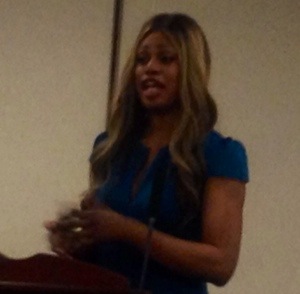
Anyway, this was a Monday, and I took the day off to drive across the state to the appointment. Tuesday I went into work, and GVSU was hosting Ms. Cox that night – it had been on my calendar for weeks. No time to go home and change (and the place was packed; I wouldn’t have had a seat if I had). A trans woman friend yelled, “Hey, Mira!” across the room, and I had a momentary panic, but the moment passed. I had been able to stop at the pharmacy on the way there, so I brought in my pills (in a baggie with cookies from Subway!), and I got to dose next to a fellow trans person, also taking their evening dose, and surrounded by tons of my own queer friends and literally hundreds of people out to embrace and support our sister Laverne.

And, damn, did that lecture not sound like sweetest symphony on estradiol? And, as she quoted Sojourner Truth, “Ain’t I a woman?” Nice way to start a chapter in my story.


The Agenda and the Lifestyle

I’m coming out against the agenda and the lifestyle. Against the agenda of exclusionism and the hate-based lifestyle. Oh, you thought I was talking about something else?

What does the queer agenda really entail? We want no one to kill us for being queer. We’d like to have homes to live in, and we expect to pay for them (I’m way ahead on my mortgage, incidentally). We want to work, and a lot of us are exceptionally skilled people with a lot to give to society. We want to be able to love our partners openly – we know that humans are not the most monogamous of species, but stable partnerships are a bedrock of human society. Or, we don’t. Some of us want to be able to engage in safe, consensual, casual sex, polyamory, or maybe don’t want sex. Not that straight people ever fool around. We want to be integrated in society – some of us, for the love of God, want to go to church (now if that isn’t a civilization-destroying agenda that will bring about the apocalypse, what is?).

And we don’t want to pretend. Trust me, I know pretending. I know how much time and energy I spent pretending, and what else I could have been doing for the world in that time creatively or in my profession.

Meanwhile, people out there use religion as a basis to say that people and human rights are not sacred. They use Christ, a guy who hung out with prostitutes and corrupt officials if he thought there was a spark of good in them, who brought Jews and Gentiles together, who turned over the money tables in the church, to say that it’s right to discriminate. Frederick Douglass rightly pointed out that the “Christ of the Cross” is a total stranger to these people (but not to him). There’s more absurdity out there. People who claim to advocate for women on the absurd basis that trans women, who identify, act, live, like women, who fought and paid tremendous prices for their womanhood, are not women, and that trans men, who want to be treated a men, are, absurdly, women. And people who claim to advocate for men on the same absurd basis. And these supposed radicals on the left don’t see a problem with the fact that they’re allied with radicals on the right who think women should be barefoot and pregnant and that guns are more important than people.

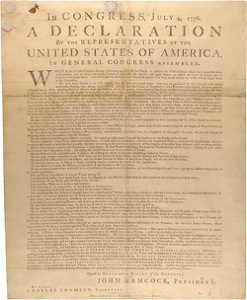
Most absurdly, some of these people advocate hating and oppressing other people, discriminating, excluding, as upholding American values. This is the moral equivalent of lining the bird cage with the Declaration of Independence.

20140408-100128.jpg
Admittedly there were some screw-ups on the road to freedom,
but we should own them, not celebrate them, right?

So my call to arms is this: judge people and movements by their inclusiveness. No one is making the world a better place for anyone by saying someone else doesn’t matter, isn’t a sacred life, should be discriminated against or even killed. No one ultimately achieved their rights by destroying someone else. And any movement that is predicated on locking the doors to keep people out is not the way to the promised land (preferably paved with rainbows and not gold).

Keeping Appearances

If you know trans women, especially politically active ones, you know that most of us hate the way our coming out is portrayed in the media. A friend recently was approached by a local reporter, who misled her into thinking she would do a piece capturing her humanity and professionalism as a trans woman, and then it turned out she was looking for something with pictures of her putting makeup on, a wall of wigs (my friend doesn’t even wear wigs, nor does she need to), before and after shots, and other totally objectifying representations. At this end of the narrative spectrum are these people who love transition stories lurid. The bigger the change, the better, ideally so that no one would ever believe the pre-transition person was them (in contrast, I too, wear my own hair, more or less within the range of neutrois to feminine styles I have for years, and I’m pretty instantly recognizable in makeup as me, although I might look a little younger and, I hope, prettier). I respect all my sisters, and I know they are survivors and that everyone makes hard choices, but I was really disappointed, for instance, in the coverage of Karen Adel Scot that, among other things, depicted her shaving her face (I’ll let you Google for that one) — we really need to support each other in saying this isnot okay media behavior and that we will not let ourselves be subjected to these kind of gratuitous expectations.

20140407-201500.jpg

Okay, so you have no idea how accomplished
I felt when I made cat eye even this good,
but no photos of me doing my makeup until
they’re in a fashion magazine where women
are asked for their beauty tips. Which is
happening two-thousand-and-never. And also
can we talk about certain women who wear
cat eye way too often? Or would that be too,
well, catty? And can I also sneak “objectifeye”
into this obnoxious caption?

On the other end of the spectrum, I will admit, there are some trans people who choose transition, but their definition of transition is to declare themselves female (for some reason, I see this more with trans women than trans men, although I’ve had the luxury to get to know some great trans guys, too), and that’s the end of the story. They dress, talk, act in a way that’s only marginally distinguishable from the range of what men do and appear as. Except they want a female name and pronouns and bathrooms and so on. This, to be honest, is kind of a mystery to me, also. I might choose to accept them as female, but I don’t, if I’m honest, read them as female. And I guess I do sort of understand why someone might have pause wanting to share a bathroom with them. I have never really gotten a clear understanding of this, because the people I know who do this don’t really share their narrative, if they even perceive themselves as having one. They seem to see that as superfluous. Some of them even go so far as to view with disdain attempts to fit in (which some regrettably call “passing”), whether by wearing makeup, adjusting dress, etc., not just in themselves but also in others.

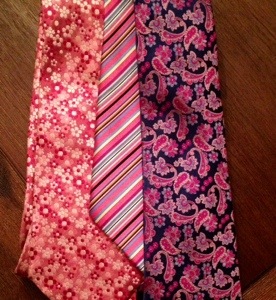
Many people have written how this kind of calculus applies particularly to women of all kinds (including trans women) — femininity, in a patriarchical world, is viewed as less authentic than masculinity and as something people “put on” instead of “are.” But I think this is where my “no transition necessary” sisters are being more than a little ridiculous. The truth is that men do put on kinds of masculinity, and women put on femininity, all the time – not just trans men and women but our cisters and brothers too. For me, being a man always felt like drag. I didn’t choose exaggerated butch masculinity as my drag. I had fun with it. I wore a lot of pink neckties. But wearing a suit and tie is “putting on masculinity” just the same as wearing eyeliner or heels is putting on femininity. It’s just not perceived that way. More particularly, it’s putting on professional workplace femininity. Granted that exists over a range, but all the cis women I’m close to (and I’ve had a lot more cis woman close friends than cis/trans anything else) make active decisions about what kind of femininity they put on, to look professional but feminine, to look cute but not slutty, to be stylish but not slavishly fashionable. It’s just judged in a more salacious way when trans women do it (and much like our cisters do this stuff… some of the worse comes from our own).

20140407-202251.jpg

So these are too cute to give away, unless someone
really appreciated them, but I’m not really sure what to
do with them, mmm-kay? I kind of 
have to channel
my inner xoJane to say things 
like mmm-kay, incidentally.

Now without getting into the whole issue of how women should not be raped, insulted, demeaned, etc, because of how feminine they choose to be, my point is that the standard that I not “put on femininity” is absurd. The reality is that I’m doing precisely what I did when I was pretending to be a “man,” except it’s far more honest. Now, I am still making choices. The girl inside says, “Hon, you’re too old for that.” Or there are lots of things that just don’t fit my body type at the moment the way I’d want to. Those problems are magnified for a trans woman who’s transitioning in adulthood and just went on hormones a month ago. So I don’t wear things I want to. Or I do wear things that aren’t my first choice, but I accept that they work on me. Is it restricted, and is it stylized to make it easier for people to consistently gender me as female and to let me feel pretty without being tacky? Well, yes, but how is that any less authentic than when, as a “man,” I said, “Okay, if I wear that, I will go way over the edge of acceptable male behavior and there will probably be a scene.” I know some trans women were way better at being men than me (like that should receive an award…) but seriously, I suck at it and that’s what it was/is like for me.

So to all my sisters who are far more gender revolutionary than me, who declare, Modo Femina*, and suddenly are women, congratulations, you’re way more of a gender revolutionary than I am. And to my sisters whose transition is like some David Copperfield act to which I’m not even good enough to be your scantily-clad-assistant-in-obnoxiously-high-heels, brava. Now just let me get on with being a middle aged woman. It’s rather delightful to me, and I’ve never wanted anything more.

* Okay, Latin was not the language I studied, and so I don’t know whether Ecce Femina, which seems much more Thus Spoke Sarah Schuster, is grammatically correct, but apparently Ovid used this, so it’s got major street cred.

Why I Choose Queer

If you know me on Facebook or in person, you know I usually say queer, not gay – I’m proud to be queer. I think “gayborhood” is something straight people came up with who are trying to be supportive but trying too hard, but I’d really like to see more “queerborhoods.”

20140407-152058.jpg

Okay, so this was on the wall at an art museum
in St. Louis…hard to resist the urge to ask
if I could buy it and put in my house (it’s HUGE!)

Lots of people have strong reactions to the word queer. Truth be told, whereas “gay” started as a code word so that we could communicate discreetly and not raise the attention of straight people, as far as I know, queer started as an insult. We reclaimed it, much like we are reclaiming our streets, our environment, our government, our civic life. So, reason number one that I like the word queer is that my small part in our work to reclaim our world is reflected in how we reclaimed our word.

The next qualm is that we have a long tradition of what we “really mean” when we talk about things like gay rights. We really mean rights for gay men, and maybe lesbians. And social acceptance of gay men, and maybe lesbians. Oh, and we hope they’re white, and affluent, and gender normative, and we hope that the men are flamboyant queens who can give us fashion recommendations and the women can help us with home improvement projects. Trans people led the revolt, before my time, at Stonewall, and yet we are just beginning to see a glimmer of a world with room for us. It’s not okay for us to be pushed to the back burner, with talk of empowering us in 10 or 30 or 50 years when we’ve got all our gay and lesbian rights down. And we need to be talking about poor queer people. And intersex and asexual people. So choosing queer is a visible and open declaration of my intersectionalism and my desire that we build something that has room for all of us (and all of me).

Beyond that, now, I don’t want to play the queerer than thou card (today!). But some of us are…well…more than one kind of queer. I’m not only transgender, but I’m also a somewhat heterocurious practicing lesbian, so if pushed on it, I identify as bisexual, although I’ll just accept the L word one of these days. Some of my trans friends are asexual, and this is a whole learning experience to me, because I don’t understand, intuitively, what it’s like to be asexual any more than I really understand what it’s like to be a man (it’s really a good analogy…the years I spent when I was single and celibate were no more asexuality than the years I’ve tolerated he/him pronouns and bathrooms that have urinals in them (eww, incidentally) make for much of manhood). So third, queer is inclusive not just of more people, but more of the whole person, including all the people who are gender/sex non-conforming in one way or another, from their orientation, to their identity, to their physiology.

To sum this all up, the rainbow we use to advocate for our cause is really emblematic. We need to not just create little chinks in the wall, that say it’s okay to be a flamboyant gay man or a butch lesbian woman, or even okay to be a feminine trans woman or a masculine trans man, when it means that we are, implicitly, saying someone else’s identity or orientation is not okay, and we’re building ourselves up on their backs. So, I choose queer. Whether you are queer or an ally, I hope you do, too.

Trans-Inclusive Spirituality

I’ve got a blog related to this topic I’m going to post in a few days, but by way of teaser, I love H. Adam Ackley’s response to the situation with George Fox University (who?) refusing services to Jayce, a trans masculine student. Dr. Ackley gets mad props for the particular Proverbs quote he leads off with.

20140408-190310.jpg

I’m deeply impressed when anyone starts a
blog with a quote like that.

In case the name sounds vaguely familiar, Dr. Ackley is the same gentleman who was kicked off faculty at Azusa Pacific University for his own transness. All us academics and quasi-academics (I have a PhD but work primarily outside the Tower) need to stand up against the monstrosity. Christian or not, it is unacceptable for any university to behave in this fashion. It defiles higher education and makes us all look bad.

20140408-190318.jpg

To be frank, I held Azusa Pacific University in low
esteem prior to this news, but it didn’t help any

Much love to Jayce, hope you get all support you deserve, and not just a degree, but an education (won’t we all live in a better world if less people get degrees and more people get educated?). Please stay tuned, I’ve lots more to say about people who build exclusionary movements under the guise of religion.