The Leap of Faith and Things We Don’t Understand

I had a really interesting discussion with one of my oldest friends about the novel, The Life of Pi, the role of faith, and the idea of accepting things that lack a means to objectively “prove” them. Without ruining the novel (it’s fantastic, and was, I believe, the first book my book club read, 4.5 years ago; the movie rendition is very good, also), a key point is that faith is not something we (only) accept because our beliefs are “right,” but far moreso, because the immediate impact of some kinds of faith is an enrichment of our lives. Faith makes our lives colorful, magic makes our lives magical, and wonderment makes our lives wonderful. To those in a Western religion, this point may seen obscure, although a close look at Christ clearly suggests that he wanted people to have joy in their lives in earth, not (just) in the joy to come. It seems more obvious in the melody of eastern thinking – “Hark! The lotus flower is blooming!” – eastern thinking is very clearly concerned with enlightenment as something from which we can benefit in each moment, a benefit we’ve been missing out on in so many of our moments. 

I have to say, Pi Patel may have been written by a white guy from Canada, but he feels like the older brother I wished I had, to look up to in the girlhood I wished I’d had

As a young Christian (my parents are Hindus, but Hinduism can be fairly giving to the idea of figuring things out for oneself… they did not really argue with or resist my interest in Christianity, driven at first by kinship with my third grade best friend, Andy, a preacher’s kid), much as I didn’t understand my gender identity, I did have an aching, eastern discomfort with the Gospel as late 20th century men preached it, which I couldn’t really explain. Now I can say simply that I am ready to accept the idea of this life as a training, as a honing. Like most people, and perhaps more than many of them, I rejoice at every victory, large and tiny, and I take pride in who I’m becoming. But what I cannot accept is the, to me, absurdist idea that this life of honing has as its ultimate purpose an afterlife in which there is no struggling, no difficulties or privations, no challenges, and no growth. The evangelist’s notion of heaven seems hell to me. I continue to believe in God, and to particularly believe that there is a deep structure* to life that links us together and provides meaning and context to our lives. But I believe most, like Pi Patel, my fictional countryman, in the enrichment faith and belief make in my every moment and every day. 
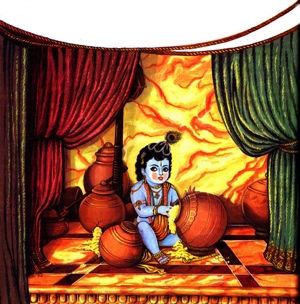
 

I’ve been told I have a mischievous smile, that makes me seem like I’m up to something (albeit something good). I am. I suppose that it’s my heritage, as my namesake, Krishna, that avatar of wisdom and the courage to make right-minded decisions, was also known to play pranks on maids. I am not big on pranks, but I do see life as a game to play at, passionately, wholeheartedly, but for the love of it.

My friend’s point in bringing up this thing was in the analogy to accepting the idea of transness in another person**. The thing about being transgender is that it’s not something we have a blood test for, or even a questionnaire or other psychological instrument that can provide a valid and reliable*** “diagnosis” for us. The old standard of care (which really policed trans women far more than trans men, and policed far more than helped) was to ignore us. Hope we’d go away, and, if after a while, we had not, deny us and tell us we’re fakers, and then keep doing this until we can prove we can be ladylike in pumps and seamed stockings. Then maybe hormones and surgeries and a modicum of acceptance****. The new standard of care is to mostly just accept the statement at face value – mostly based on the principal that, if nothing else, who would really want to screw up their life like this if they were just playing around?

The claim is leveled unfairly at broader issues in cognition and psychology. We have reliable and valid means of identifying depression, anxiety disorders, OCD, cognitive problems secondary to a variety of causes, and many other things. My autism diagnoses are valid and reliable without having to do a blood stick or needing a specific genetic marker. So it’s really not true in that broader sense, but it is true when it comes to things like sexual orientation and gender identity. Even if we wanted one, we don’t have a valid and interpretable questionnaire that would correctly identify us, either pre or post hoc.

I think one thing cisgender people don’t really consider, however, is that most of us transgender people are our own biggest skeptics. I spent 38 years trying to be a boy and trying to be a man. I tried being a gay man – it turns out I make an even more terrible gay man than I make a straight man. I thought love would cure me and made multiple lengthy attempts with straight women to try and prove this point. A lot of people, especially now, transition much younger, but had it been 28 or even 18 instead of 38… That’s still a long time thinking about this. When I first came out, I’d say, “I think I might be transgender” or something sheepish like that. Sister, please. I don’t think, I know*****. I think people get this in my story, intuitively. Which probably goes back to how binary and how feminine I am. But out of the probably 200 people, to whom I’ve come out by now, only one tried to argue the point with me. In his defense, we’d just met, and he wanted me to be his boyfriend (dearheart, I’d make a terrible boyfriend to anyone, and I can give you references if you’d like to fact check). 

Anyways, my life has become unimaginably richer in the just seven months or so it’s been since I finally accepted, on faith, this idea, which, on it’s surface, seems quite as crazy as believing in a white haired man looking down in judgment (I believe in God, for the record, but I think that conception of God is cray-cray). I’ve been told, so I don’t guess, now, by several people who knew me as a “man” and now also as a woman, that I make so much more sense to them this way, that I seem airier and now unceasingly bounce and skip through life these past months, and I see in the eyes of my friends that they are benefitting from this new faith, now (when I’m not even full time yet). The (vast) majority of these early people I’ve told have been thrilled to be “in” on the secret and to celebrate with me. 

Let’s be honest, I was made to put on a cute dress and twirl around. But it’s not the dress that gives a bounce to my step. It isn’t the heels, cute as they are. It isn’t the makeup or the earrings. The twinkle in my eye doesn’t come from the contrast increasing benefit of mascara. The lilt in my voice isn’t voice coaching******. It’s the faith that puts the spring in my step and the twinkle in my eye. The faith in me. 

* I’m appropriating this term from Noam Chomsky, because I think it fits remarkably well. Chomsky’s point, in essence, is that language cannot be understood by pure virtue of its surface features – the sounds, character shapes, and so on, because its deep structure lies in its communicating approximations of ideas that humans (and other creatures with language) understand with our brains. This explains why anthropologists and archeologists need Rosetta stones. 

** I hardly ever throw a line to my trans friends who are always looking for excuses to call people traitors, and this is no exception… I am not going into the details, which go beyond my friend’s acceptance of my own journey, but he has nothing to prove as an ally to anyone. 

*** Basically, reliable means that a test could be repeated, at least in principle, by different people at different times, and provide the same results; valid, which requires reliable, means that the test means what it claims to mean, because it can predict outcomes well, because it correlates strongly with other validated tests of the same condition, etc. Although most people don’t know it, most procedures used in most of clinical psychology are held to essentially the same standards of reliability and validity as “objective” biological tests used in medicine. 

**** Jan Morris’s story shows that the standard of care, even back then, was unevenly applied, with far better treatment to educated, affluent women like her or me. 

***** Embarrassing number of parentheticals by your shameless authoress, but I can’t resist the bubble gum comic joke. The teacher says, “Billy, what is the answer to this problem” Billy says, “What do you think it is, ma’am?” She says, “I don’t think, I know.” Billy says, “I don’t think I know, either!”

******* Now I’m just being impertinent. For the record, I am seeing a voice coach on Monday (it’s Saturday the 17th today… I write these blog posts in advance and schedule them out, and I’ll edit and add pictures later, because it seems wasteful to buy airplane WiFi to blog). I’m curious about what she has to say, but I don’t really think this is a big focus area for me, although if there are tweaks I can do, beyond what I do subconsciously and with a little iPhone app training, I’ll possibly do them. Jenny Boylan did this, though, and she felt like she mistressed (I must resort to a parenthetical to opine on my love for neologism, since a footnote within my sixth footnote in this blog would be ridiculous, even for me) it, but it felt insincere, and she stopped doing it. When I did the iPhone app, I felt kind of like this also, but anyways, we’ll see. 
Getting My Ears Pierced

I finally got my earlobes pierced*. It was a good experience. The piercing specialist, who has crazy gaugings with gears spinning in them and most likely some advanced form of clean/renewable electric power generation happening inside, asked me if I would want to gauge my ears at any point in the future (considerate of him to ask, and I’m fine with other people gauging their ears, but #No).

This got me to thinking about something along the lines of the hierarchical sexism problems that Julia Serano writes about. I identify as queer** in two senses. I am gender non-conforming, in the sense that I try to / want to conform well within female normative appearance (happily) and behavior but I was assigned male at birth***. I am also sexually non-conforming in that I am bisexual-going-on-lesbian, in a really amazing relationship with a lesbian identified woman who has always known me and accepted me as a woman, even when it’s under the male mask for work, etc.

And yet, right? (In Japanese, the women especially say あの、ぬ。I find this a lot more artful, but, well, my Japanese is rusty these days, but you think I sound like a girl in English, whew, you should hear me speak Japanese.) As queer people have more and more come out into the open, doesn’t it sometimes seem that being appearance non-conforming is more queer than being LGBTQIA+? It seems like a different thing than the days, back when I was in college, that people called the local coffee chain “Oppresso Royale” for policing tattoos and piercings. Rather, it seems sometimes that queerness of the appearance kind – having lots of tattoos, body piercings, dressing in non-conforming ways, sometimes is a shibboleth for queer spaces. *Cough* really a shibboleth for BTQIA+ spaces and maybe occasionally L spaces (I haven’t had opportunities to go to that many L spaces, but I do get invited). I guess this isn’t really a new thing. Kate Bornstein, of all people, has an experience in her wonderful memoir where she gets read as cis/het in a lesbian bar, and they kind of gave her the “this is no place for a pretty little thing like you” line until it turned out she was kinkier-than-thou.

This is really absurd and is really an element of something between hierarchicalism and what Serano calls Oppression Olympics. It is, ultimately, putting people into different better/worse categorizations based on variables like race/sex/appearance rather than rejecting the notion that people are fundamentally more and less valuable in an intrinsic way****, from one to the next.

Queer spaces should not gatekeep sexual/gender minorities based on stuff that is not fundamentally related to being a sexual/gender minority. Being trans and being a woman who loves a woman make me queer. That woman I love has a number of tattoos, and sometimes I kiss them and sometimes I like looking at them, and other times I really don’t have strong feelings about her tattoos, or even her discussion of getting a sleeve, and occasionally I make fun of them. But my not having any tattoos, and no piercings except my ungauged earlobes, in which I wear girly earrings that match my outfit whenever possible, do not de-queer me, and it’s no more right that I be looked down upon because I am au naturel than for me to look down on someone because they are pierced or tattooed. 

Really fundamental to this concern is the idea of identities, experiences, and behaviors being more revolutionary because they are farther from the mainstream. In that way, my argument is that it is much the same as claiming femmes somehow invalidate the experience of other lesbian women by their femininity or preserve the patriarchy because they kiss women, but do so in lipstick and heels. Maybe it’s even easier to see in the idea that somehow non-tattooed people are oppressing tattooed people with their plain skin. The bottom line is that the truly revolutionary acts are to be authentic to oneself, and to decide that all people matter. And the revolution won’t be over, until life is equal, until love is equal, until gifts are equal. 

* Use a reputable tattoo / piercing parlor, it’s worth it.

** Sometimes I hear people in the trans community use queer to mean non-binary, instead of saying the more specific genderqueer. I’d really like to push to keep queer as an umbrella identification, because there’s no other good word that tries to capture the entirety of people who are gender and/or sexually non-conforming to societies’ expectations. Like the concept of “colored,” the umbrella use of queer is a political construct – because we all experience marginalization because we are queer, like nearly Ll “colored” people have experienced at least some marginalization in a “white” society. It is not my intent to imply that there is a homogeneity to queer people or to straight (cis/het) people. There isn’t, and that’s the whole point.

*** I find this language clumsy and overly indulgent of implausibly constructionist gender theories, but whatever.

**** Careful readers will note I am a Fountainhead-loving libertarian and wonder at this statement. I take a constructionist view of equality. I do not believe that people are born equal, nor do I believe they remain equal over the course of their lives. I think we create societal systems, however, that give them equality in the sense of opportunity. Those societal systems reduce/eliminate, and I reject, the idea of valuating people on many things that they are rather than do, such as race or sex. I also reject valuating people based on extraneous variables – I don’t give someone the kind of respect I value most because of their tattoos – tattoos have nothing to do, mostly, with my loves – passion, creativity, ingenuity. I will give mad props to a really pretty tattoo, though, because I love beauty.

Empathizing, Systemizing, Autism, and Trans People

Some of you may know that a big part of my professional life right now is tied up in the early diagnosis of, comprehensive treatment planning for, and early intensive behavioral intervention with kids with autism*. I kind of ❤ them, and I kind of ❤ their families. I am involved more peripherally and less intensively with adolescent/adult autism advocacy and services, but really it is preschoolers by whom I am surrounded on a daily basis. 

I get asked a fair amount about connections between autism and being transgender. One of the dominant pathophysiological models of autism is called the extreme male brain theory. (Some people in the autism world are fairly angry about this theory, but no one has put forward a scientific argument against it nor a better scientific model of the autism pathophysiology.) Although we don’t know exactly why it happens, this theory strongly implicates an excess of testosterone during a critical prenatal developmental period that essentially over-masculinizes the brain (and, to a limited extent, other parts of the body – surprisingly, hirsuitism has an elevated base rate in women with ASD). According to this model, whose chief developer is Simon Baron Cohen, there is a general pattern that some cognitive skills follow, which is:

F > M > Autism

… And a pattern that other cognitive skills follow, which is:

Autism > M > F

Where M is neurotypical (without autism) males, F is neurotypical females, and Autism is people of any sex with autism. As with most cognitive skills, individual differences are far larger than group differences in range, and so these are small averaged group effects (not every man or woman, NT or Autism, fits this pattern for every or even necessarily any cognitive skill, but on average, large groups of them do). The general pattern in both cases is that the autism population is at the extreme end of the male side of the curve. In the first case (where women have the advantage) these skills fall into a category Baron Cohen and others call empathizing skills. They tend to be holistic kinds of skills, like fine-grain modulation of production and detection and production of emotions and nuance, non-literal and non-verbal communicative adjuncts that “spice” language. They also include a number of skills that, at least to a neuroscientist, are related. The male advantaged skills fall into an area they call Systemizing, and they include analysis, classification, sequential task analysis, and a number of other skills.

So to start with, there’s already a theory linking autism with sex/gender. The theory explains the way in which the sex differences in autism occur both in terms of base rate and presentation (and why mild autism may go unnoticed in girls). To add to this, there has been some recent research linking people with autism and transgender people, with substantially higher rates of people identifying as transgender among people with autism than in the general population. One of the hardest things for this data to explain, however, is why there are autistic trans girls/women – if autism biases to male, it would seem there would be significantly more trans men among XX-karyotype people with autism, but significantly less trans women among XY-karyotype people with autism, because the pathophysiology of autism biases all people with autism of all sexes in the direction of at least certain kinds of masculinization.

I commented on this on a listserv recently, and a colleague kindly sent me an article I had not seen. This one looked at Baron Cohen’s Empathizing and Systemizing variables (EQ and SQ quotients for these can be derived from standardized, validated questionnaires, and a fair amount is known about the performance of various groups on these instruments). It found something interesting. In this study, adolescents who were transgender had EQ scores comparable to cisgender males. Whether they were MTF or FTM! The SQ’s were in the middle, without statistical differences from either men or women. In other words, the EQ/SQ measures did not classify trans youth in a way that concords with their self-identified gender identity, when in the group accuracy sense, it can do so for cis/NT youth.

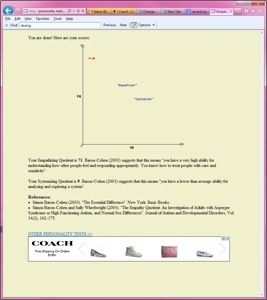
And … this is how I experience the world, in terms of the same questions (you can take the questionnaire and obtain your scores here, although ideally it’s helpful to have an external source describe us, since they may see us very differently than we see ourselves):

20140428-072046.jpg
I may not be perceived exactly this way by others, but this is how I feel, not all the pretending I’ve done all my life, to try and fit in with boys and men … on the other hand, I’m a little skeptical of this idea of the Coach store as “other personality testing” … well, the targeted marketers know me well

It’s pretty much the same way that test that classifies people accurately on sex based on answers to seemingly innocuous questions came out. Both put me overwhelmingly in female territory.

One of my observations about this is that this study is in trans youth. That’s cool and helpful, because many of these kids did not go through decades of forced pretending like I did. On the other hand, generally speaking, younger samples of trans-identified people contain relatively more very binary** and relatively less binary (transsexual) people, although there are also youth who are very binary. I am, by my own admission, and no one is jumping up to disagree, also very binary. I reap lots of benefit from the fact that I made no sense as a “man” but, aside from my height, largely fit right in as a woman. I have two more observations I think might be relevant. One is that, in different contexts, I have actually met probably a fair number of trans people with autism. Of them, only one that I can think of was “very binary” in her appearance. The second is a comment a cis-ally friend made, that in reading Jenny Boylan’s book, she doesn’t hear a woman’s voice, but rather hears a transgender voice. Now, Boylan is pretty binary, and I’m skeptical of my friend’s ability to pick a “transgender” experience out of a blind lineup of male and female voices (or really even for anyone to articulate a proposed nosology for what a transgender voice sounds like). But I have to admit, while I at first pooh-poohed this idea, I wonder now.

Is there a possibility that, rather than FTM and MTF spectrums, what is going on with people who are binary transsexuals (meaning they want to transition, and more specifically to transition into an easily genderable masculine maleness or feminine femaleness) is fundamentally different and separate from what is going on with relatively less-binary people (that is, people who may or may not transition, but do not particularly desire to pass or blend, and who are not particularly seeking an easily genderable presentation)? I’m not saying anyone would be a “true” transgender person and certainly not that anyone would be a false one. I reject this whole line of nonsense that calls me some complicated non-homosexual transsexual male instead of just calling me the intuitively obvious trans woman. If this were the case, is it possible that the former category of very binary trans people would generally classify like cisgender peers who match their gender identity? And this less binary group, whose core experience may be gender role non-conformance (rather than a gender identity that is more directly “opposite” their birth-assigned sex), could in actuality have its own place on the EQ/SQ matrix (and perhaps even on some as-yet-unidentified third orthogonal plane, in which these individuals would be highly differentiated and cis males/females would not, nor would highly binary trans males/females), rather than mirroring male or female values? Like the data on the extreme male brain theory, one would also predict that, alongside gender nonconformance, these brains may be optimized, on average, to do certain things way better than the gender conforming brains many of us have. And put all together, could they, indeed, have transgender voices rather than male or female voices? 

And the final what if: what if among people with autism, this latter proposed grouping were represented at higher base rates, but the former group were not? This might explain the presence of so many trans women with autism and also draw a parallel explanation that could shed light on the experience of less binary NT trans people. It might also explain the fight between the spectrum narrative and the woman-trapped-in-a-man’s-body narrative. I have no recollection of being uncertain, ever, of where I really belonged on the masculinity-femininity continuum. I didn’t know it was possible that I could be a girl, with all the external evidence pointing against it and all the internal evidence pointing towards it. But I’ve always known I don’t have an ounce of masculinity in me. I just didn’t know how to get to womanhood without being killed or benefitting from magic or the technology of an advanced alien civilization. Without being able to experience such a world, I can also say that, for me, being allowed to dress and act like a girl but still grouped with and identified as a boy would not have been enough. The spectrum narrative doesn’t explain why, the first time I put foundation on my face (which is pretty much enough to make me look female), I knew immediately that I was seeing me for the first time. It doesn’t explain why, once I finally accepted the insane idea that I could find my womanhood, I knew exactly what it should look like, whereas I’ve never known how my supposed masculinity could look. To be indelicate, it also doesn’t explain why, when you ask many very binary trans women like me, outside of financial, safety, and outcome considerations, once we start transition, the question “do you want surgical options” this is not much of a question at all. That is, of course I do – given that it is very safe, the outcomes are generally very good, and I can afford it, it’s been a question of when and not if, ever since I decided to transition, and again, once I accepted womanhood, this has always been a foregone conclusion.

Let me stop here and take a really deep breath, because I sound like Professor Bailey from Northwestern, and the next thing you know, I’ll be doing the kind of shoddy research that is performed in gay bars and published in sexology journals. That person and others before him get caught up in trying to prove/disprove transness, as well as a host of other things (most prominently male bisexuality). I don’t care about that at all. And they are connected to traditions that gatekeep access to healthcare services to trans people (particularly access to hormones and surgery). Again, I’m firmly against that – I’m not saying less binary people should not transition, and I’m not saying they should. Actually, all I’m saying is that, while I still kind of hate calls to signal amplify, it may be really important to improving trans peoples’ quality of life to better understand the experiences of less binary trans people. And for that to happen, more of them, both autism and NT, need to tell their stories – neuroscience may also be informative, but it’s a concern that non-binary trans people are doubly marginalized, living trans in a cis world and then damned again by living less binary trans in a binary trans world.

Then, if our experiences are deeply and fundamentally different, us very binary people and less binary people, then maybe we would stop bickering over defining our supposedly common space and instead be allies and co-advocate for our common causes, while respecting each other’s right to have and celebrate their own narratives. I’m not saying I’m sure this is the right answer, but I’m curious. I’ve always thought people with and without autism have a lot to offer each other. I do think very binary and less binary people have a lot to offer each other, too. And what if transgender and autistic people were more involved in the process of trying to identify sub-types or sub-entities? Would we ask different questions based on our desire to help each other and understand ourselves, or would be just as driven to be “right” or to prove/disprove our own experiences’ validity as the sexologists are?

* With respect, I am just going to say “autism”; I mean people diagnosable with autism spectrum disorders, including Asperger’s Disorder, although my hope is that most of them are thriving and living life. I’m also bypassing the question of using the phrase “people with autism” instead of “autistic people” – I use the former because I work with children, and their parents seem to prefer it, but I understand why and respect that autistic self-advocates frequently choose the latter. Finally, I generally use neurotypical, or NT, but I celebrate neurodiversity and I do also like what some people do, which is to say autistic and say allistic for non-autistic people

** I’m making up the wording as I go, sorry, but what I want to delineate is not the difference between genderqueer/genderfluid people and transsexual-identified people, but rather between people who identify deeply with the binary and those who identify weakly with the binary, whether or not they choose hormones, transition, surgeries, and so on.

Learning to Be Loved

I’ve said before that I really haven’t been fooling anyone with the sad drag show that has been my male life. At support group the topic of coming out on social media came up – I’ve always been out here, obviously, and on Facebook. That’s because I resisted joining Facebook for the longest time, and my erstwhile male identity never was on FB. Twitter is a different story – I have a fairly mature presence there, with a lot more followers than anywhere else. So, it’s actually important to me, and I have given a little thought to coming out on Twitter. I joked at group that I would say, “I’m transgender. I’m sorry for my sad impersonation of a man. I know it’s embarrassing, it won’t happen again.” That actually pretty much sums it up – if you follow me on Twitter* you’ll probably actually see that tweet in a few months. It’s probably funnier to me than anyone – it probably won’t be how I finally break into Huffington Post’s Funniest Tweets by Women weekly column. Sigh.

I’m kind of a walking stereotype, which I’ve also said before. I like heels (but not embarrassingly high, and those chunky low heel pumps from Coach are being discounted, hmmm…). I like skirts and dresses (but not too short). I like makeup (but not too much eye shadow, it looks garish on me). I’m not even full time and I have two designer purses (Saffiano is way nicer than I expected it to be, incidentally). I drink cosmos and drink every kind of martini but an actual, normal martini. I listen to girly music. And cry along at the sad songs. Kind of a lot. I still dream of being Elizabeth in Pride & Prejudice (the original, not the one with zombies, although in a pinch I’m open to negotiation). I’m flirty, often just because it’s fun, and I understand the concept of a flirty hemline.

The one place where I’m not exactly a walking stereotype is the continuing ambiguity of my sexual orientation. I do find it incredibly liberating to say I’m not really sexually/romantically attracted to very feminine women, although I like them a lot as friends, and I enjoy looking at how they dress and do their makeup, and I try to learn some tricks from them, because I’m pretty moderately feminine myself. That pretending went away immediately when I came out the first time. I want to be a beautiful woman (and the emotionally unstable one, but let’s not get into that trope) far more than I want to be with one. And I always nod along silently when women say they’re not that into guys based on their looks. Preach it, sisters. I was never really attracted to what I was “supposed” to be attracted to. I am attracted to masculinity, though. At least in relatively small to moderate doses, I find it achingly beautiful. I don’t want to be it. I never have, and this is a big part of why my attempt at masculinity is so sad (on a particularly butch day in my en homme form** I’m probably roughly Ellen DeGeneres). But the gap teeth and the goofy smiles and the bravado, I find it all amazingly cute. So I say masculinity, whatever. I’m attracted to my girlfriend’s masculinity. Or butchness. Or agency. Or whatever. It’s so much hotter to me than girly girlness.

I adore how she can wear the same couple of shirts she cycles through day after day without any self-consciousness, while I try to remember the last outfits the people I’ll see today saw me in, to avoid the mortification that they’ll see me in the same outfit again (I’ve been a little bit less like this in my en homme form, recently, because it’s just getting harder and harder to put on a male mask, even a kind of a sad one, day after day, but before transition for some time, I was pretty much like this already). I love that she doesn’t consider matters such as whether her underwear matches her clothes. That her clothes are pretty much not getting ironed unless I do it. That she went to a “bro party” because her friend considers her one of the guys (and I get to tease her and pretend to suspect that there were strippers involved). That she lets me say I’m attracted to her masculinity (I usually say butchness, but I have said it that way) and isn’t threatened by it.

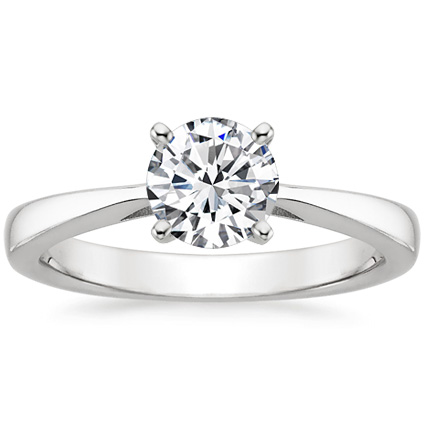
She’s got some issues that we’re working through, too, to be sure, and I’m still kind of holding on to see how those get worked out. But. I’m kind of in love with her. Okay, when I say kind of, I mean my heart’s skipped a lot of beats recently. I want to build a nest for her and not let her do any of the decorating (she’s been trying to convince me recently that her choices are not terrible, and I’m observing the evidence, but so far, #No). Okay, I’ve already begun reminding her that diamonds are the Taurus birthstone and educating her about the importance of truly conflict-free, ethical trade diamonds. Soon I’m sure I’ll start dropping hints*** about my ring size (7.5) and setting preferences (something simple and elegant, probably white gold, just one stone, nothing ostentatious). Okay, I’m a little embarrassed that I actually typed all that “out loud.” And haven’t deleted it (and in fact saved the strikeout text for a much less embarrassing admission in the next paragraph and neither this nor the really embarrassing thing I say in the footnotes).

trellis-ring

Yeah. So, erm something like this with a didn’t-leave-a-shorty-armless diamond, please? What… not subtle enough to put a picture of an engagement ring in the middle of a blog post? Can I at least work out some click-through arrangement? Or should I just be really embarrassed at blatantly inserting a picture of an engagement ring in this post?

And…moving on.

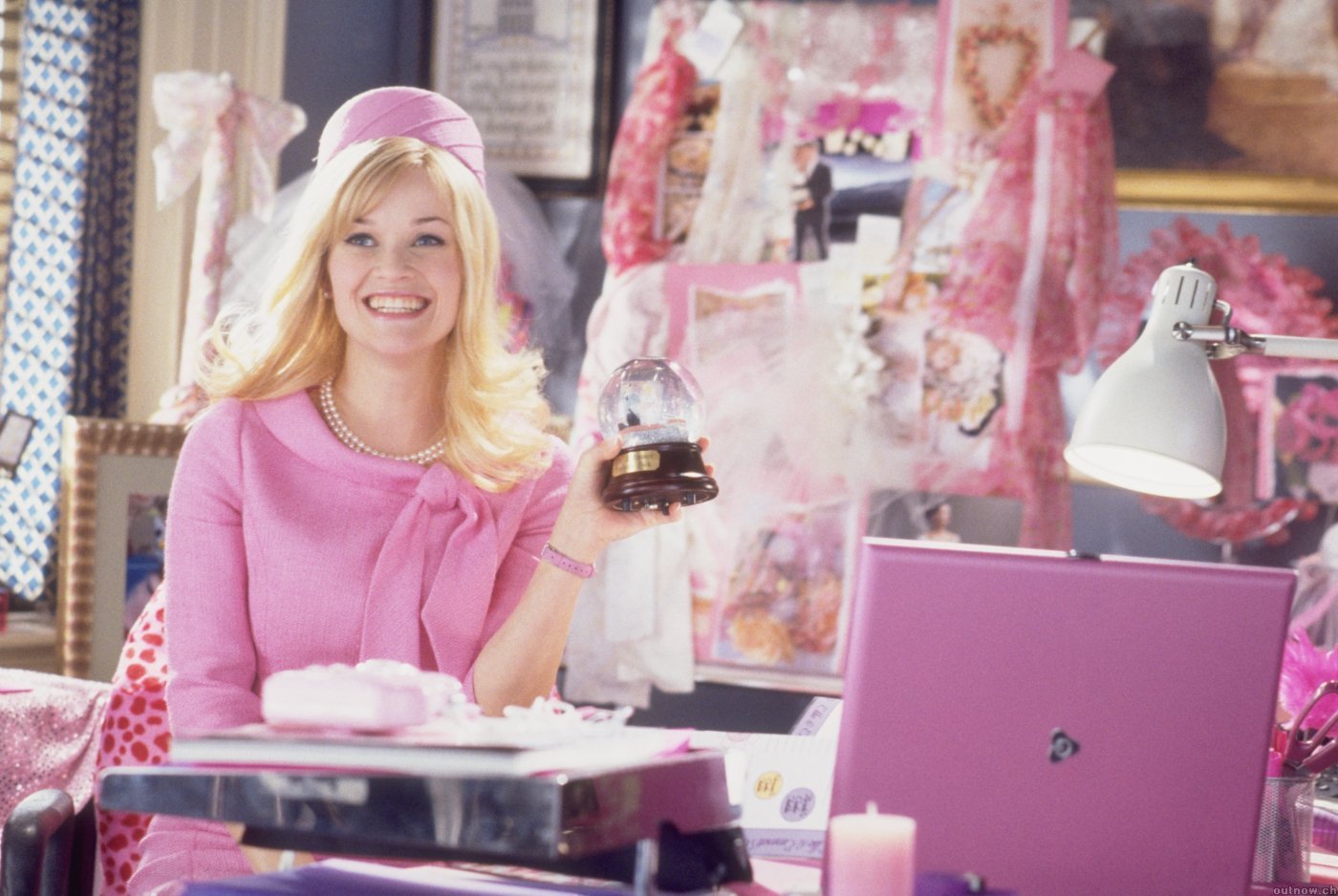
In terms of defining my sexuality, I’m really not bisexual-going-on-lesbian in the pansexual kind of sense (being bisexual means a whole lot of things, and covers a really wide range of experiences and orientations, incidentally). I really like a slice of mildly to moderately masculine/butch people. The rest, I feel, is actually *gasp* sort of like how those creepy sexologists describe feminine sexuality – I’m kind of attracted to everything pretty. I don’t foresee myself being with a hairy, dirty-white-cap wearing football superfan, and I don’t really want anyone who thinks his biceps are prettier than I am. But… a sensitive guy with strong arms and a gentle smile? A dog and a pickup truck Prius Subaru-with-a-manual-transmission-so-I-can-borrow-it-in-snowstorms-and-continue-to-drive-pretty-but-impractical-convertibles? Swoon. I know. Stereotype. Total Reece Witherspoon movie moment. And I’m sure if I were not in love, and if he came along, Reece will steal him from me anyway, probably by talking him into teaching her how to drive a manual transmission. Hands meet on the shifter. Happy ending by the two hour mark, and time left over to buy new pink Prada pumps that I would never be able to pull off. Sigh.

legallyblond

Oh my god, oh my god you guys…

I write all of this in support of a really cool story that came up on my timeline recently about a cis/het woman who fell for a trans man. I loved that article.

selfmade

Seriously, this was such a beautiful piece, it really made me cry

My situation is quite a bit different, but my experience of sexuality is very similar – there’s some level at which masculinity is kind of a separate entity from maleness (particularly karyotype maleness, since I do consider the gentleman in the story to be male). It would be ideal to call it something other than masculinity to avoid policing anyone else’s gender expression. But whatever, you know intuitively, most of you, what I’m talking about. Whether the objects of our affection are cis men, trans men, or butch women, she and I are both attracted to masculinity or whatever else you want to call it. I haven’t met her, but I suspect like me, it might just her heart swoon. It might make her want to preen and do her hair just right. Maybe it makes her want to twirl around so her boyfriend can appreciate her dress. I kind of get that, because I’m enjoying the same with my girlfriend. It is, in essence, the “deep in the binary” feminine experience of romance and desire, and it’s really just like the straight experience of feminine desire, just queerer. It’s what I’m going through to learn how to finally feel attraction without compromise. And it’s an important milestone on the way to being loved and loving, in a romantic sense, again, without the hangups and compromises and unspoken components all this had when I was pretending to be a man.

And let’s not get into a hierarchy discussion of how it’s less queer than more gender or tradition non-conforming relationships, this is a love story, not the Olympics. Everybody should win their own prize.

* For safety reasons, I’m not linking my Twitter account here, until I come out on Twitter. I’m not trying to hide anything, but this blogging publicly with my full intended name en femme when I’m not full time yet is kind of uncharted territory, and I’m making this up as I go.

** I plan to be full time (Mira forevermore) around August. Can’t come a day too soon.

*** Here’s another thing… So in Michigan I can legally marry her, right now and probably for the next year or so, and it would probably “stick” later, even if I were caught wearing a cute dress, and I am for sure not going to be caught dead at my own wedding in a tuxedo. I really want to legally be a bride, though, and I may sound awfully impulsive, but there’s no way I’m getting married within a year … a small, intimate Indian wedding is 300 people and only one elephant. So I’d need to gay marry her, even if that were to happen. Erm. Support marriage equality.

Things Change in a Moment

I had a drink with a friend the other night, at a newer brewery*. It was a really great night. Even though I got carded (I really need a new drivers license, hopefully in 3-4 months I may legally change my name, and at least have a female name and appearance on it, even if it still says “M”), but it was no big deal. They were respectful, and treated me like any other woman. No one stared at me. I not only felt comfortable with my girlfriend and our friend, but I felt comfortable in the place, chatting up waitresses and being my usual bubbly self. We had a little food, but I was watching my waist & my wallet, and I didn’t have a full dinner (I split appetizers with my girlfriend). I only had one beer, so I didn’t get drunk or even tipsy (well, I do get pretty animated after just half a drink, and at home I put plastic wrap and a rubber band over the half-empty beer bottle and save it for tomorrow, hashtag cheapest date ever). But it had been a long week at work. My girlfriend politely ignored all my nonverbal / discreet attempts to say, “Your sweetie is exhausted!!!” So I was loving the conversation, but went home a bit after I was worn out.

Then I did a stupid (albeit very small stupid, in the grand scheme of things) thing. I wanted to stop at the supermarket for a couple of things for making brekkie after sleeping in. So the supermarket that’s around the corner is the kind of place where there are semi-abandoned-by-their-parents groups of kids with bad manners roving around. Kids incidentally who are too old to be awake, let alone in the store, at that hour. Anyhow. I’ve gone in there during the day, dressed en femme, and it was cool, but this was different. These kids did some serious slack-jawed staring. Now, you should know that African American kids, especially, stare at me en homme too, maybe even more. They even ask me if I know I look just like Michael Jackson (I don’t, but I’m polite and say I get that all the time in my best southern charm) or go get their sister to show them. So I don’t even know if they were staring because they knew I was trans or because I’ve just always been something unlike anything they’d ever see before. But tired and late at night and … It really got to me. I cried and cried into my sweetie’s shoulder in bed that night. Everything can change in a moment – it had been such an affirming evening.

I get over myself pretty quickly. As I was crying, my intersectionalist nucleus** was already gently pointing out that these are poor minority kids, who are left to wander the supermarket at 11 PM, and even being trans, I sadly have a huge number of advantages over them, and in most of society outside of a supermarket at 11 PM on a Friday, I am way less marginalized than they are. By the morning. I was proud that I held my head up and got everything I needed instead of bolting out. And … honestly, I don’t feel emotionally different on estrogen, but crying in front of someone else, and for myself (as opposed to over someone else or a movie or story) is something I’ve never been able to do, so I felt really proud of myself for being able to cry in my girlfriend’s arms. And then again, I was chopping cilantro to put in the omelette and listening to country music on the SoundLink, and again, everything can change in a moment. Thank god for that.

* Excellent, incidentally – they have saganaki and sausages they light on fire, and it’s fun to let boys light stuff on fire in a safe environment, and I had a great dark cherry wheat beer. Also my girlfriend lets me make her order things I want to taste, if they look like she’ll like them too, and having been played by that one many times, I am really enjoying being on the other side of it!

** Usually, it’s called a nucleus if it’s in your central nervous system, and a ganglia if it’s outside, but the basal ganglia are an obvious exception. Anyway, I’m trying to internalize my intersectionalism here, people!

Am I a Woman of Color?

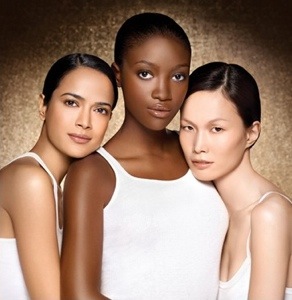
I’ve done a lot of thinking about this question, both the variant asking whether I am a person of color, and more to the point, if I am a woman of color (I think less about “Am I a Woman?” … I’m at peace that I am)*. When I’ve asked Caucasian feminists to weigh in, they usually answer with an immediate (and cursory?) “yes.” I think this is correct, but an equally resounding “no” is important, and I think the full story is not told without both the yes and the no.

20140428-074210.jpg
Before it became fashionable to be Irish once a year for St. Patrick’s day, and whenever Guiness is poured or Celtic music is played, or just because one always fancied red hair, Irish Americans were the targets of a lot of racism by the “white” minority, who were somewhat less white than them

Let me start with the “no.” First, it’s important to consider that, much like the question of whether pink is for boys and blue is for girls, or vice versa, the answer to the question, “Who is white?” has changed. Riots among Anglo-Saxon (“white”), Irish, and Italian Americans in the early 20th century were characterized as race conflicts. The concept of being “white” has always really been rooted in Colonialism and control of people. “White” people were Europeans who exerted control, and “colored” people were the othered people they subjugated – predominantly Africans and indigenous Americans. Asians have long played an indeterminate role in this equation. Some of us, and sometimes, were othered as colored people, but other times, we were not. Even in the Colonial era, India had a more complex and different relationship with the crown than any other nation predominantly peopled with “colored folk.” This did not stop us from getting called names – you will occasionally even see the “N word” used to describe my ancestors by Britons (e.g., in passing in the wondrous Passage to India by E. M. Foster). I don’t want to get too sidetracked on this – complex is really a key word, and it has the funny consequence that, were in the UK instead of the US, there would be a lot more Indian faces around me, and certainly far more Indian food, but I would also be far more marginalized than I am here. I simply want to say that our experience was far different than our sisters and brothers in Africa and South America.

More recently and humorously, the mid-2000s pass-time that was Stuff White People Like listed things, well, that white people like, and I’m embarrassed to admit how many are true of me (this is part of the gag, incidentally – the blog was created by an Asian American). So, much like Othello, I am called often whiter than many of my unequivocally “white” girlfriends (I’ve only ever had one non-Caucasian girlfriend, although I’ve gone on dates with people of a variety of ethnicities). Many of my less-grounded-in-feminism women friends have told me they think of me as white. It’s not as simple as that.

20140428-073519.jpg
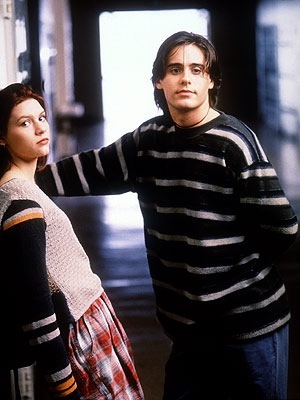
It’s fantastic that Stuff White People Like ended on My So Called Life. And I may be the stupidest woman alive in listening to all this Dallas Buyers’ Club debating and not realize that Jared Leto was Jordan Catalano

However, all of this should actually be easy to think about by analogy for my feminist and LGBTQIA+ friends – there’s a lot of complaining about traditional gender roles within the “binary.” (I was caught by surprise at a recent support group meeting – someone didn’t know the word; it’s come up in so many conversations in the last half year that I guess I forgot it was not a household concept. That binary is the gender binary that misrepresents maleness and femaleness, or masculinity or feminity, as being opposing states of a binary system, most crudely represented by “1” signifying the “presence” of masculinity and “0” representing the “absence” of femininity). If anything, the white/colored “binary” is far more, not less flawed and nonsensical than the male/female binary. The latter has existed across time and culture and is likely a basic (but malleable) part of the human competing strategy, and many animal ones as well. The former is rooted in an extremely narrow and Eurocentric conception of history. So, while I endorse the gender binary (for me – I am a femme and attracted to moderately masculine/butch people – I don’t push the gender binary on others or police their gender), the “race binary” is just dissonant with my experience, and in this way, I am leery of identifying as a trans woman of color, because it endorses the underlying binary.

A corollary to this: it is vitally important for people like me to remember that marginalization and oppression actually make up a relatively small part of our life histories and experiences. I mean, let’s be real. My Brahmin ancestors came from significant privilege even under the oppression of the British Raj. My parents are black sheep in my family, to some extent, because neither have a doctorate (both have masters degrees in Chemistry – in my family, when you tell an auntie you have a masters degree, they ask why you dropped out). My experience of being a trans woman is far more Coach purses and flash sales at the Limited than homelessness or poverty. It’s the kind of experience being trans where, in more than six months of coming out to more than a hundred people, I’ve had no negative responses and only actively felt gaped at twice. By this standard, arguably the President’s daughters are not women of color, either. I recognize that’s an audacious thing to say, and I don’t want to police their choice to identify or not identify as women of color. I just fear that we privileged (but non-Caucasian) women talking about oppression of racial minorities, as if our direct experience of it is enough to offer a fully informed perspective, run a risk of doing something almost as bad as “mansplaining.”

But that answer, by itself, is simply not complete.

There is also the obvious “yes.” I don’t quite have “skin the color of mocha” (my life is much closer to a queer Taylor Swift song than a queer Ricky Martin song). It’s more like honey, but it’s for sure not alabaster. A woman (of whose ethnicity I am unsure) came up to me at a support group recently and said she was glad another woman of color was there (this town is not so non-diverse, but some of it’s spaces can be amazingly over-representative of Caucasians compared to our city population).

20140428-073913.jpg
I clearly need to consider the subset of products marketed at “women of color,” or at least some of them, anyway, and scads of makeup trends will just never work for me, oh well … I could do worse than these women

Let me go briefly back to leveraging my certainty that I am a woman. I don’t have a uterus, and it’s unlikely I ever will. To my regret, I will never have a child grow inside me. This does mean that I should defer to the voices of women with uteruses (and those who used to have them) in many matters reproductive. But it does not mean that it is not an important part of my experience as a woman to co-advocate with these sisters (I love my sisterhood), and when I do so, I do so in a meaningfully different way than me advocating on behalf of other oppressed groups, in that I am advocating as a fellow woman (just as women stand up for me as a fellow woman – that night I met my girlfriend, her ex did this for me, and it was so amazing).

Furthermore, while I have not experienced so much oppression, I know what it’s like to be othered in subtler ways. I know what it’s like to not conform to the magazine image of beauty, my transness even aside – all the hair colors or makeup that don’t work with my skin, not having the “it” blue or green eyes, and so on. (In spite of having a purely Brahmin Indian lineage going back hundreds of years, I don’t exactly look like most other Indian Americans, either, that’s a topic for another time.) Interestingly, I serve and, in past settings, worked alongside many African American people, and every once in a while, one of the women compliments my having the “good hair,” (if you don’t understand what the phrase means specifically…). To be honest, I am immensely flattered that they sort of considered me one of them, since it’s not a comment they would make to Caucasian people, and certainly not to most people nominally perceived as male, as I was at the time! I know what it’s like to have a name that’s different (the name I chose occurs in several languages, including Sanskrit, but my birth name is common to Indians but not to most Americans, and instantly foreign and “exotic” sounding to Americans… to have fun with them, I point out that it means “mesmerizing” or “charming,” like a snake charmer!). I know what it’s like that the food and customs in my home were “foreign” to my peers.

In essence, I co-advocate with women not only on the basis of our co-humanity, but on shared experiences and interests and perspectives shaped by shared experiences (past, present, and future), which we have in common as women, but which men do not generally share. I do co-advocate, in this very same way, with other women of color, even if we have non-overlapping histories. There are even some ways in which my history as a woman of color (or those of other less marginalized women of color) may be uniquely informative – Lindsey Yoo makes a great case for this. I willingly and gladly take my place alongside other women of color (some of whom were oppressed a lot, and others, like, me, oppressed little or not at all), because I think the world will be a better place when these sisters and I experience less oppression and othering. While doing so, I remember my privilege. I remember that each of us occupies a unique intersection of different forces that privilege us and predispose us to oppression and marginalization. And I stand in the doorway and bid you in – because we are all better together.

* This blog post has an embarrassing number of parentheticals. Radical feminists love parentheticals almost as much as we love footnotes. I just love you so much that I can’t leave the good parts out on you.

You Gotta Have Principles

newmanifesto
I love girl power, and I’m fine with most of the logos, but it’s time we have a feminism that gets back to fighting for “equality, period”

So… Rather than merely attaching myself to hooks’ intersectionalism or to Serano’s trans-feminism, to me, these are my guiding fourth wave feminist principles:

  1. Woman is born in chains, but we are everywhere making her free – to turn Rousseau’s famous quote on its head (although there are arguments that he meant closer to what I mean), rather than pretending that we are created equal, and that our differences are arbitrary constructs, we must recognize that we are born with many inequalities that give and take privilege before we even speak for ourselves and continue to operate in modified forms throughout and beyond our lives.
  2. Sex and gender are deeply rooted in the very existence of human social constructs, and the feminism that helps us will be every bit as radical as this, in an honest manner that understands what we can can and cannot change, today, about human biology. Like Serano and other scientists, and since I am a neuroscientist myself, I do reject the idea that sex/gender are purely socially constructed – although there is arbitrariness in what is perceived as masculine and feminine at a given time, that many people naturally congregate and compartmentalize behaviors into masculine and feminine, and that these are moderately to strongly correlated with karyotype, is a stable feature of humans across time and cultures, and evidence against either a purely socially constructed or a purely genetic (excluding epigenetic effects) notion of sex and gender makes both of these extremes implausible. The focus of fourth wave feminism must not be arguing with people about their gender identity or experiences, or arguing with people about the very existence of gender and sex, but must rather be on how we can use intellectual/philosophical, legal/moral, and scientific / technological innovations to create (not restore) equal playing fields, as we learn more and more about what we can and cannot change, and how we can and cannot change human beings.
  3. Only inclusion builds stronger society. We have ample evidence that segregation does not work. We must stop banging our head repeatedly against doors marked “separate but equal” when we know that this has failed us time and time again. Although she denies it, history generally credits Phyllis Schlafly with using the fright of unisex/gender inclusive bathrooms to stop the ERA, and almost 40 years later, we’re still scared enough of equality that we are frequently choosing segregation (Civil unions? Please…) when we know it is not “close enough.”
  4. The fights for every kind of freedom, for freedom from poverty, freedom from racial/ethnic marginalization, freedom from sexual oppression, freedom from unjust or inhumane incarceration, freedom from dominance by the ignorant – they are all the same fight, and every freedom fighter is our kin-in-arms, and I am in league with everyone who dreams of and yearns for the life beyond the bars. Whenever we start a conversation with “equality for xxx,” are we not implying that, even when we get what we want, some people will be equal-er than others? I’m not saying that we can’t be pragmatic, that we can’t implement equality piece-by-piece, but we have to be clear that the ultimate goal is an inclusive world that provides whatever we mean by equality (not homogenization) as something everyone can enjoy.
  5. No one ever truly became freer standing on the neck of another. Oppressing trans women will not make cis women free. Oppressing the poor does not make the rich free. Demonizing members for mere membership in the dominant ethnic minority is as wrong as demonizing someone for other factors not under their control such as their sex, race, sexual orientation, or gender identity. We are none of us safe until we are all of us safe, and we must build freedom for those who lack it without trying to destroy the freedom of others.

buddha
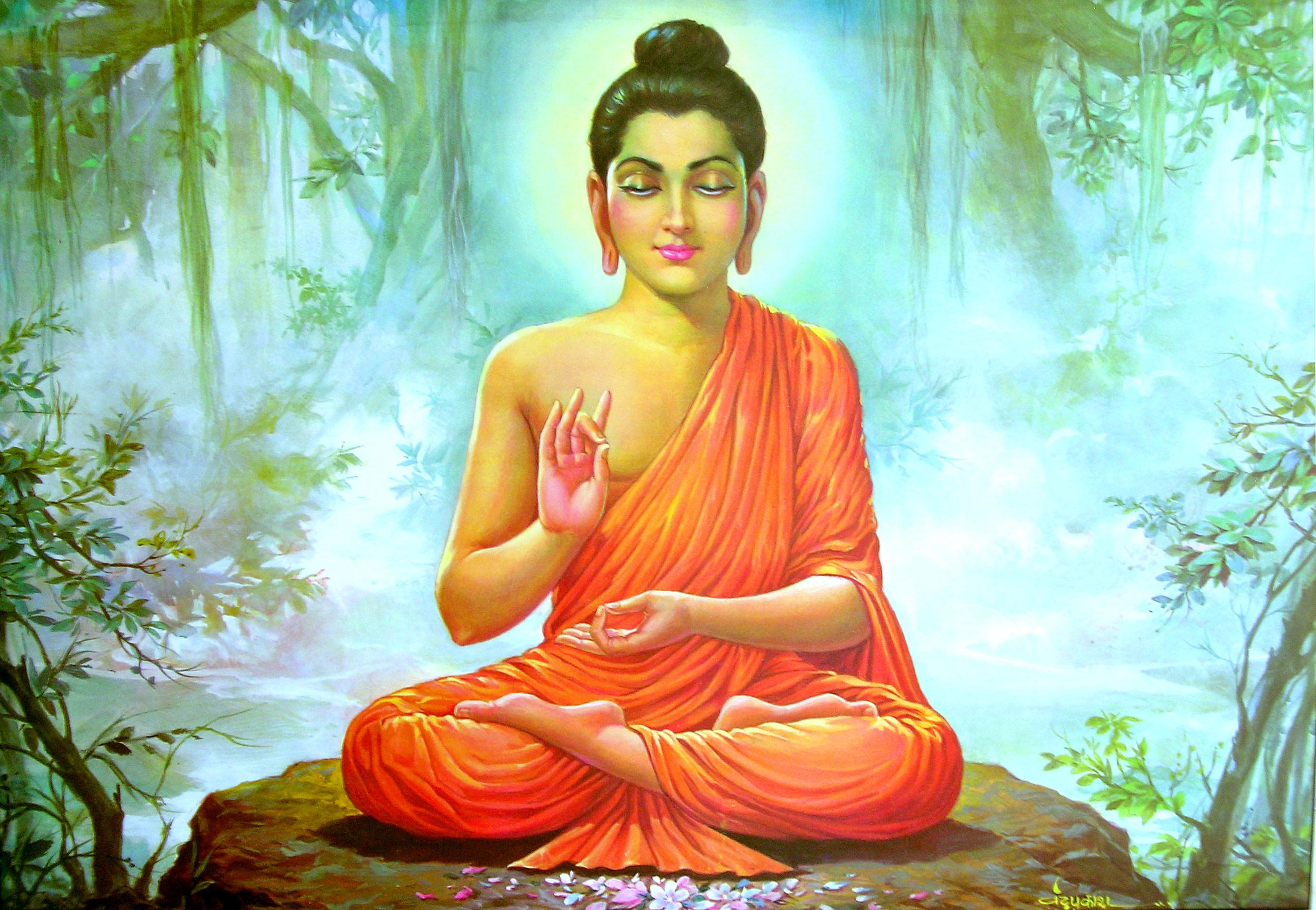
“And Govinda saw that this mask-like smile, this smile of unity over the flowing forms, this smile of simultaneousness over the thousands of births and deaths — this smile of Siddhartha — was exactly the same as the calm, delicate, impenetrable, perhaps gracious, perhaps mocking, wise, thousand-fold smile of Gautama, the Buddha, as he perceived it with awe a hundred times.” — From Siddhartha by Hermann Hesse

To paraphrase Steinem, the advocates of the status quo, of ignoring all of these points, and of keeping one group or another bound in chains, they will do anything to make a woman like me seem ridiculous. They will argue with me about everything, from my hemline to my mascara to my genitals, from questionable translations of the Bible to non-credible histories of the founding fathers, in short with everything but what really matters, which is freedom for my people.

Happy Birthday, Dear Mira, Happy Birthday, to Me!

It’s my birthday. I’m, yeah, never-mind how old I am.* It hasn’t been a year since I started transitioning (it’s been about seven months), but it’s Mira’s first birthday. It’s pretty special – I’ve never gotten to be the birthday girl before, and girl, I have wanted to be. Birthday party Friday at my house, beer and wine and lots of people who love and accept me, hopefully (it’s shaping to be a decent turnout).

firstcake

I’m still debating (and running out of time) the relative merits of ordering my own cake vs. running the risk of a no-cake birthday party, which is rather more adult than one wants

It’s amazing to take a moment and think back. A year ago, I knew exactly how many people knew I was transgender. That would be one. Now, I’ve rather lost track – I’m pretty sure it passed 100, and I’m not even full-time yet. A year ago, I still thought I was a monster, and if they knew, so would everyone else. Have I ever been wrong on that one – even my daddy gets it and accepts me. My ex-girlfriend accepts me and she never accepted me when we were together. A year ago, I assumed I would die trapped in my sad-drag-king act. Today, I’m trying to figure out specific timing for when I might legally change my name, and even beginning to more seriously talk about surgical timing and options. A year ago I had testosterone running through my veins, and now I’m well into switching to running on clean-burning estrogens. A year ago, I thought transition would put me in some campy daytime-talk-show world, and last week, my employer brought in an outside counsel to help me with legal aspects of my journey, which will continue full steam without sacrificing the career I love. I actually even have some new business contacts that exist purely because I’m queer (and connected).

Where will I be in another year? If I When I survive (saying this out loud is still an adjustment for me), I hope being me all day, every day, will be starting to get … boring. I’ll probably be thinking about surgery pretty seriously, and I’ll probably have a date for it. I’m sure I’ll be thinking about what we want to do next for kids with autism (well, I’m thinking about that now, I’ll be thinking about the next next thing by then!). I’ll be working on finalizing our next national public policy paper, and maybe digging around for some good opportunities to take on a supporting cast member role in the Movement (that is, look for some minor leadership role in Division 44 or even talking to Women in Neuropsychology or other programs targeted to improve female inclusion about common advocacy points with trans sisters.

Franz_Kafka_1910

“Break the boards, bite a hole through them, squeeze yourself through an opening which in reality hardly allows you to see through it and which, when you first discover it, you greet with a blissful howl of ignorance! Where do you want to go? Beyond the boards the forest begins….” — from “Report to an Academy” by Franz Kafka**

I’ve had nights and weekends that were so impactful that, the next morning or on Monday, it seemed like the day or week before happened a thousand years ago and was foggy in my memory. The kids at Camp were like that when I did my first family weekend. The last year seems surreal, and I still can’t believe I wake up each day and glimpse freedom, that I see a life beyond the bars of the cage. It feels so good to be alive, and although I think life may be back to being a little more boring in a year, I can’t imagine how much better the big four-oh will be. Oops, I’ve rather given it away, haven’t I? But who am I kidding? I love being a middle-aged woman.

** No, this picture is not here because Throwback Thursday… it’s Wednesday today!

Calling Out Transphobia … Less?

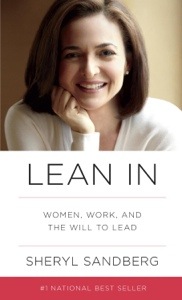
I think it might behoove us to pick our battles, and respond with a smile and a sense of humor, sometimes. I hope that this doesn’t make me Sheryl Sandberg, and I am not trying to make the “Lean In for Queers” point here.

20140413-103112.jpg

If I were doing Lean In for queers, I would tell you to man up.
I seem like the least sensible person in the universe
to be telling anyone to man up, particularly
as I continue the process of, well, manning down

I talk about misogyny, but you’ll notice that, so far, I don’t use the term transphobia much in this blog. It’s a real thing. It can make it illegal to use restrooms, deprive us of work, and in some cases, kill us. Part of being a connected queer is attacking this miasma of phobia by giving people a chance to know who we are, rather than hiding in the shadows and letting hatemongers do the public describing of us.

But, on Facebook, I found myself with … less of value to say on the whole topic of Jared Leto and Dallas Buyers’ Club (to be honest I haven’t gotten around to seeing it, but I think it’s in RedBox). I noticed I wasn’t the only trans woman with mixed feelings (Jenny Boylan, as always, brings a lovely balance of insight, perspective, and humor to this). More in my case, it’s a balance of being a person who just can’t hate anything or anyone if I see some small amount of good in them, and that I’m also a very live-and-let-live kind of woman. I don’t talk about transphobia that much on Facebook, either. Especially, I don’t talk about the million and one jokes that I find mildly distasteful, even though feminist scholars are increasingly studying some of this kind of behavior as “micro-aggression.” My point really is that we as a community are spending way too much time cataloging every micro-aggression and calling out everyone from Jesus Christ to Ellen Degeneres out for transphobia. Enough is too much. I’m not oops-shaming people who have chosen to be allies when they say something for which I don’t care. (Do ya like oops-shaming? I’ll also drop in a link to this great blog about abusing the word shaming in the women’s blogging world).

It’s not that I always find these jokes funny. When I can, I do gentle education. But, among my favorite movies, the ones where I know the lines by heart, I choose (yes, choose) to overlook humor I find mildly distasteful. Love, Actually has an unfortunate joke about hiring prostitutes for a bachelor party and how it “turned out they were men.” Music & Lyrics has a comment where the main character criticizes musicians for “wearing panties.” Because of my prism of gender experience as a trans person, I don’t care for these jokes. I still love these movies. I’ve been watching Love, Actually at least once a year for a decade now, and I don’t really ever watch movies even twice anymore. And Hugh Grant dancing is just fundamentally funny (& a little sexy).

20140413-103158.jpg

Hugh Grant characters are sexy, but if I ever actually had a real
relationship with a man, I would take pretty much any
character Colin Firth ever played. So there, I’m even giving him
more than the usual 300pix width, because yum

I’m also not really backing down on my principles. I still think exclusionary models of feminism are falsely radical, that they are not real feminism, because they spend more time hating out groups than empowering even the women they do accept as women. I embrace anyone’s right to identify their sexual orientation as they wish, and I think there are some people who are fluid by nature and can “choose” things like the political lesbianism of radical feminism and have it help them be more authentically “them,” but I think the way exclusionary radical feminism uses it runs the danger of being tantamount to the same controlling of women’s bodies and experiences of the patriarchy we’re all supposed to be fighting. As a trans woman in love with a lesbian cis woman, who has more lesbian friends than trans friends, I also find the idea that I hate lesbians absurdist (and you can ask my girlfriend if you want independent verification). These kinds of ideas, which mostly take their roots in third wave feminism organized around the “RadFem” identity (everyone more or less agrees whom and what was in the first two waves of feminism; whether there is a third and a fourth wave, and what constitutes what, are a little more contentious), especially when they are about controlling or excluding women, are dangerous to all women. When I first started coming out, I thought that people who spend all their time fighting “TERFs” and other exclusionary / hate-mongering people hiding under the premise of feminism, were being heroines. The truth to me, now, is that this is a waste of time, much like having debates with “creation scientists” take good people and wastes their time.

20140413-104044.jpg
When “feminists” spend their time arguing
about who is and isn’t a woman, and
who is and isn’t a woman worth empowering,
they need to be more radical, not less radical

We need to stand up against major acts of transphobia. Our sisters and brothers must be safe in the world. It is not okay when states try to make it a crime for us to use the restroom, or when it is open season for us to be fired because of our gender identity. And anyone who thinks I am a man (and that a trans man is, absurdly, a woman) is not an ally. But I think we need to shift the balance far, far, in the favor of publicizing strong and talented trans people, trans stories that go beyond the narrative around facial electrolysis and bottom surgery to how trans people are leading their communities, innovating, and living and loving alongside cis people. We need to do mor to help the cis world, including the cis queer world, have some idea of who and what on earth we are. Judging from all the cis people who have gotten to know me and are very loving and accepting, who enjoy my company, and don’t just include me on principle, I think this has to be a primary arm of our approach to building an inclusive world. For me, it’s simply also consistent with who I am – I am way too full of joy to spend all my time complaining.

Along the way, I may need to be held to my own standard, to not let this blog become negativistic. I did feel the need to start by clearing the air on some differences and nuances in perspective compared to other dominant views within trans and queer advocacy. But I need to spend more time being positive and lifting up, more time telling my story, and not be someone who silences her sisters. Please don’t oops-shame me, but I will accept your gentle reminders to be true to myself, and I’ll love you for it.

Why I Choose Advocacy

There are a lot of politics surrounding the notion of “passing” (that is, not generally being recognizable as trans after transitioning) and trans* people who transition and can/do pass. These politics follow an odd pattern. There is this irrational fear in parts of the cis- world that trans women who pass or blend in are some kind of stalking monsters whose aim is to prey on unsuspecting heterosexual men (no one who has ever met me had ever thought of me as a super-predator … most of my girlfriends have claimed they could take me in a fight, and, well, they’re right). However, usually when cis people see me walk like a duck, talk like a duck, quack like a duck, it helps them accept that I, well, I am a duck*. Actually, most of the antipathy towards trans women who blend in with cis women comes from … other trans people. They don’t question my womanhood, but they do look with disapproval on trans women like me who are or want to be deep inside the binary.

More on that issue another time. It’s actually the necessary frontispiece, in this case, to say that, while I probably don’t pass or blend completely right now, a year or more down the road, I think I might. Now this is what I really want to talk about. I do not have a credible option to be truly “stealth” (having no one really know I’m trans, in my day-to-day life). The only way this could possibly happen is if I were to completely abandon the professional field which I studied for seven years of graduate school, internship, and residency, in which I became board certified, which I honestly love. My field is simply too small – most of my colleagues inside my specialty will know when I go full time, because of the connections I inherited and the connectedness I craved and developed. So no, I can’t go deep stealth. I could go a more shallow stealth. In many places, there are only handfuls of people in my specialty practicing, and not all of them at connected in the way that I and most of my classmate are. So what I could probably do is go full time and then move somewhere where HR, and maybe my immediate supervisor, know that I am transgender. If I shut this blog down, silence my trans story in favor of a nondescript story of my womanhood (which would not make for a great herstory), I could probably maintain this indefinitely.

There’s really one thing I would lose, besides a level of my sense of personal dignity, if I did this. It’s my ability to advocate. No pride parades. No calls for local, state, and national government to increase LGBTQIA+ rights and protections. All of that would “blow my cover.”

I have to admit, it’s a little tempting. Oh, not forever. I’m a connected queer. I just don’t have it in me to isolate. But the thought of doing this, especially early after transition, when it would be more possible, is awful tempting, just to have the experience of simply being known as a woman, before having that as most of my life space (as opposed to limited areas of my life space, when I’m around only strangers) becomes infeasible. If I wasn’t so connected, if my field weren’t so reliant upon webs of references and colleagues and mentors voicing their support of me, I can’t honestly say I am sure I would reject the option.

On the other hand, I also view it as something of a blessing that it’s not much of an option to me. The truth is, I like advocating. This road has been hard for me. I did suffer. I’ve been bullied and bruised. I’ve been called countless names, which healed far more poorly than the bruising. I’ve played a role that doesn’t work for me for a long, long time, at first in ignorance and then knowing the truth full well, but not seeing a way out. I didn’t always know how I would survive, and although I never gave up, I was often sure I would die unfulfilled, and there are parts of my journey that I survived I know not how.

I know I’m not the only one going through this. I’m not very strong, and I’m not very brave. I’m not at all courageous. I get scared. I cry. But I feel that if some brother or sister could suffer a little less because of my being out in the open, I will wear the target, and suffer the attacks, and if I must fall, I hope that I shall look braver than I feel as I fall, that the fight I put up will scare our enemies, and embolden our allies, and that I acquit myself with some small measure of honor. I also do it because I believe that if people like us have the audacity, we can shape the world in an inclusive way, instead of letting bigots shape it into a maze of exclusionary movements and spaces.

david_bowie

Mazes are not really very inclusive spaces, but I will point out that Labyrinths, which are a completely different thing, have major genderqueer cred

I could vanish into the night. I choose instead to stand my ground and advocate.

*I am not a duck, just to be clear. I am a woman.