Am I a Woman of Color?

I’ve done a lot of thinking about this question, both the variant asking whether I am a person of color, and more to the point, if I am a woman of color (I think less about “Am I a Woman?” … I’m at peace that I am)*. When I’ve asked Caucasian feminists to weigh in, they usually answer with an immediate (and cursory?) “yes.” I think this is correct, but an equally resounding “no” is important, and I think the full story is not told without both the yes and the no.
20140428-074210.jpg
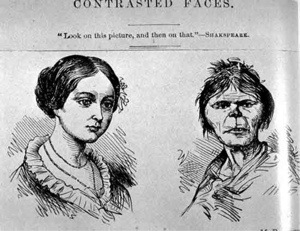
Before it became fashionable to be Irish once a year for St. Patrick’s day, and whenever Guiness is poured or Celtic music is played, or just because one always fancied red hair, Irish Americans were the targets of a lot of racism by the “white” minority, who were somewhat less white than them

Let me start with the “no.” First, it’s important to consider that, much like the question of whether pink is for boys and blue is for girls, or vice versa, the answer to the question, “Who is white?” has changed. Riots among Anglo-Saxon (“white”), Irish, and Italian Americans in the early 20th century were characterized as race conflicts. The concept of being “white” has always really been rooted in Colonialism and control of people. “White” people were Europeans who exerted control, and “colored” people were the othered people they subjugated – predominantly Africans and indigenous Americans. Asians have long played an indeterminate role in this equation. Some of us, and sometimes, were othered as colored people, but other times, we were not. Even in the Colonial era, India had a more complex and different relationship with the crown than any other nation predominantly peopled with “colored folk.” This did not stop us from getting called names – you will occasionally even see the “N word” used to describe my ancestors by Britons (e.g., in passing in the wondrous Passage to India by E. M. Foster). I don’t want to get too sidetracked on this – complex is really a key word, and it has the funny consequence that, were in the UK instead of the US, there would be a lot more Indian faces around me, and certainly far more Indian food, but I would also be far more marginalized than I am here. I simply want to say that our experience was far different than our sisters and brothers in Africa and South America.

More recently and humorously, the mid-2000s pass-time that was Stuff White People Like listed things, well, that white people like, and I’m embarrassed to admit how many are true of me (this is part of the gag, incidentally – the blog was created by an Asian American). So, much like Othello, I am called often whiter than many of my unequivocally “white” girlfriends (I’ve only ever had one non-Caucasian girlfriend, although I’ve gone on dates with people of a variety of ethnicities). Many of my less-grounded-in-feminism women friends have told me they think of me as white. It’s not as simple as that.
20140428-073519.jpg
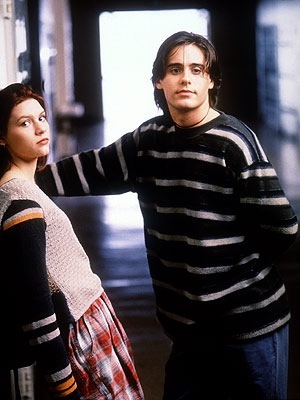
It’s fantastic that Stuff White People Like ended on My So Called Life. And I may be the stupidest woman alive in listening to all this Dallas Buyers’ Club debating and not realize that Jared Leto was Jordan Catalano

However, all of this should actually be easy to think about by analogy for my feminist and LGBTQIA+ friends – there’s a lot of complaining about traditional gender roles within the “binary.” (I was caught by surprise at a recent support group meeting – someone didn’t know the word; it’s come up in so many conversations in the last half year that I guess I forgot it was not a household concept. That binary is the gender binary that misrepresents maleness and femaleness, or masculinity or feminity, as being opposing states of a binary system, most crudely represented by “1” signifying the “presence” of masculinity and “0” representing the “absence” of femininity). If anything, the white/colored “binary” is far more, not less flawed and nonsensical than the male/female binary. The latter has existed across time and culture and is likely a basic (but malleable) part of the human competing strategy, and many animal ones as well. The former is rooted in an extremely narrow and Eurocentric conception of history. So, while I endorse the gender binary (for me – I am a femme and attracted to moderately masculine/butch people – I don’t push the gender binary on others or police their gender), the “race binary” is just dissonant with my experience, and in this way, I am leery of identifying as a trans woman of color, because it endorses the underlying binary.

A corollary to this: it is vitally important for people like me to remember that marginalization and oppression actually make up a relatively small part of our life histories and experiences. I mean, let’s be real. My Brahmin ancestors came from significant privilege even under the oppression of the British Raj. My parents are black sheep in my family, to some extent, because neither have a doctorate (both have masters degrees in Chemistry – in my family, when you tell an auntie you have a masters degree, they ask why you dropped out). My experience of being a trans woman is far more Coach purses and flash sales at the Limited than homelessness or poverty. It’s the kind of experience being trans where, in more than six months of coming out to more than a hundred people, I’ve had no negative responses and only actively felt gaped at twice. By this standard, arguably the President’s daughters are not women of color, either. I recognize that’s an audacious thing to say, and I don’t want to police their choice to identify or not identify as women of color. I just fear that we privileged (but non-Caucasian) women talking about oppression of racial minorities, as if our direct experience of it is enough to offer a fully informed perspective, run a risk of doing something almost as bad as “mansplaining.”

But that answer, by itself, is simply not complete.

There is also the obvious “yes.” I don’t quite have “skin the color of mocha” (my life is much closer to a queer Taylor Swift song than a queer Ricky Martin song). It’s more like honey, but it’s for sure not alabaster. A woman (of whose ethnicity I am unsure) came up to me at a support group recently and said she was glad another woman of color was there (this town is not so non-diverse, but some of it’s spaces can be amazingly over-representative of Caucasians compared to our city population).
20140428-073913.jpg
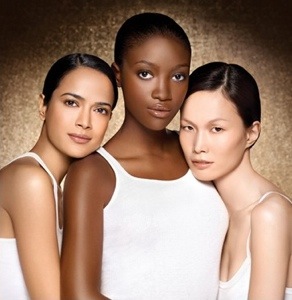
I clearly need to consider the subset of products marketed at “women of color,” or at least some of them, anyway, and scads of makeup trends will just never work for me, oh well … I could do worse than these women

Let me go briefly back to leveraging my certainty that I am a woman. I don’t have a uterus, and it’s unlikely I ever will. To my regret, I will never have a child grow inside me. This does mean that I should defer to the voices of women with uteruses (and those who used to have them) in many matters reproductive. But it does not mean that it is not an important part of my experience as a woman to co-advocate with these sisters (I love my sisterhood), and when I do so, I do so in a meaningfully different way than me advocating on behalf of other oppressed groups, in that I am advocating as a fellow woman (just as women stand up for me as a fellow woman – that night I met my girlfriend, her ex did this for me, and it was so amazing).

Furthermore, while I have not experienced so much oppression, I know what it’s like to be othered in subtler ways. I know what it’s like to not conform to the magazine image of beauty, my transness even aside – all the hair colors or makeup that don’t work with my skin, not having the “it” blue or green eyes, and so on. (In spite of having a purely Brahmin Indian lineage going back hundreds of years, I don’t exactly look like most other Indian Americans, either, that’s a topic for another time.) Interestingly, I serve and, in past settings, worked alongside many African American people, and every once in a while, one of the women compliments my having the “good hair,” (if you don’t understand what the phrase means specifically…). To be honest, I am immensely flattered that they sort of considered me one of them, since it’s not a comment they would make to Caucasian people, and certainly not to most people nominally perceived as male, as I was at the time! I know what it’s like to have a name that’s different (the name I chose occurs in several languages, including Sanskrit, but my birth name is common to Indians but not to most Americans, and instantly foreign and “exotic” sounding to Americans… to have fun with them, I point out that it means “mesmerizing” or “charming,” like a snake charmer!). I know what it’s like that the food and customs in my home were “foreign” to my peers.

In essence, I co-advocate with women not only on the basis of our co-humanity, but on shared experiences and interests and perspectives shaped by shared experiences (past, present, and future), which we have in common as women, but which men do not generally share. I do co-advocate, in this very same way, with other women of color, even if we have non-overlapping histories. There are even some ways in which my history as a woman of color (or those of other less marginalized women of color) may be uniquely informative – Lindsey Yoo makes a great case for this. I willingly and gladly take my place alongside other women of color (some of whom were oppressed a lot, and others, like, me, oppressed little or not at all), because I think the world will be a better place when these sisters and I experience less oppression and othering. While doing so, I remember my privilege. I remember that each of us occupies a unique intersection of different forces that privilege us and predispose us to oppression and marginalization. And I stand in the doorway and bid you in – because we are all better together.

* This blog post has an embarrassing number of parentheticals. Radical feminists love parentheticals almost as much as we love footnotes. I just love you so much that I can’t leave the good parts out on you.
Calling Out Transphobia … Less?

I think it might behoove us to pick our battles, and respond with a smile and a sense of humor, sometimes. I hope that this doesn’t make me Sheryl Sandberg, and I am not trying to make the “Lean In for Queers” point here.

20140413-103112.jpg

If I were doing Lean In for queers, I would tell you to man up.
I seem like the least sensible person in the universe
to be telling anyone to man up, particularly
as I continue the process of, well, manning down

I talk about misogyny, but you’ll notice that, so far, I don’t use the term transphobia much in this blog. It’s a real thing. It can make it illegal to use restrooms, deprive us of work, and in some cases, kill us. Part of being a connected queer is attacking this miasma of phobia by giving people a chance to know who we are, rather than hiding in the shadows and letting hatemongers do the public describing of us.

But, on Facebook, I found myself with … less of value to say on the whole topic of Jared Leto and Dallas Buyers’ Club (to be honest I haven’t gotten around to seeing it, but I think it’s in RedBox). I noticed I wasn’t the only trans woman with mixed feelings (Jenny Boylan, as always, brings a lovely balance of insight, perspective, and humor to this). More in my case, it’s a balance of being a person who just can’t hate anything or anyone if I see some small amount of good in them, and that I’m also a very live-and-let-live kind of woman. I don’t talk about transphobia that much on Facebook, either. Especially, I don’t talk about the million and one jokes that I find mildly distasteful, even though feminist scholars are increasingly studying some of this kind of behavior as “micro-aggression.” My point really is that we as a community are spending way too much time cataloging every micro-aggression and calling out everyone from Jesus Christ to Ellen Degeneres out for transphobia. Enough is too much. I’m not oops-shaming people who have chosen to be allies when they say something for which I don’t care. (Do ya like oops-shaming? I’ll also drop in a link to this great blog about abusing the word shaming in the women’s blogging world).

It’s not that I always find these jokes funny. When I can, I do gentle education. But, among my favorite movies, the ones where I know the lines by heart, I choose (yes, choose) to overlook humor I find mildly distasteful. Love, Actually has an unfortunate joke about hiring prostitutes for a bachelor party and how it “turned out they were men.” Music & Lyrics has a comment where the main character criticizes musicians for “wearing panties.” Because of my prism of gender experience as a trans person, I don’t care for these jokes. I still love these movies. I’ve been watching Love, Actually at least once a year for a decade now, and I don’t really ever watch movies even twice anymore. And Hugh Grant dancing is just fundamentally funny (& a little sexy).

20140413-103158.jpg

Hugh Grant characters are sexy, but if I ever actually had a real
relationship with a man, I would take pretty much any
character Colin Firth ever played. So there, I’m even giving him
more than the usual 300pix width, because yum

I’m also not really backing down on my principles. I still think exclusionary models of feminism are falsely radical, that they are not real feminism, because they spend more time hating out groups than empowering even the women they do accept as women. I embrace anyone’s right to identify their sexual orientation as they wish, and I think there are some people who are fluid by nature and can “choose” things like the political lesbianism of radical feminism and have it help them be more authentically “them,” but I think the way exclusionary radical feminism uses it runs the danger of being tantamount to the same controlling of women’s bodies and experiences of the patriarchy we’re all supposed to be fighting. As a trans woman in love with a lesbian cis woman, who has more lesbian friends than trans friends, I also find the idea that I hate lesbians absurdist (and you can ask my girlfriend if you want independent verification). These kinds of ideas, which mostly take their roots in third wave feminism organized around the “RadFem” identity (everyone more or less agrees whom and what was in the first two waves of feminism; whether there is a third and a fourth wave, and what constitutes what, are a little more contentious), especially when they are about controlling or excluding women, are dangerous to all women. When I first started coming out, I thought that people who spend all their time fighting “TERFs” and other exclusionary / hate-mongering people hiding under the premise of feminism, were being heroines. The truth to me, now, is that this is a waste of time, much like having debates with “creation scientists” take good people and wastes their time.

20140413-104044.jpg
When “feminists” spend their time arguing
about who is and isn’t a woman, and
who is and isn’t a woman worth empowering,
they need to be more radical, not less radical

We need to stand up against major acts of transphobia. Our sisters and brothers must be safe in the world. It is not okay when states try to make it a crime for us to use the restroom, or when it is open season for us to be fired because of our gender identity. And anyone who thinks I am a man (and that a trans man is, absurdly, a woman) is not an ally. But I think we need to shift the balance far, far, in the favor of publicizing strong and talented trans people, trans stories that go beyond the narrative around facial electrolysis and bottom surgery to how trans people are leading their communities, innovating, and living and loving alongside cis people. We need to do mor to help the cis world, including the cis queer world, have some idea of who and what on earth we are. Judging from all the cis people who have gotten to know me and are very loving and accepting, who enjoy my company, and don’t just include me on principle, I think this has to be a primary arm of our approach to building an inclusive world. For me, it’s simply also consistent with who I am – I am way too full of joy to spend all my time complaining.

Along the way, I may need to be held to my own standard, to not let this blog become negativistic. I did feel the need to start by clearing the air on some differences and nuances in perspective compared to other dominant views within trans and queer advocacy. But I need to spend more time being positive and lifting up, more time telling my story, and not be someone who silences her sisters. Please don’t oops-shame me, but I will accept your gentle reminders to be true to myself, and I’ll love you for it.

Why I Choose Advocacy

There are a lot of politics surrounding the notion of “passing” (that is, not generally being recognizable as trans after transitioning) and trans* people who transition and can/do pass. These politics follow an odd pattern. There is this irrational fear in parts of the cis- world that trans women who pass or blend in are some kind of stalking monsters whose aim is to prey on unsuspecting heterosexual men (no one who has ever met me had ever thought of me as a super-predator … most of my girlfriends have claimed they could take me in a fight, and, well, they’re right). However, usually when cis people see me walk like a duck, talk like a duck, quack like a duck, it helps them accept that I, well, I am a duck*. Actually, most of the antipathy towards trans women who blend in with cis women comes from … other trans people. They don’t question my womanhood, but they do look with disapproval on trans women like me who are or want to be deep inside the binary.

More on that issue another time. It’s actually the necessary frontispiece, in this case, to say that, while I probably don’t pass or blend completely right now, a year or more down the road, I think I might. Now this is what I really want to talk about. I do not have a credible option to be truly “stealth” (having no one really know I’m trans, in my day-to-day life). The only way this could possibly happen is if I were to completely abandon the professional field which I studied for seven years of graduate school, internship, and residency, in which I became board certified, which I honestly love. My field is simply too small – most of my colleagues inside my specialty will know when I go full time, because of the connections I inherited and the connectedness I craved and developed. So no, I can’t go deep stealth. I could go a more shallow stealth. In many places, there are only handfuls of people in my specialty practicing, and not all of them at connected in the way that I and most of my classmate are. So what I could probably do is go full time and then move somewhere where HR, and maybe my immediate supervisor, know that I am transgender. If I shut this blog down, silence my trans story in favor of a nondescript story of my womanhood (which would not make for a great herstory), I could probably maintain this indefinitely.

There’s really one thing I would lose, besides a level of my sense of personal dignity, if I did this. It’s my ability to advocate. No pride parades. No calls for local, state, and national government to increase LGBTQIA+ rights and protections. All of that would “blow my cover.”

I have to admit, it’s a little tempting. Oh, not forever. I’m a connected queer. I just don’t have it in me to isolate. But the thought of doing this, especially early after transition, when it would be more possible, is awful tempting, just to have the experience of simply being known as a woman, before having that as most of my life space (as opposed to limited areas of my life space, when I’m around only strangers) becomes infeasible. If I wasn’t so connected, if my field weren’t so reliant upon webs of references and colleagues and mentors voicing their support of me, I can’t honestly say I am sure I would reject the option.

On the other hand, I also view it as something of a blessing that it’s not much of an option to me. The truth is, I like advocating. This road has been hard for me. I did suffer. I’ve been bullied and bruised. I’ve been called countless names, which healed far more poorly than the bruising. I’ve played a role that doesn’t work for me for a long, long time, at first in ignorance and then knowing the truth full well, but not seeing a way out. I didn’t always know how I would survive, and although I never gave up, I was often sure I would die unfulfilled, and there are parts of my journey that I survived I know not how.

I know I’m not the only one going through this. I’m not very strong, and I’m not very brave. I’m not at all courageous. I get scared. I cry. But I feel that if some brother or sister could suffer a little less because of my being out in the open, I will wear the target, and suffer the attacks, and if I must fall, I hope that I shall look braver than I feel as I fall, that the fight I put up will scare our enemies, and embolden our allies, and that I acquit myself with some small measure of honor. I also do it because I believe that if people like us have the audacity, we can shape the world in an inclusive way, instead of letting bigots shape it into a maze of exclusionary movements and spaces.

david_bowie

Mazes are not really very inclusive spaces, but I will point out that Labyrinths, which are a completely different thing, have major genderqueer cred

I could vanish into the night. I choose instead to stand my ground and advocate.

*I am not a duck, just to be clear. I am a woman.

Why I Kind of Hate Calls to Signal Amplify

I hope this doesn’t come off as catty or self-absorbed. Okay. So I probably am both. I kind of hate calls to signal amplify. My intersectionalism card is sitting on the table, and I’ll give you the scissors, and you decide if you want to cut it up or not.

A little background from my particular perspective. I’ve survived a few decades of this rather awkward drag show in which I’ve been pretending to be a man, and feeling ridiculous, like when those women in bad comedy movies paint goatees on with makeup. But this experience is different for each of us. For me, although I knew really well the extent to which I was supposed to hide my feelings and particularly my fear or suffering, I just didn’t really have the heart to do it. I’ve been outright bullied, with non-metaphorical bruises to show for it, but much moreso, my childhood is littered with experiences where I tried to feel, publicly, even maybe complain or whine a little bit (not a lot, I’ve never needed to complain a lot), and this was met essentially with responses that boil down to, “Oh, your problems matter, but mine are worse. You should stop talking and listen to me, and when I don’t have any problems that are worse than yours, then it will be your turn.” Of course, my turn never seems to come up, and my friends and loved ones seemed to be blessed/cursed in such a way that it was always their day to suffer.

I feel that calls to signal amplify are very similar. There’s a phenomenon in our community that, as soon as some of us (and I believe this is often/usually directed against feminine people in the advocacy world) want to tell our own stories, we are hastily interrupted, a few words in, to “signal amplify,” because people who have it worse by virtue of their poverty, being in an oppressed ethnic minority, or being in another category targeted by the patriarchy for oppression. My experience is things like being pretty & stylish, and also smart or talented, seem to very quickly elicit calls to stop talking and start signal amplifying.

A couple of my own experiences. One person in the community, within a day or two of knowing me, comfortably told me, in essence, that I should empty my retirement accounts and give all my money to a loose acquaintance who feels that their transition is held up by lack of access to facial feminization surgery (if you’re not transfeminine, and you want to experience myocardial infarction, look up what that costs). Amazingly, this was the very first thing they suggested when I whined (no, emoted – I’m allowed to emote) that I didn’t know how to help this particular friend at this particular part of her struggle, because at the time, she was very negativistic and brushed off my attempts to empathize, listen, or even engage her in fun. Another person (I’m still friends with both the struggling person and this next person, for what it’s worth, and I have largely gotten over myself and found ways to connect and relate with them both) once came to my book club because we were reading Jenny Boylan’s book, and she felt Jenny’s voice should be silenced and replaced with voices of trans women who struggle more, because the fact that she is happy is unhelpful. Au contraire, ma sœur, these stories of happy trans women are what gave me the courage to finally start transitioning, what allowed me to survive. They mattered to me. bullhorn-muzzle

It may surprise you to note only one of these is designed
to amplify people’s voices. No, it’s not the muzzle

And here’s where it gets sticky, and you’ll have to decide if you’re going to out me as a faux intersectionalist. I do believe in the intersecting lines of oppression. I am cognizant of the fact that I am well educated and affluent, and that, while I am not white (later, I’ll take on the tricky question, “Am I a trans woman of color?” but let me work my way up to that), I am not very much racially oppressed either. I am aware that when these advantages are added to others, it’s likely that it will be far easier for me to survive transition than it will be for many of my sisters. I’m aware that I go to TDOR and mourn and grieve and advocate and call for justice, but it’s not people quite like me who end up in those shallow graves. And I do experience some “survivor guilt” over all of this. But (no, BUT) the path to empowering all of us is not to arbitrarily select a group of people who are “privileged enough” and isolate them and invalidate or silence their stories. And the people who self-select as arbiters, who have somehow given themselves the right to switch on and off other people’s right to be considered oppressed enough to have a story, are not helping the cause.

And then finally, here’s the part where I valiantly try to snatch my intersectionalism card back before you cut it up. I don’t hate signal amplification as a broad concept. These stories of (more) oppressed people (than me) are so important. It’s a major problem that there are now a solid number of stories of people like me – affluent, educated, professional trans women, who have a route to being fairly readily acceptable in society – and there is still hardly any visibility of transmasculine stories, of genderqueer stories, of stories of people who are discriminated against because they will never be “pretty” enough to be socially acceptable. It’s a major problem that the victors write history, and in the small way that women like me “win,” you hear our stories and not the story of the woman who spent months or years trying to find a basic job as a trans person and finally had to de-transition (or maybe even tried to kill herself), or the story of the person sent to live on the streets, and certainly not enough of the story of how those poor women and men we celebrate on TDOR suffered.

Rather, I celebrate these stories when I hear them. I’ve learned to listen when I hear them and know that they are absent (for which I am ever thankful to our sister-in-arms, Gloria Steinem, she taught me how to listen), and I do seek them out. So I think this is different than the longstanding battle in feminism between ethnic minority and majority voices. There, the problem is active silencing of black and Latina women’s voices, over which affluent middle-class white woman views are shouted. I’m not shouting over anyone. I’m the one being silenced. And silencing me is not the way to add visibility to these stories. Invalidating me is not the way to validate them. And ultimately, we need to support these brothers and sisters to be brave and tell their own stories, listen and celebrate with them, and get their backs when trouble comes. Not stop telling our own stories and insert theirs in our places – because there’s no story I will ever be able to tell like I can tell my story. So the kind of “signal amplifying” that involves invalidating other people, it’s got to go. And all our stories, all our experience, the house of love and hurt that makes us a community, they all have to matter.

I Took My First Dose of Estrogen At A Laverne Cox Lecture

Mostly because it seemed like it’d make a good story. By way of background, when I started transition, I started seeing a therapist and going to a support group (through the fabulous Network) right away, but I didn’t really push for booking an endocrinology consult right away. There is someone decent here in town, but it turned out that I wouldn’t be able to see him until October. Also, he practices out of a diabetes group and trans health is not his primary calling. So, I did some digging and some emailing, and I settled on my second course of action, to seek care instead at the University of Michigan, which had the advantage of offering a comprehensive program. I don’t think speech therapy is my most pressing problem, but I’m going to get a consult from their SLP when I go back for my next appointment. Likewise I’m not sure it’s the surgical clinic I want, but still.

UMTrans
University of Michigan also maintains a great
community resource guide for trans* people

When I started support group, in hindsight somewhat foolishly, I didn’t know if I should come “en femme” the first time. I think, the second time, I wore foundation (and erm, a bra under my short trench) and went out for a drink like that after. One of the bartenders at the place we usually go to said to me, aside, when I was looking up front for someone, that he didn’t know who was what gender, but we were some of his nicest customers. After that I went to group in fairly clearly female form, and honestly, my “look” has only subtly evolved since then. Anyway, it seems in hindsight ridiculous for me to question whether it would be okay to go to a transgender support group in makeup. Mira won the same argument some four or five months later, when I had my endocrinology appointment, and I went in booties, a grey tweed skirt, white blouse, black velvet jacket (❤️ I do rather love clothes), and a faux fur bucket hat, since it was bitterly cold that day, and that hat is cuuuute. Anyway.

Endocrinology was great. The resident seemed like a nice fellow (sorry, medical joke), and the endocrinologist was excellent. They answered all my questions and got me going. Labs at the next building over confirm the testosterone in my blood (can’t wait to see the next numbers I post!). Okay, the Indian woman at the front desk, with whom I didn’t even have to communicate, really, since I got whisked back to a check in desk, was staring. I wondered if it was possibly because she hadn’t seen an Indian American trans woman, but she didn’t say anything, and she apparently stared at a trans man who came in later, and possibly also at my girlfriend (neither of whom are Indian Americans). Whatever, kind of odd, considering that a significant number of trans people come to see the doctor, and we rather pay her salary. But okay. I can tolerate staring, and I’ll be ready for her when I go back. In grad school, long before I took transition seriously, I got accused of working a room like a sorority girl, and forget you, if you think I make a timid woman.

20140409-215637.jpg
If you haven’t met her, Laverne is radiant. Seriously.
And when anyone preaches bell hooks, I listen.

Anyway, this was a Monday, and I took the day off to drive across the state to the appointment. Tuesday I went into work, and GVSU was hosting Ms. Cox that night – it had been on my calendar for weeks. No time to go home and change (and the place was packed; I wouldn’t have had a seat if I had). A trans woman friend yelled, “Hey, Mira!” across the room, and I had a momentary panic, but the moment passed. I had been able to stop at the pharmacy on the way there, so I brought in my pills (in a baggie with cookies from Subway!), and I got to dose next to a fellow trans person, also taking their evening dose, and surrounded by tons of my own queer friends and literally hundreds of people out to embrace and support our sister Laverne.

And, damn, did that lecture not sound like sweetest symphony on estradiol? And, as she quoted Sojourner Truth, “Ain’t I a woman?” Nice way to start a chapter in my story.


The Agenda and the Lifestyle

I’m coming out against the agenda and the lifestyle. Against the agenda of exclusionism and the hate-based lifestyle. Oh, you thought I was talking about something else?

What does the queer agenda really entail? We want no one to kill us for being queer. We’d like to have homes to live in, and we expect to pay for them (I’m way ahead on my mortgage, incidentally). We want to work, and a lot of us are exceptionally skilled people with a lot to give to society. We want to be able to love our partners openly – we know that humans are not the most monogamous of species, but stable partnerships are a bedrock of human society. Or, we don’t. Some of us want to be able to engage in safe, consensual, casual sex, polyamory, or maybe don’t want sex. Not that straight people ever fool around. We want to be integrated in society – some of us, for the love of God, want to go to church (now if that isn’t a civilization-destroying agenda that will bring about the apocalypse, what is?).

And we don’t want to pretend. Trust me, I know pretending. I know how much time and energy I spent pretending, and what else I could have been doing for the world in that time creatively or in my profession.

Meanwhile, people out there use religion as a basis to say that people and human rights are not sacred. They use Christ, a guy who hung out with prostitutes and corrupt officials if he thought there was a spark of good in them, who brought Jews and Gentiles together, who turned over the money tables in the church, to say that it’s right to discriminate. Frederick Douglass rightly pointed out that the “Christ of the Cross” is a total stranger to these people (but not to him). There’s more absurdity out there. People who claim to advocate for women on the absurd basis that trans women, who identify, act, live, like women, who fought and paid tremendous prices for their womanhood, are not women, and that trans men, who want to be treated a men, are, absurdly, women. And people who claim to advocate for men on the same absurd basis. And these supposed radicals on the left don’t see a problem with the fact that they’re allied with radicals on the right who think women should be barefoot and pregnant and that guns are more important than people.

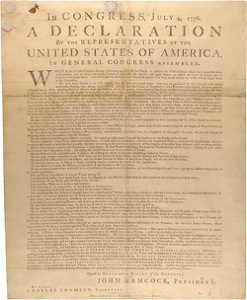
Most absurdly, some of these people advocate hating and oppressing other people, discriminating, excluding, as upholding American values. This is the moral equivalent of lining the bird cage with the Declaration of Independence.

20140408-100128.jpg
Admittedly there were some screw-ups on the road to freedom,
but we should own them, not celebrate them, right?

So my call to arms is this: judge people and movements by their inclusiveness. No one is making the world a better place for anyone by saying someone else doesn’t matter, isn’t a sacred life, should be discriminated against or even killed. No one ultimately achieved their rights by destroying someone else. And any movement that is predicated on locking the doors to keep people out is not the way to the promised land (preferably paved with rainbows and not gold).

Do Social Networks Drive Autism Underemployment?

This is an historical post from an earlier blog, Adopted Son of the Autism Family, which I had before this current blog. It is re-posted without modification (other than this introductory sentence).

This is a quick thought of the day, with apologies for good, solid blog posts being lacking from me over the past few weeks. Then again, it’s too much for me to squeeze into a tweet, and my mother thinks my blog posts are too long, so perhaps this will appeal to her!

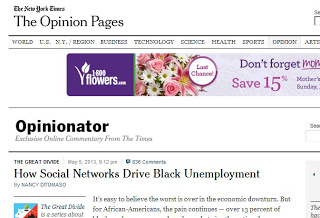
Take a look at this NYT Blog.

NYT Opinionator blog post from today

NYT Opinionator blog post from today

They advance a very interesting idea that social networks function to extend and strengthen the secret connections that keep the wealthy (and dominant racial/ethnic/cultural groups) enfranchised. They do it by enhancing the ability of “who you know” to overpower “what you know” in being the person picked for the desirable job that becomes a great career or a stepping stone. It makes a lot of sense, since social networks allow easy access across strata of society to people, as long as they have the right connections (for instance, I routinely tweet with people who have 1/10 or 1/100th as many followers as me, or 10x or 100x as many followers as me, and we have a two-way interchange, although primarily because we are connected by the Autism Family). Without the right connections, however, Facebook, Twitter, and the like, are just as closed a door as any that existed before social networking.

We already know that people with autism are unemployed and underemployed compared to other people at their cognitive levels. This spans across the Spectrum — cognitively impaired autistic people are much less likely to work than people with MR without autism. High functioning autistic people with college degrees or graduate degrees are also less likely to work than their “neurotypical” peers. I talk to parents all the time about the fact that much of this has to do with people with autism struggling to read the unwritten messages and follow the unwritten rules in job searches. They rock out in their classes and get high grades, but they don’t talk to their professor or their peers about their interests. They don’t engage their departments to parlay their interests and academic success into internships, volunteering opportunities, and entry level jobs. This is all about unwritten rules and networking. Are we overlooking one of the most powerful tools thus far in the 21st century, in the form of these social networking sites, and what they may be able to do for autistic people?

We know (look at my timeline on Twitter, or check out the #AutismFlashFollow or #autismbullying hashtags!) that we have people with autism thriving on social media, as well as some who engage in it but are not engaged back. Maybe we need to think more constructively about helping people with autism develop social links on social media that are likely to generate jobs (because they may not automatically engage in using social media this way). Maybe the broader autism family needs to help build those links between people with autism on social media and the decision makers and other people who hold the keys to these invisible doors. What do you think? And if you’re an autistic person, have you used social media to land a job? Would you?